
Studio & Process with Loriel Beltran
Join us for an intimate studio visit with artist Loriel Beltrán, whose sculptural accumulations of paint and color challenge how we define mediums.

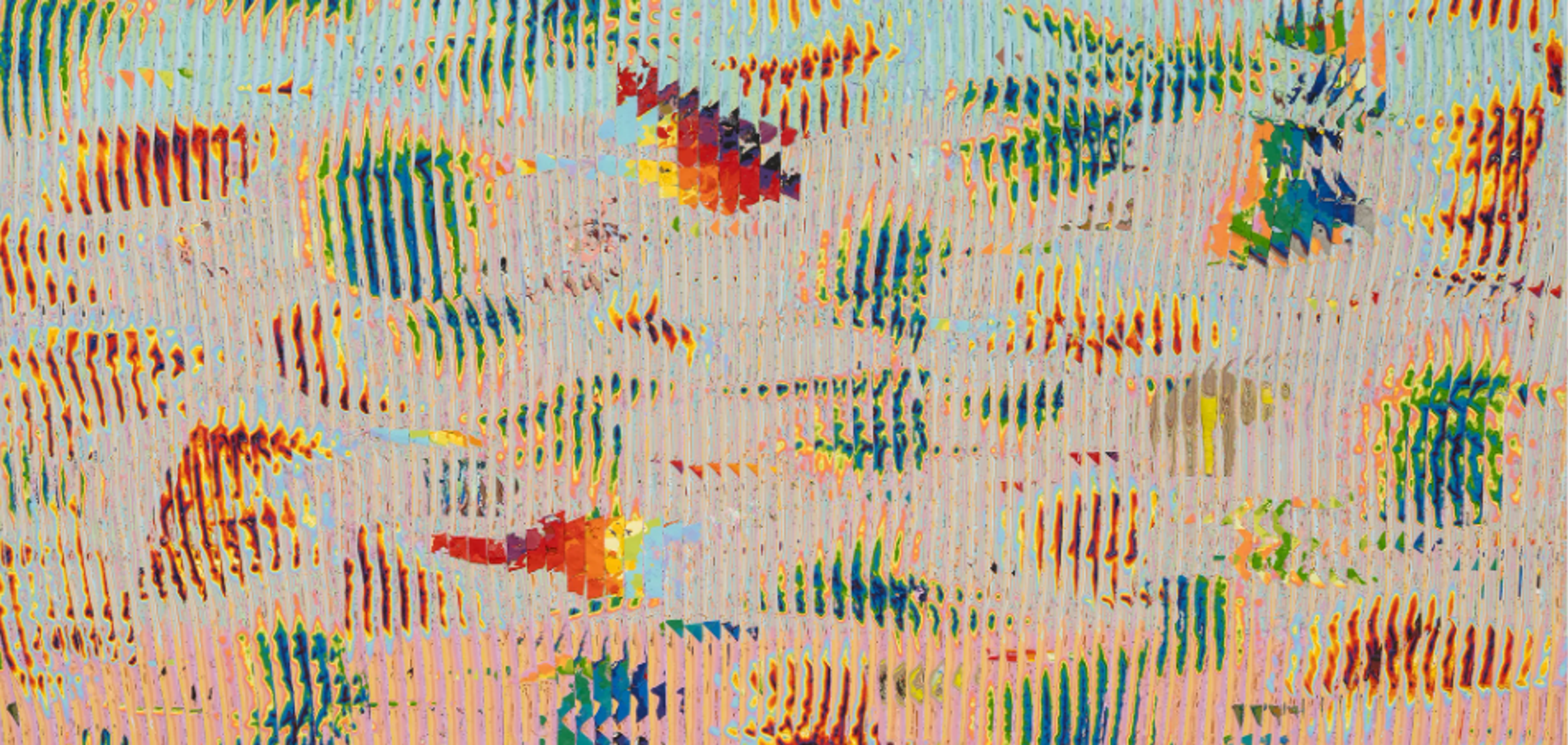


In a season that asks us to imagine the cultural infrastructure we want to build in our communities, we’re turning to artists for whom tools, time, and process are central to their practice. As part of a continued exploration, please join us for an intimate studio visit with artist Loriel Beltrán, whose sculptural accumulations of paint and color challenge traditional distinctions between artistic media.
Blurring the boundaries between painting and sculpture, the artist’s works, as he describes them, “resist becoming images,” instead materializing color in all its complexity.
Situated somewhere between the legacy of Latin American modernism and postwar painting in the United States, Beltrán dissolves the line between image and object. And while the aesthetic and visual effects of his work are remarkably striking, he is equally invested in materiality, process, and industry, foregrounding artistic labor and the residue it leaves behind.
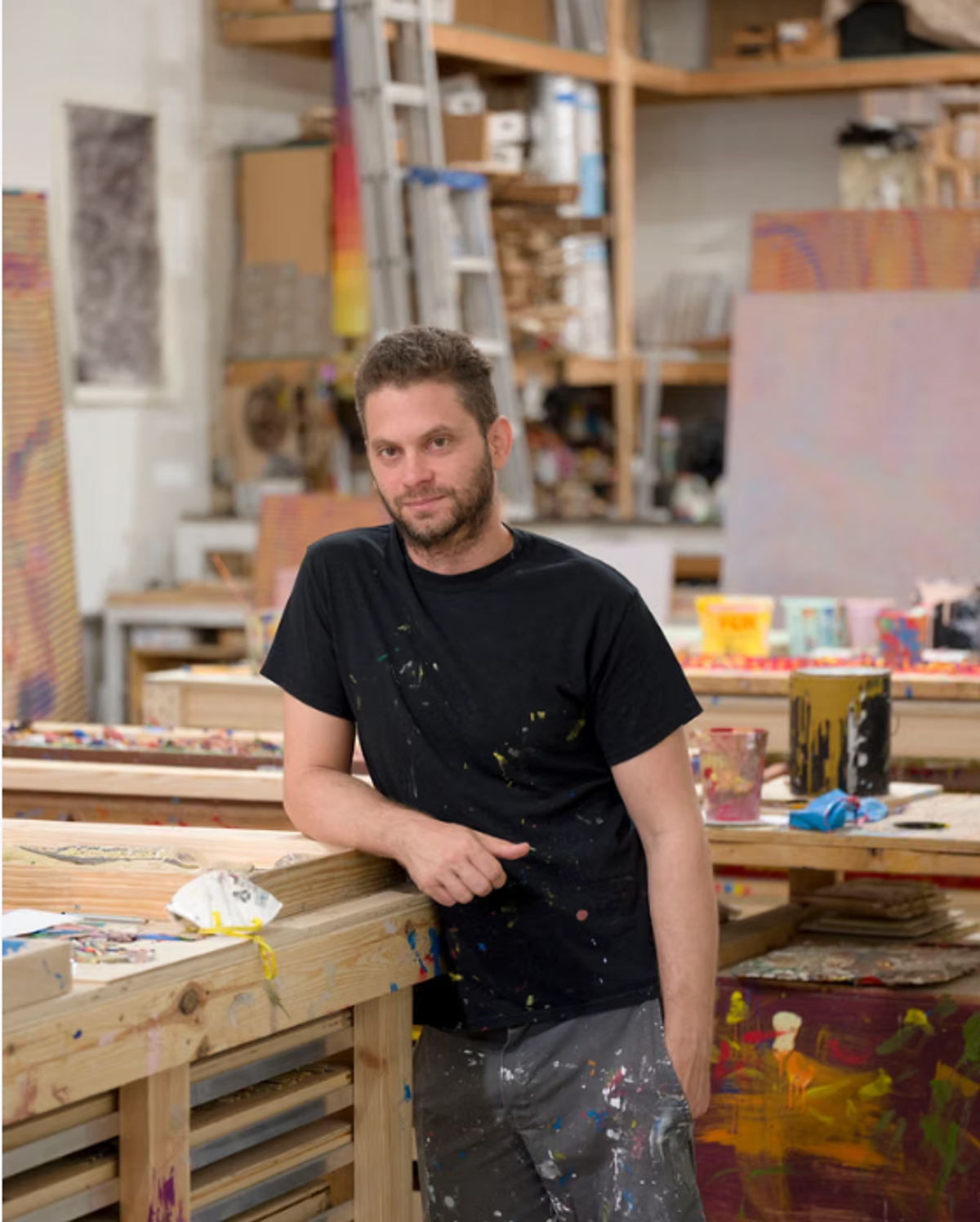
More about Loriel Beltrán
Many of Beltrán’s works consider the interplay between particular combinations of colors, often indicated by technical abbreviations in his works’ titles. Beltrán has described the resulting works as “panels of code,” and rather than depicting a single image, they suggest a distinct visual language, replete with numerous possibilities for imagery. The artist’s surfaces are composed of layers of paint that have dried to create vibrating optical effects. To create his works, Beltrán produces custom molds and pours paint into them, allowing the paint to harden and dry over time. The artist sometimes integrates objects into his molds–such as leftover materials or detritus from his studio–to introduce “interruptions” into his compositions. He repeats this process for months or even years, as layers of paint coagulate and accumulate. The artist then removes the mold and slices the resulting object–a hardened block with swirls and layers of color–into strips using a custom-built machine. The strips are arranged into bold, planar compositions, which he adheres to a wooden substrate.
As a diasporic Miami-based artist, Beltrán locates his work at the intersection of a variety of art histories and traditions across the Americas. He identifies significant points of connections with a number of postwar United States artists, evoking Jack Whitten's material experimentations, Lynda Benglis's pours, Agnes Martin's organic grids, the notion of the flatbed picture plane in Jackson Pollock’s work, Mark Rothko’s exploration of the color’s expressive potential, and Robert Morris’s engagement of chance and gravity, among others.
Beltrán earned his B.F.A from the New World School of the Arts, Miami, FL. Recent solo exhibitions of his work include To Name the Light (2024), Lehmann Maupin, London, United Kingdom; Over the Sun, Under the Earth (2022), CENTRAL FINE, Miami, FL; and Constructed Color, Museum of Art and Design, Miami, FL (2021). His work has also been exhibited in a number of significant group exhibitions, including Draw (2025), Museum of Contemporary Art – University of Chile, Santiago, Chile; and Cut: Abstraction in the U.S. from the 1970s to the Present, Frost Art Museum, Miami, FL (2019). Beltrán was also a co-founder and co-director of the artist-run gallery and collective Noguchi Breton (formerly GUCCIVUITTON). His work is included in a number of notable private and public collections, including the Guggenheim Museum, New York, NY; Institute of Contemporary Art Miami, Miami, FL; and Pérez Art Museum Miami, Miami, FL, among others.
Learn more about the artist here.