
The Life and Death of Bluegill Prime by David Correa
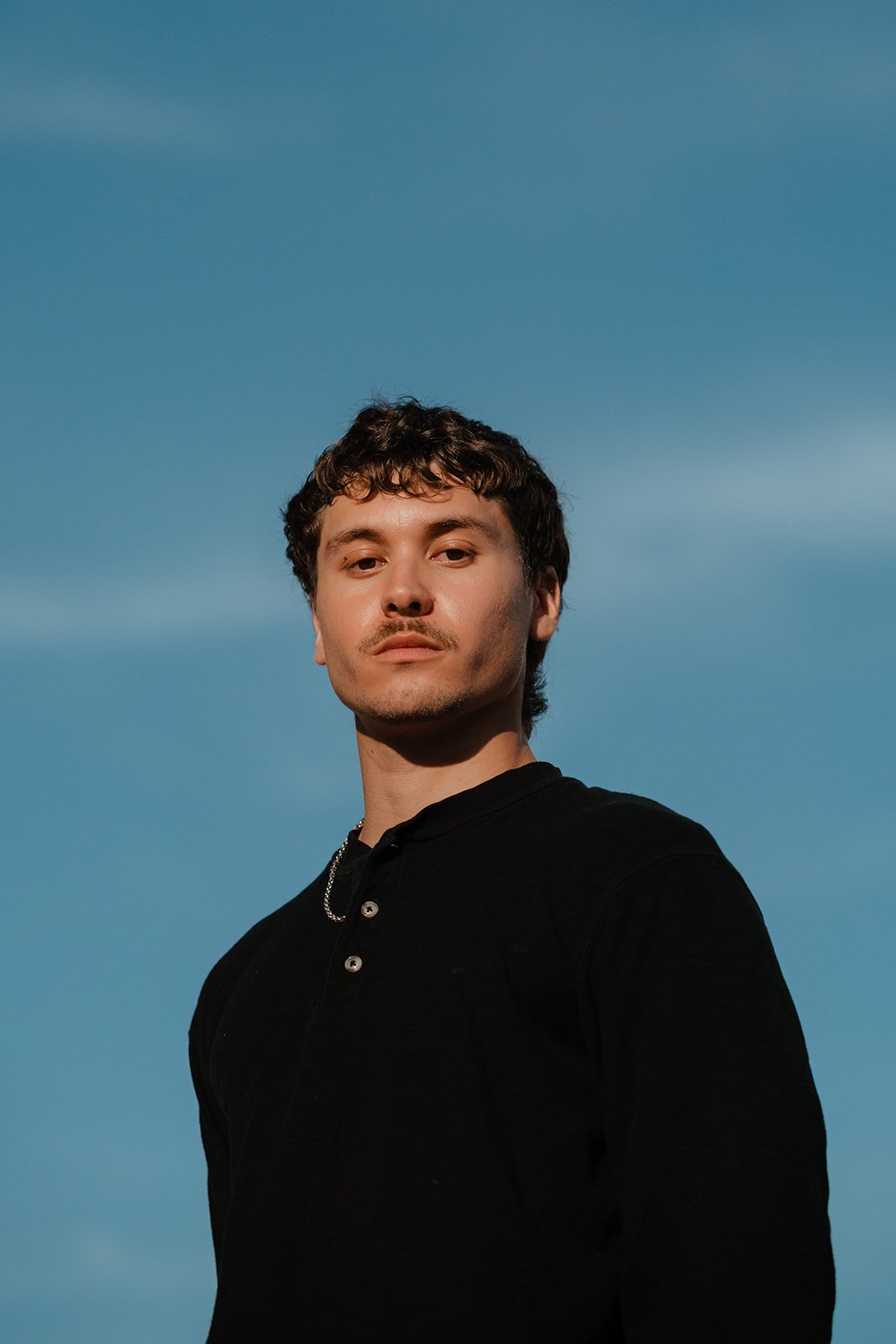
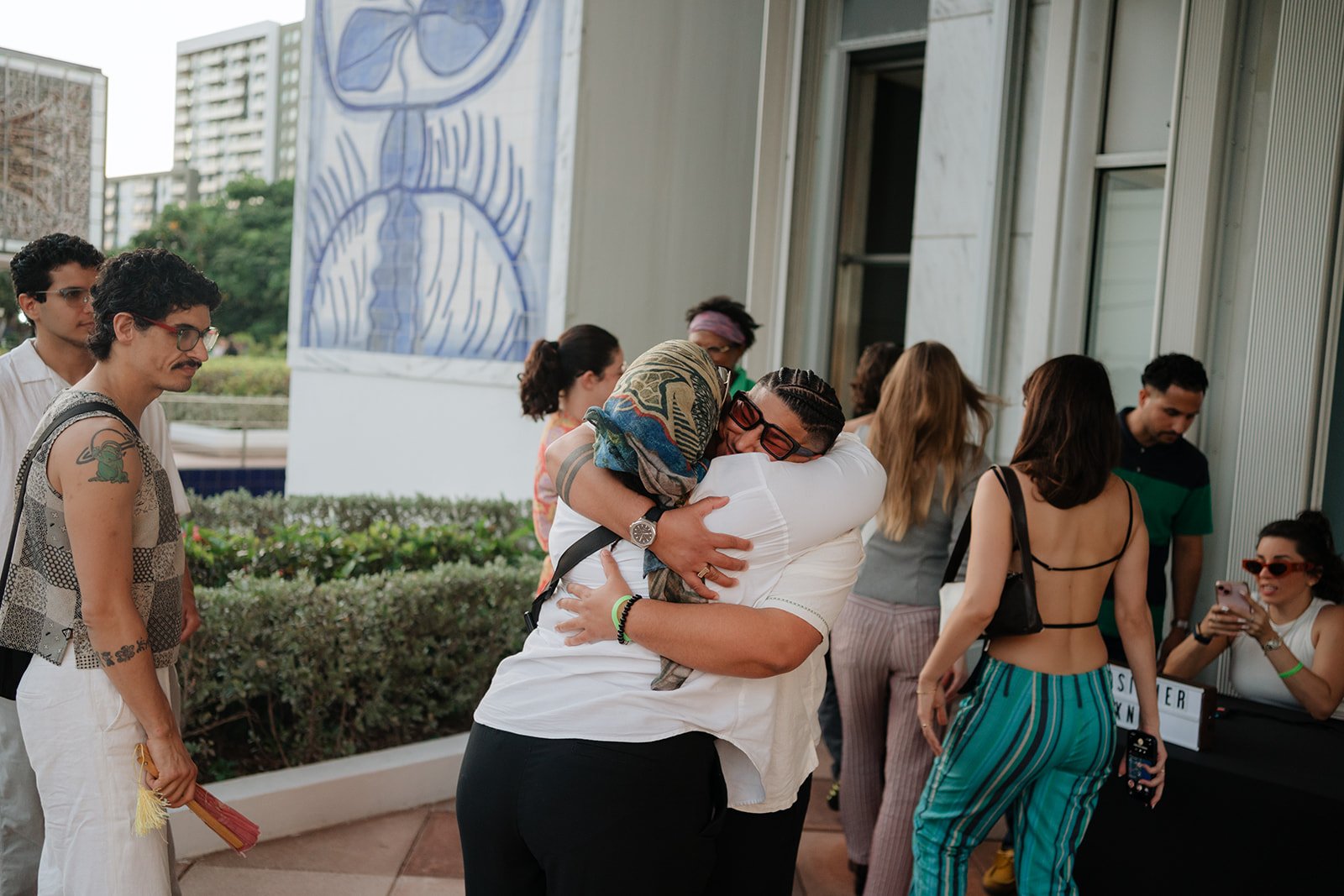
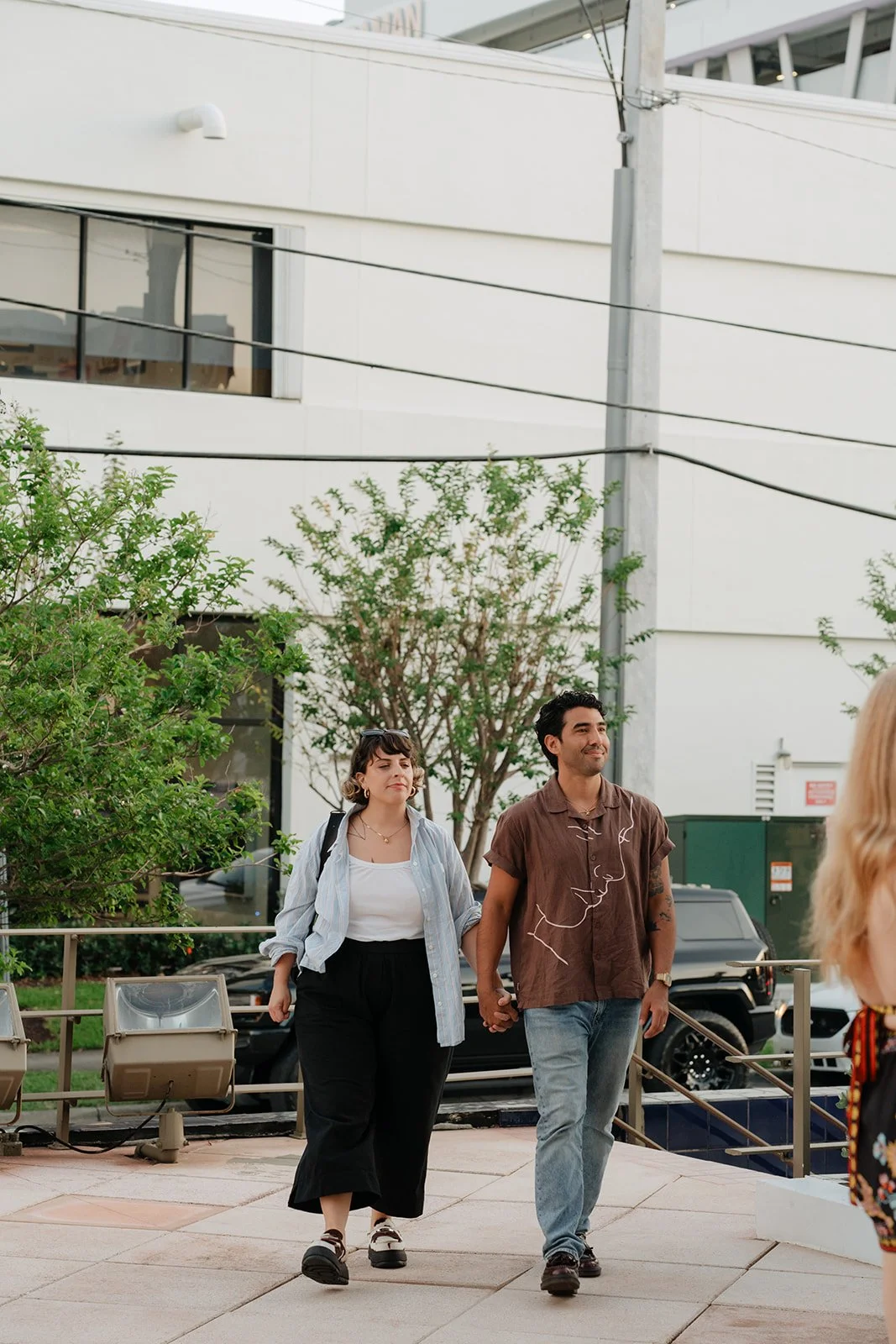
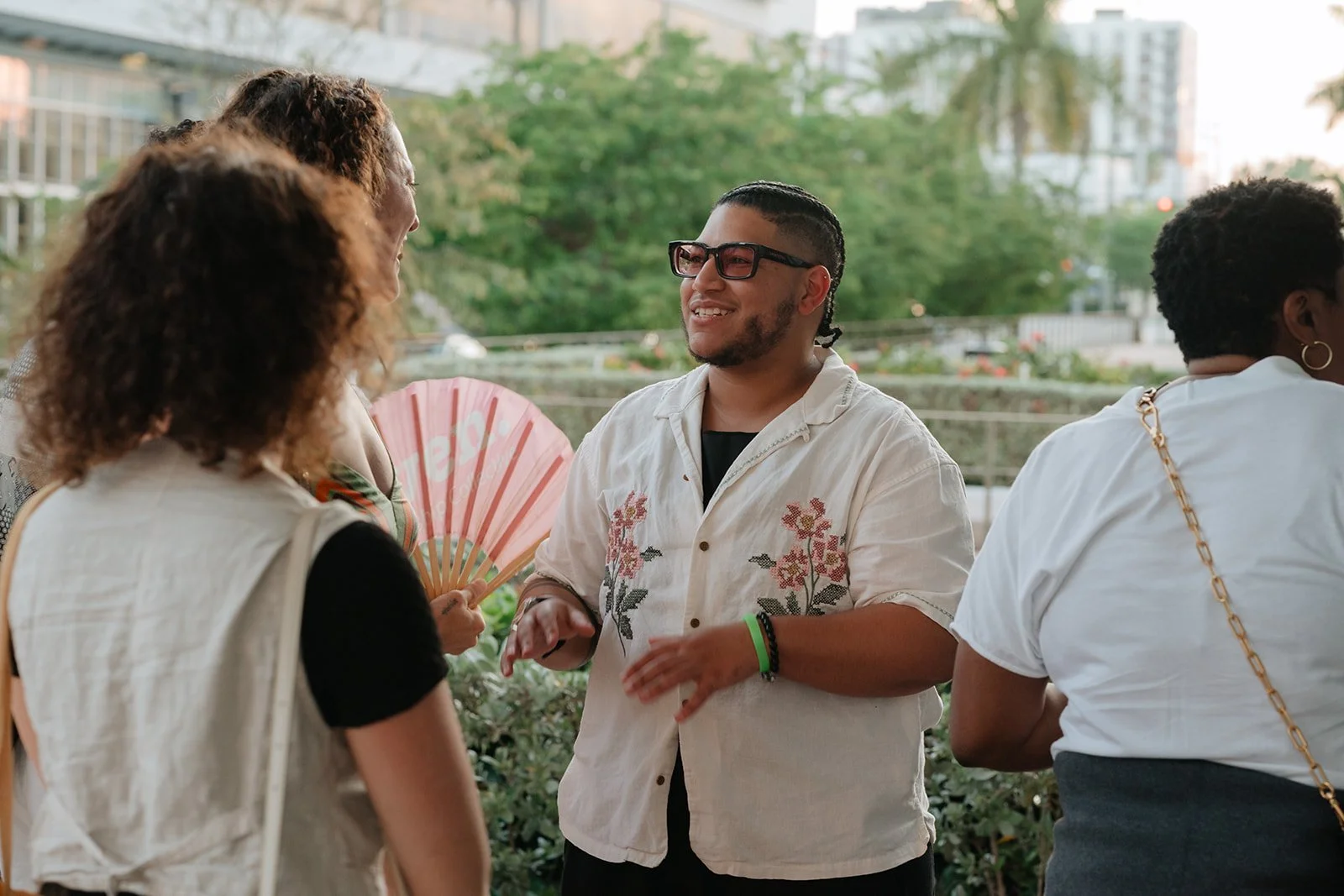
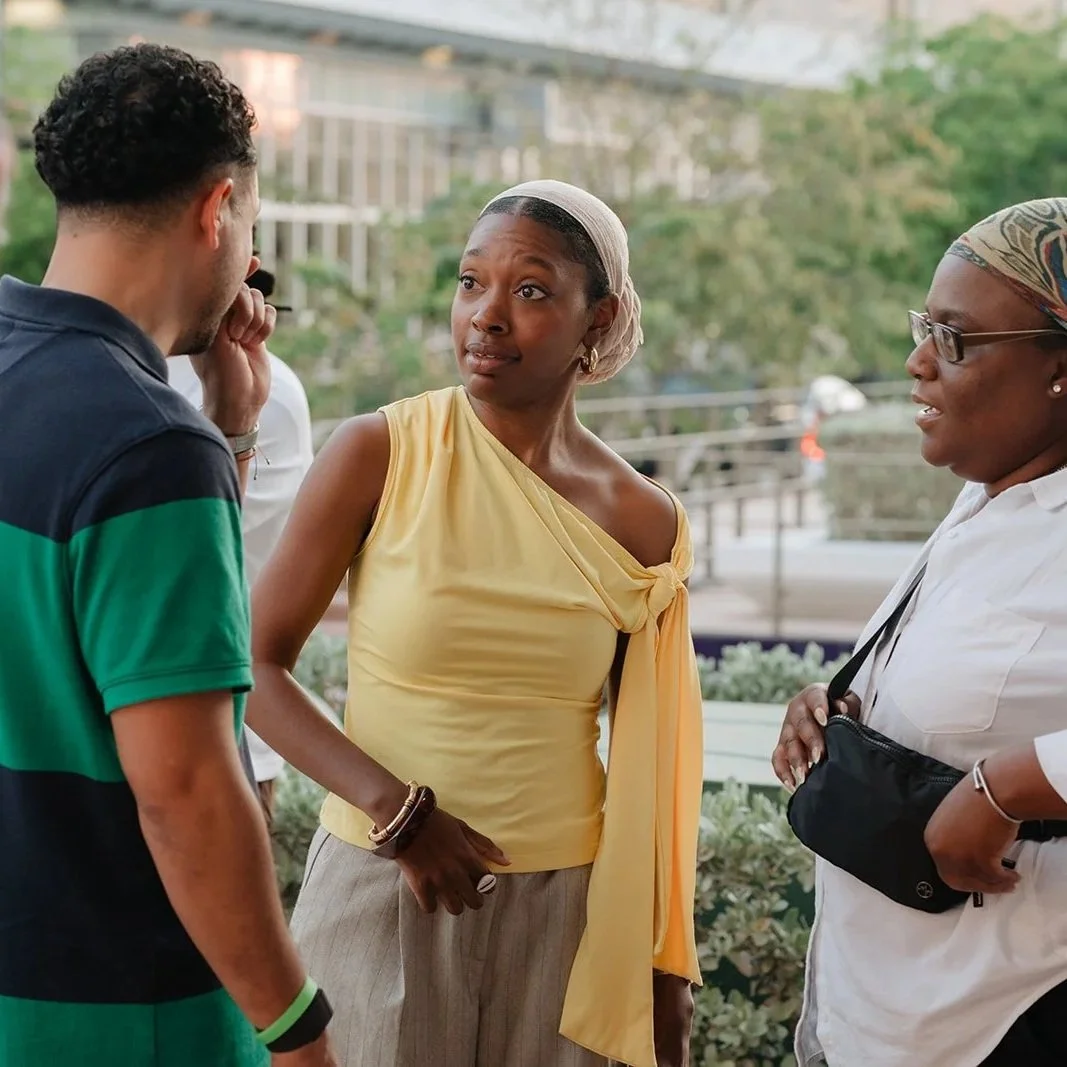
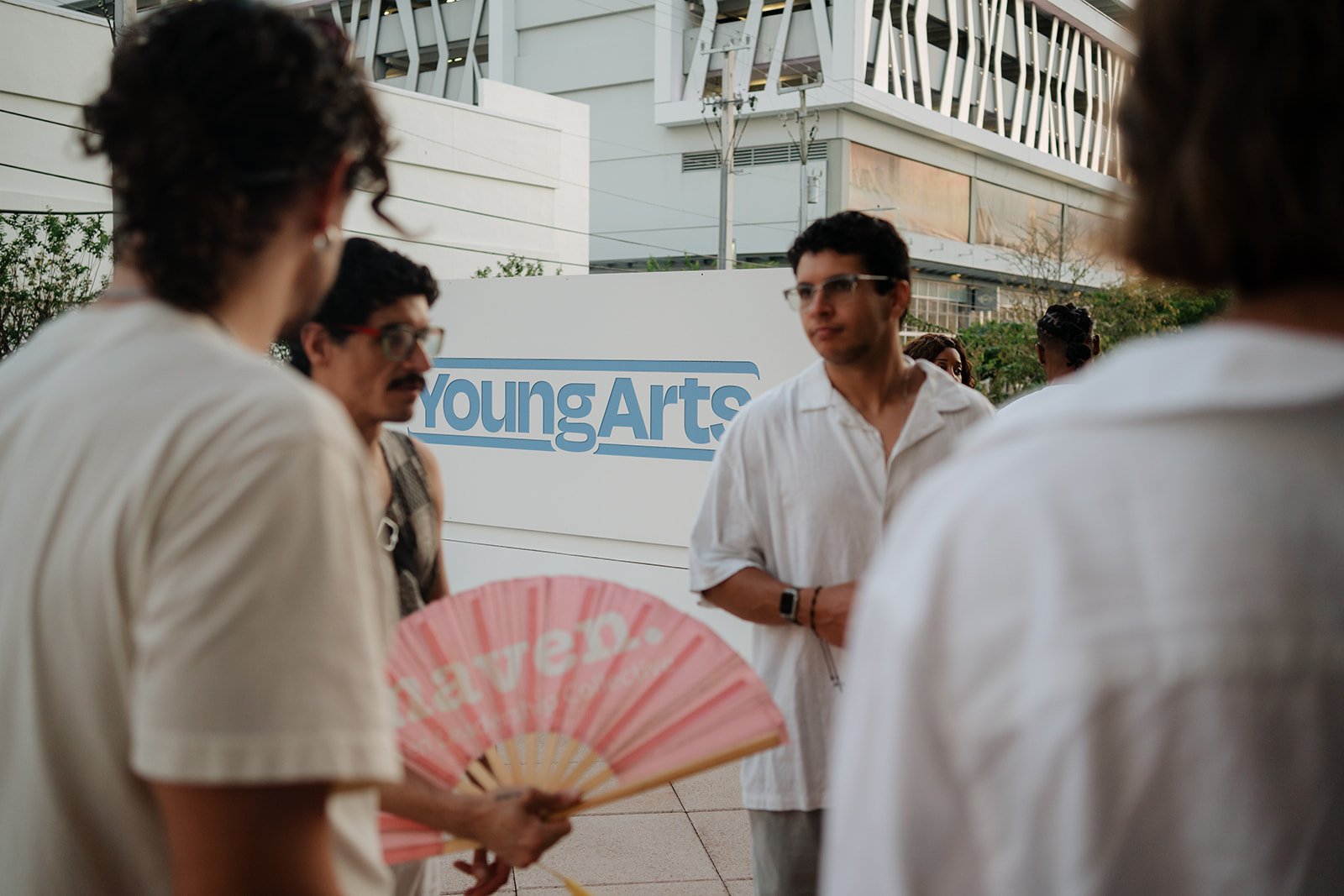
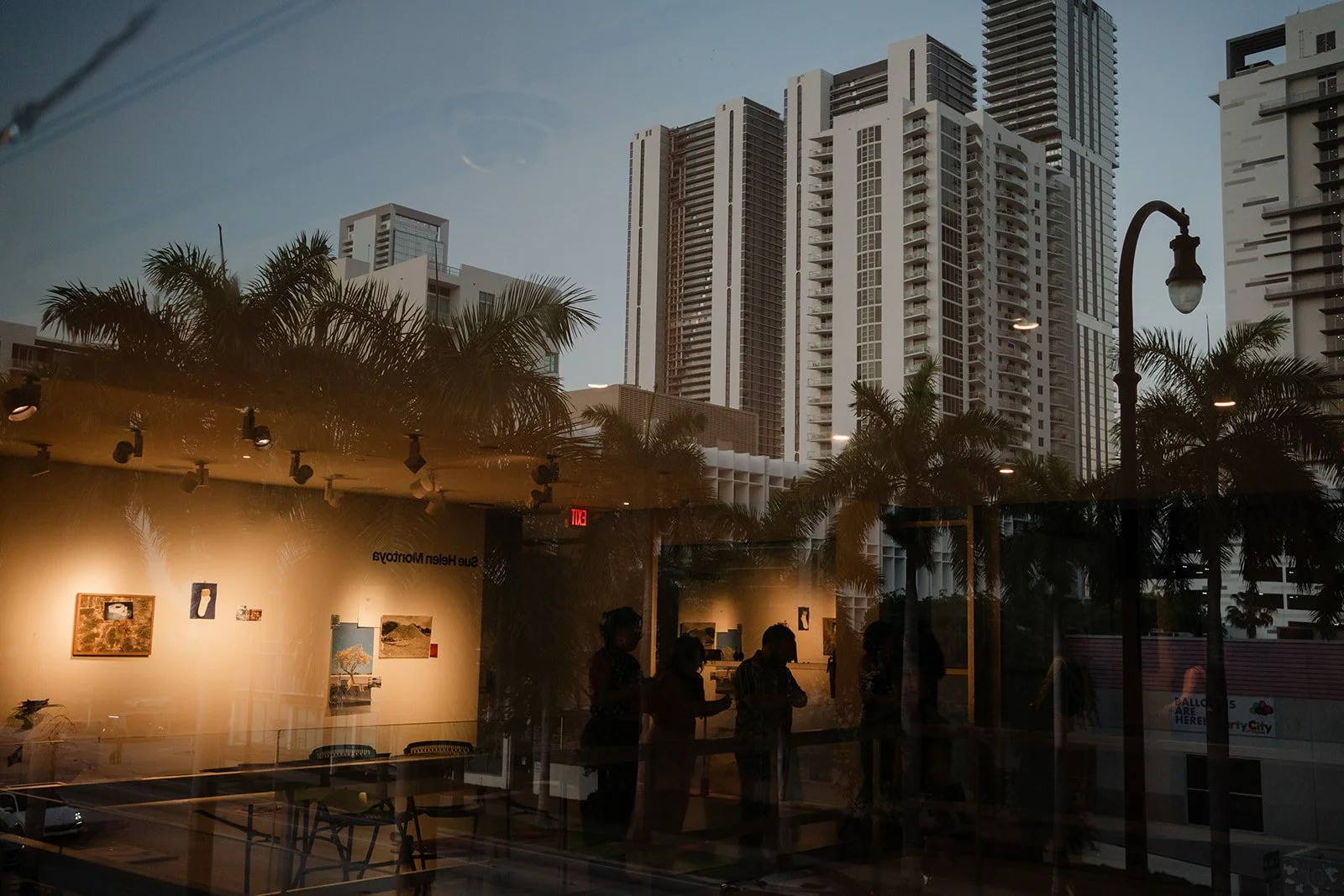
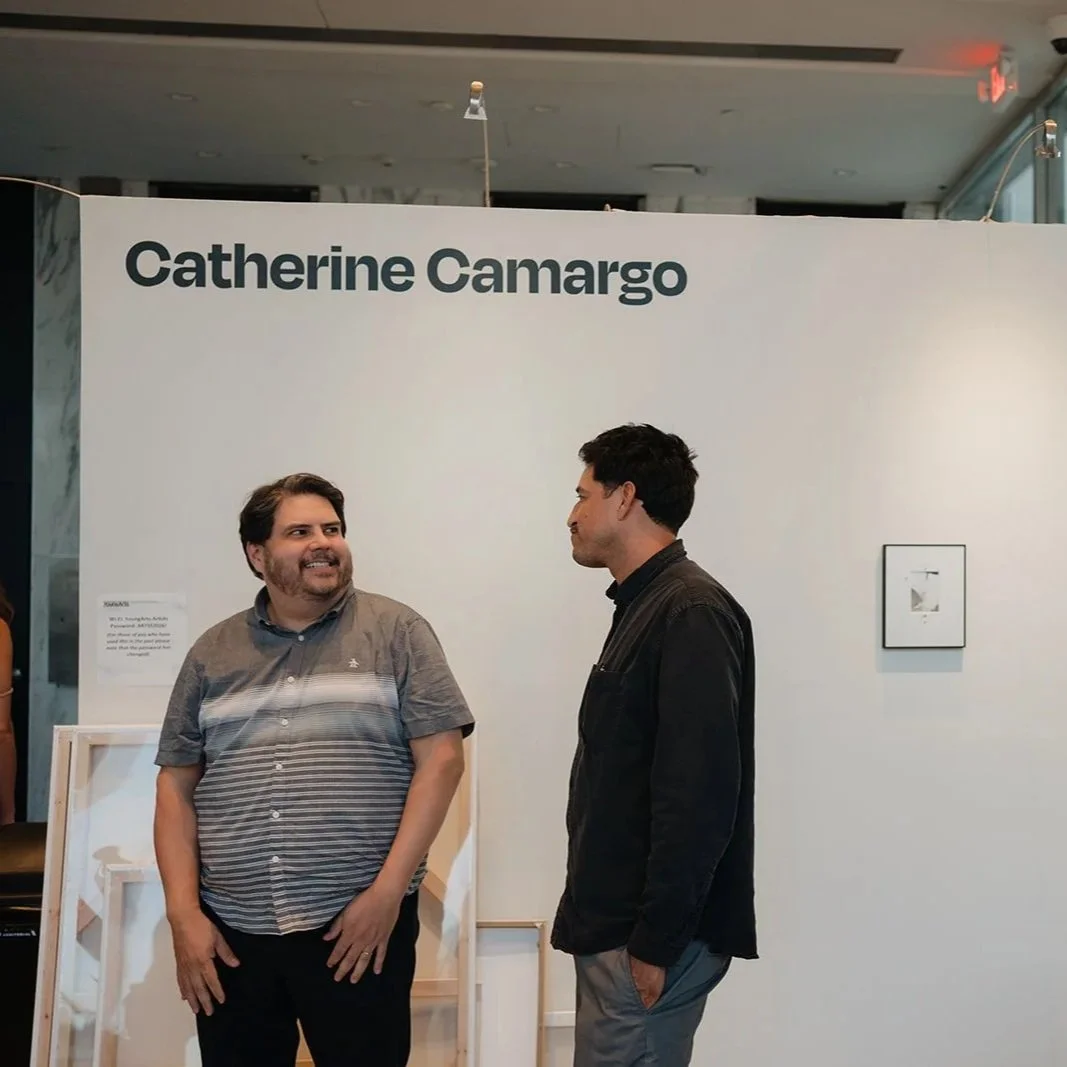
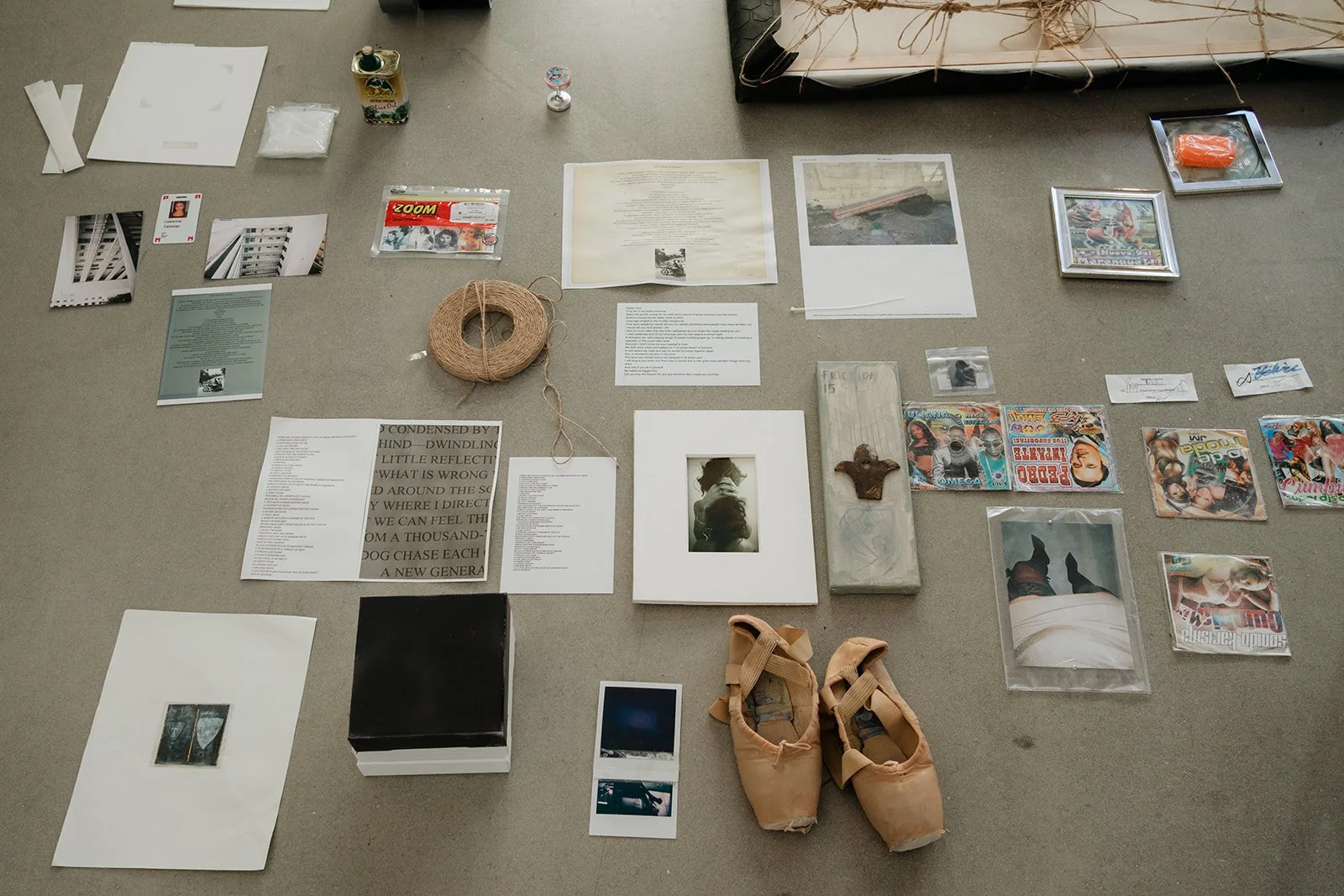
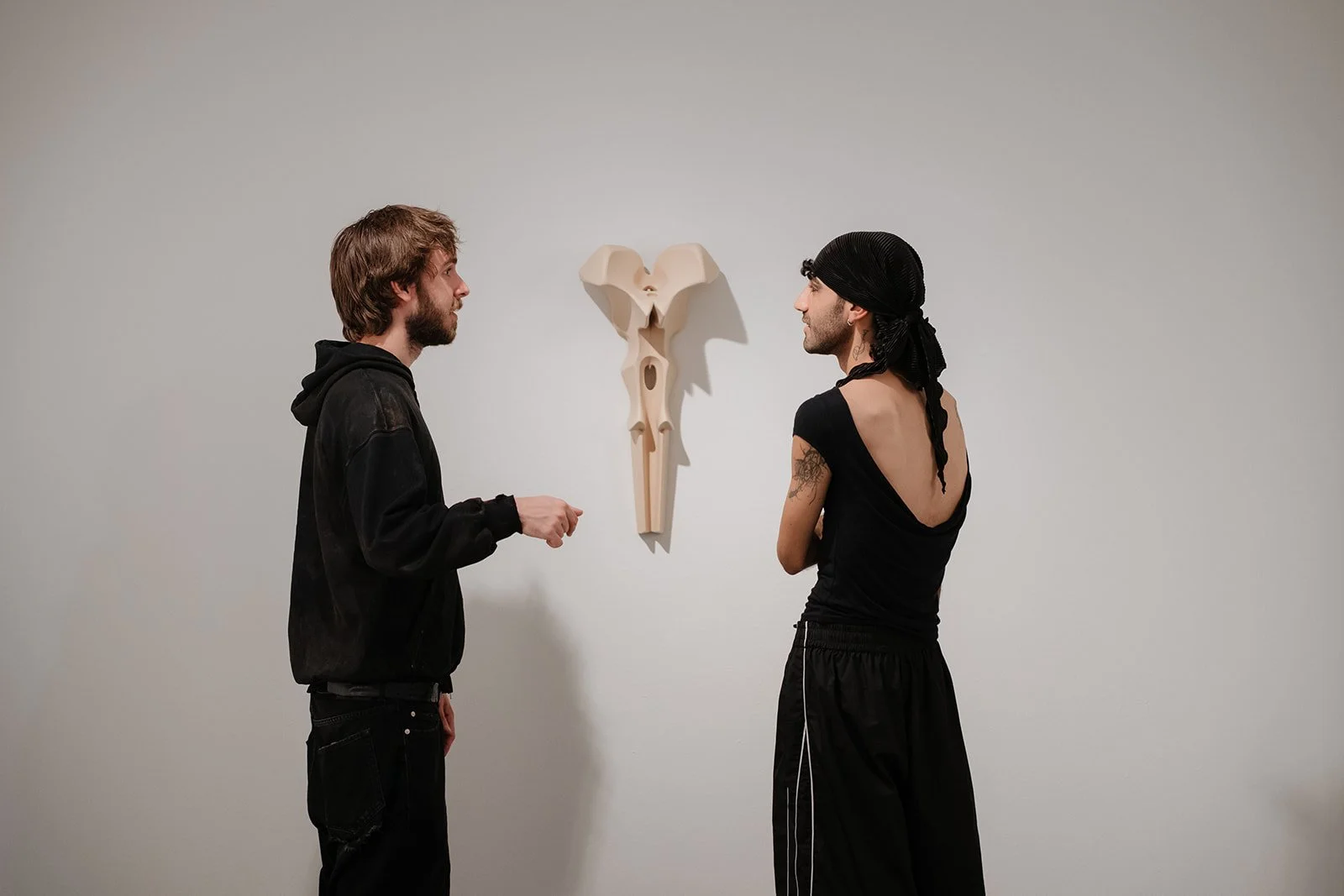
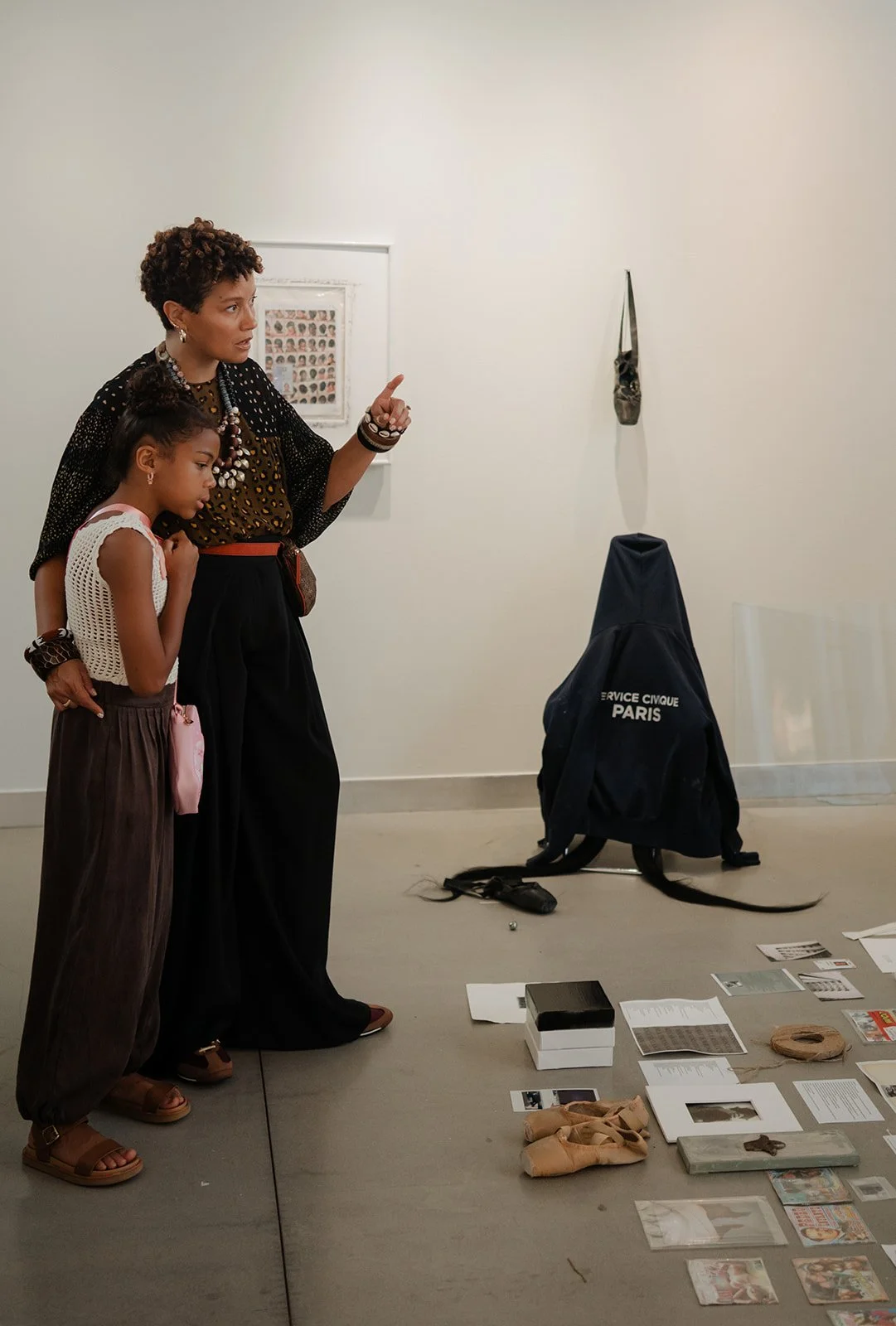
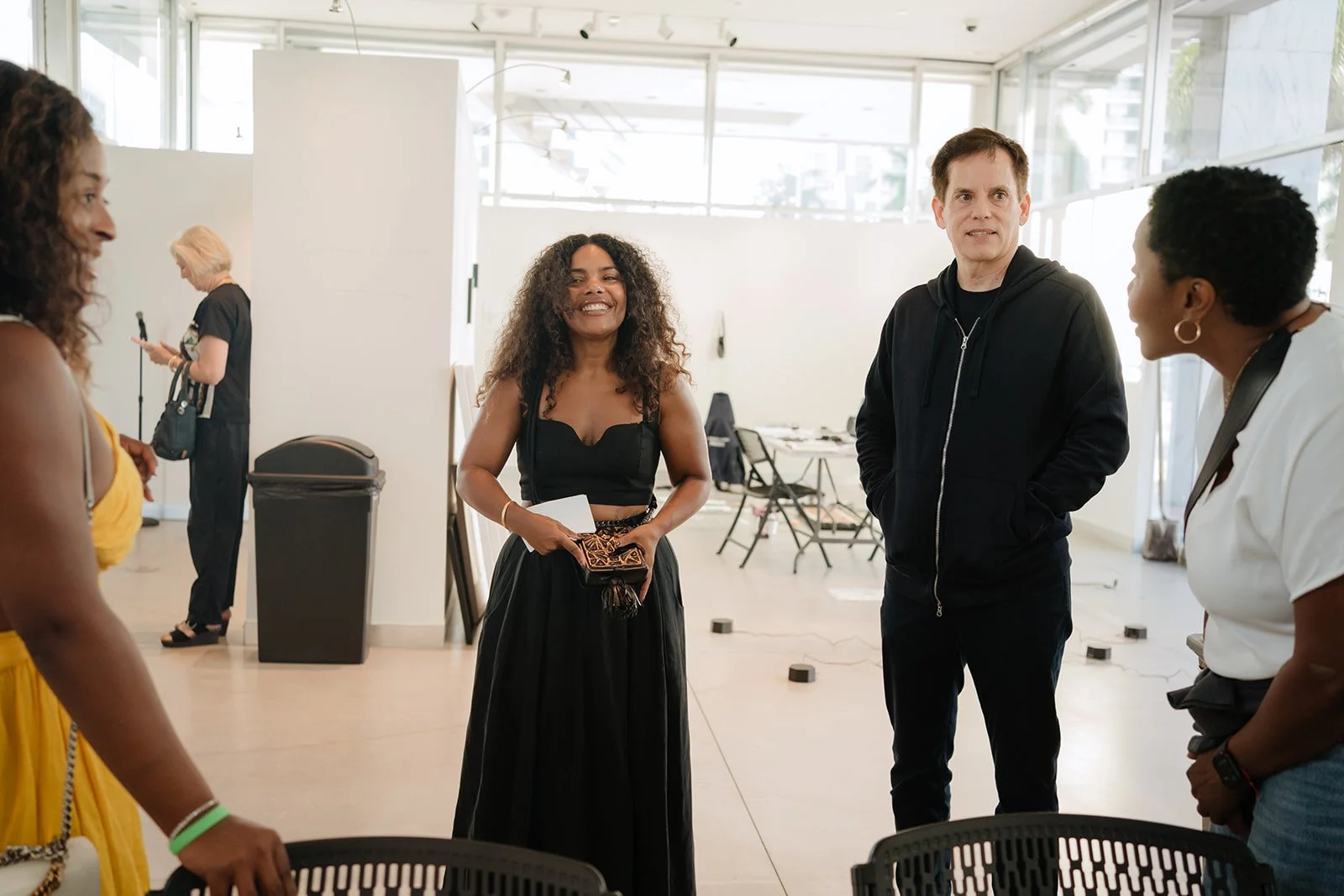
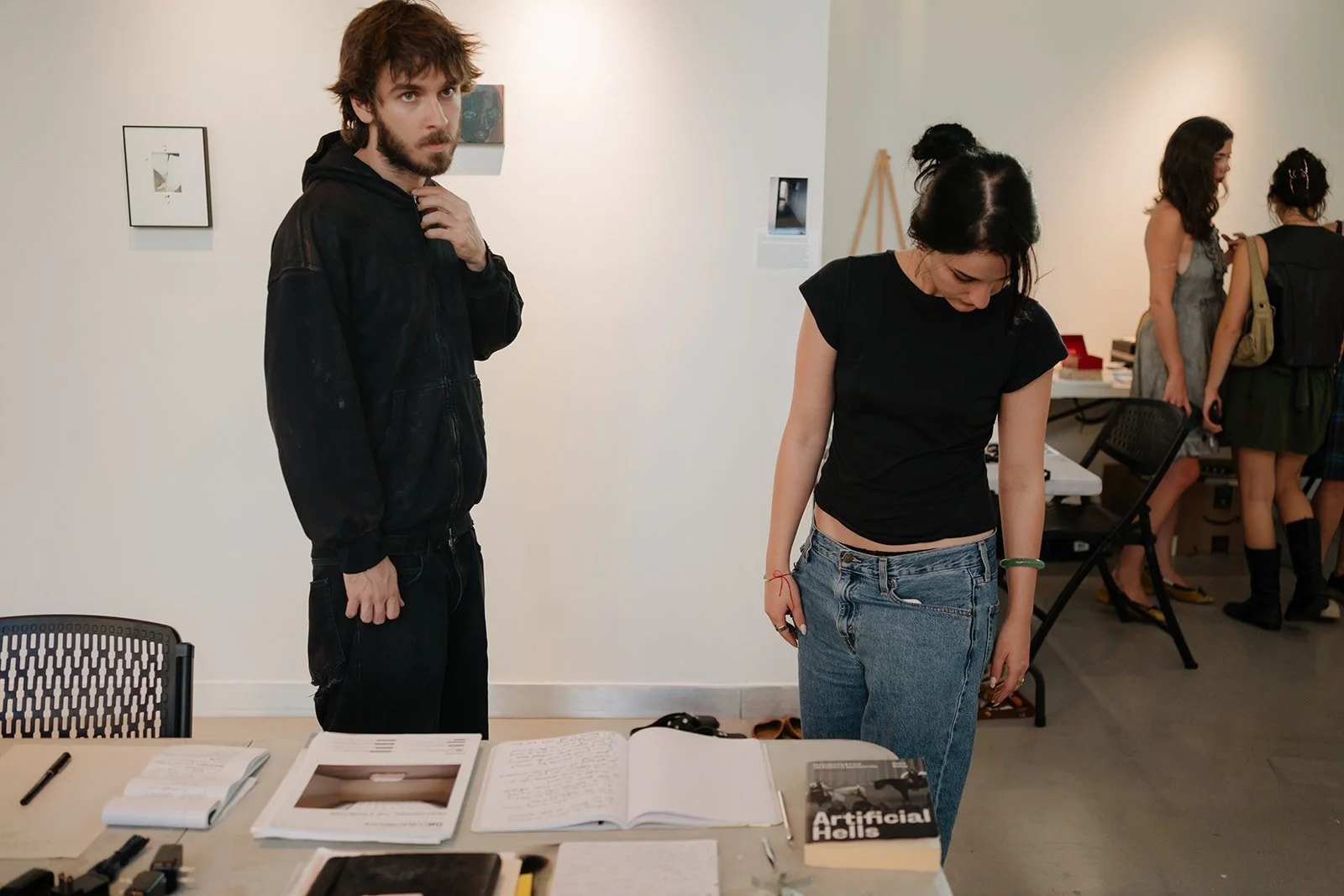
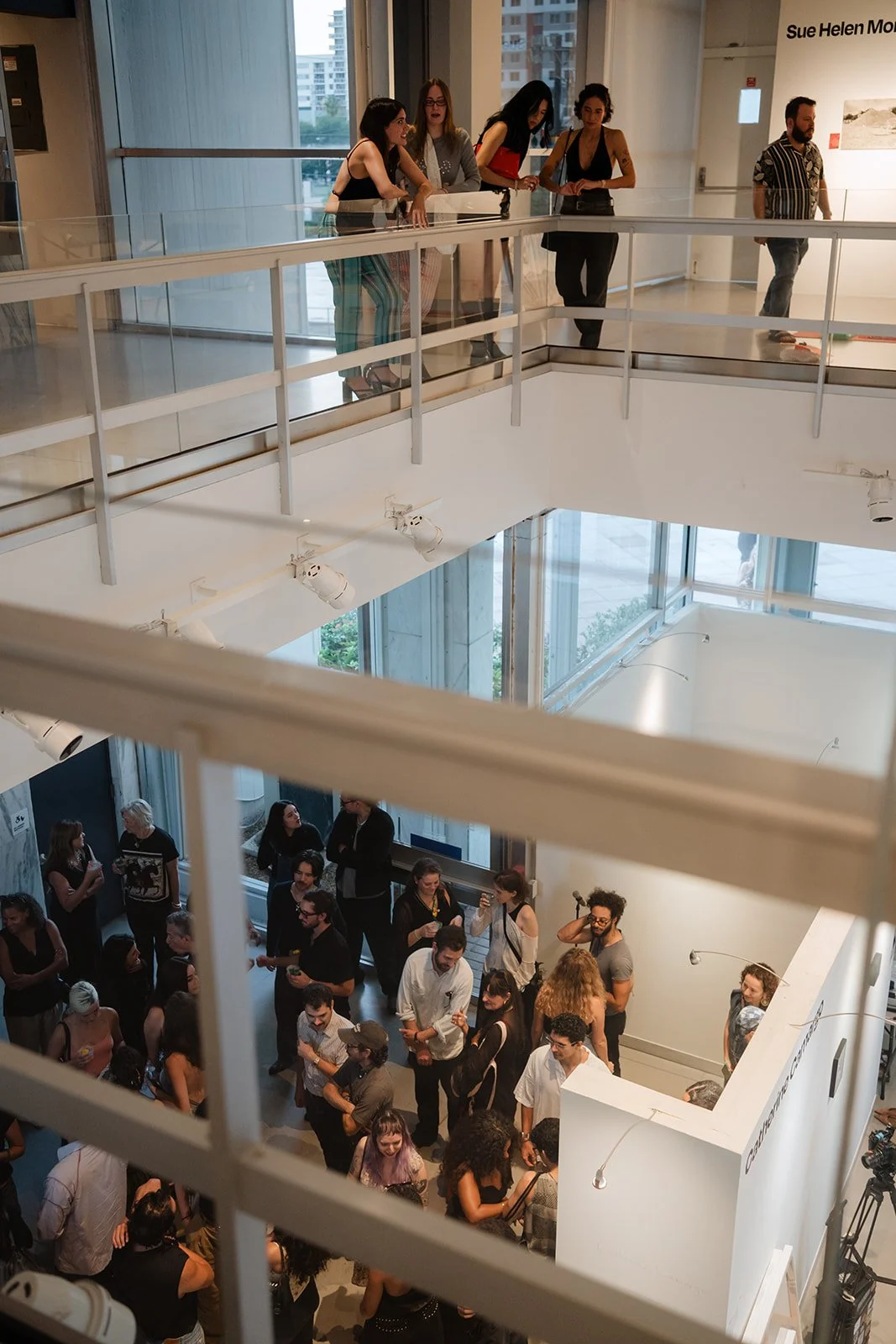
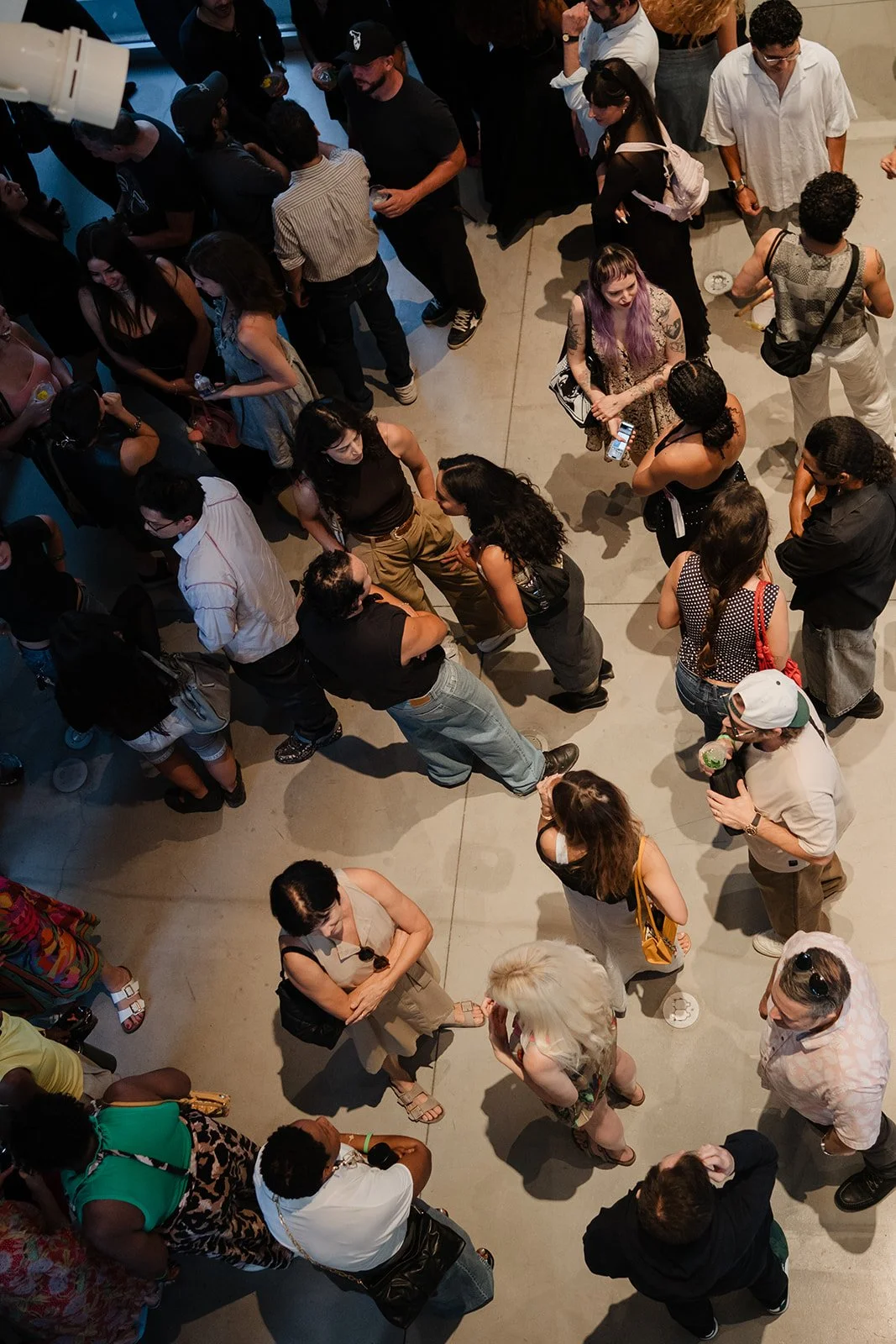
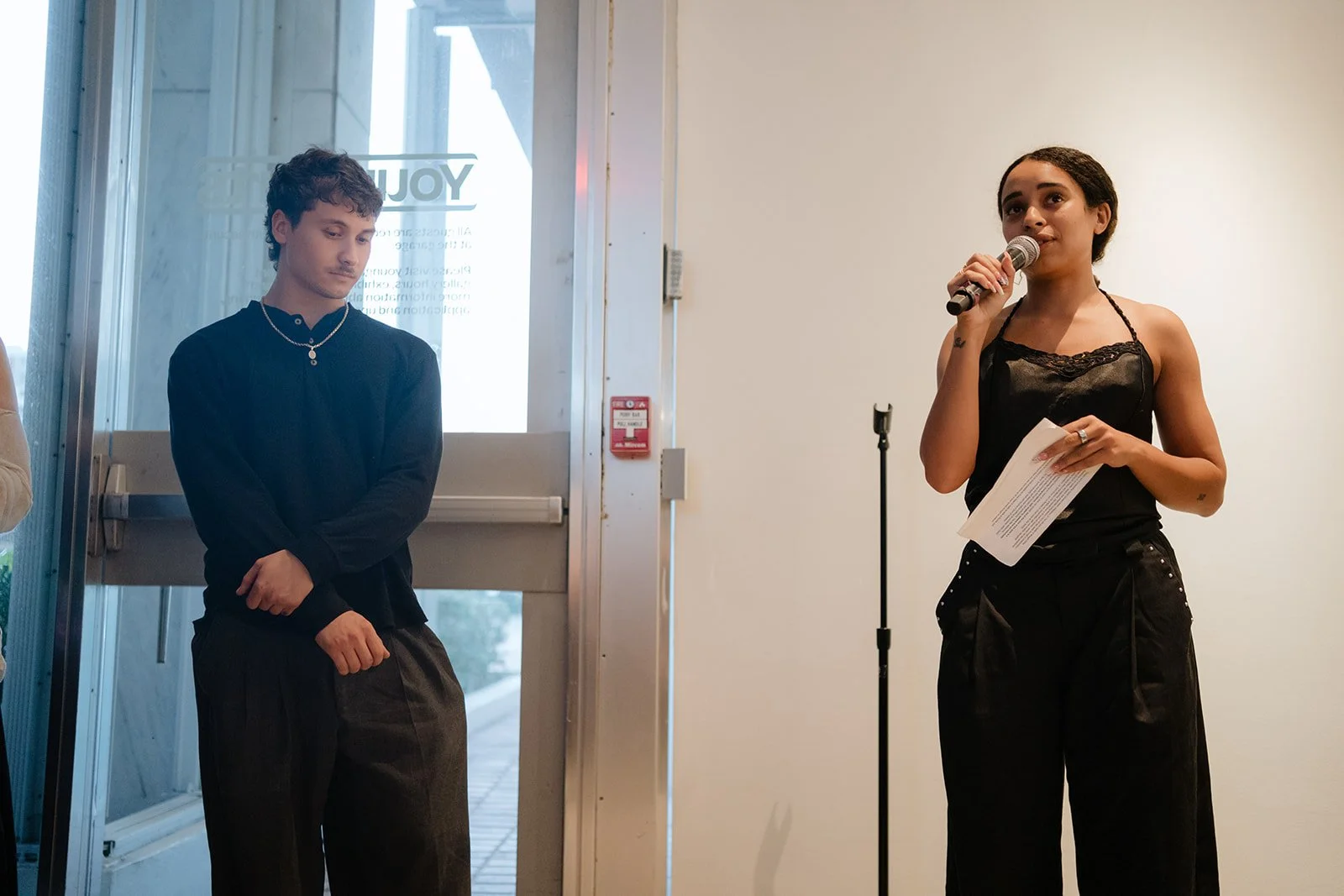
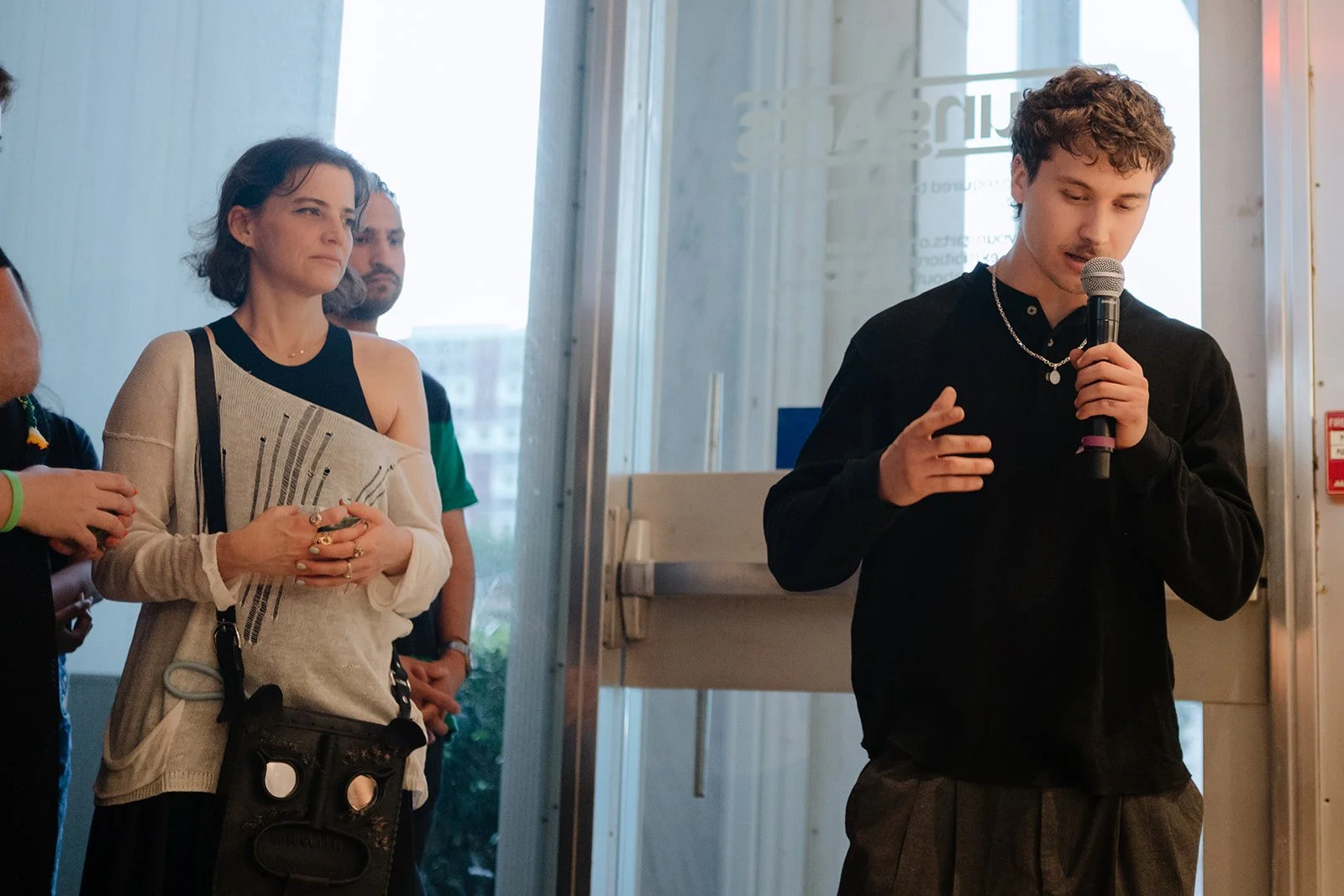
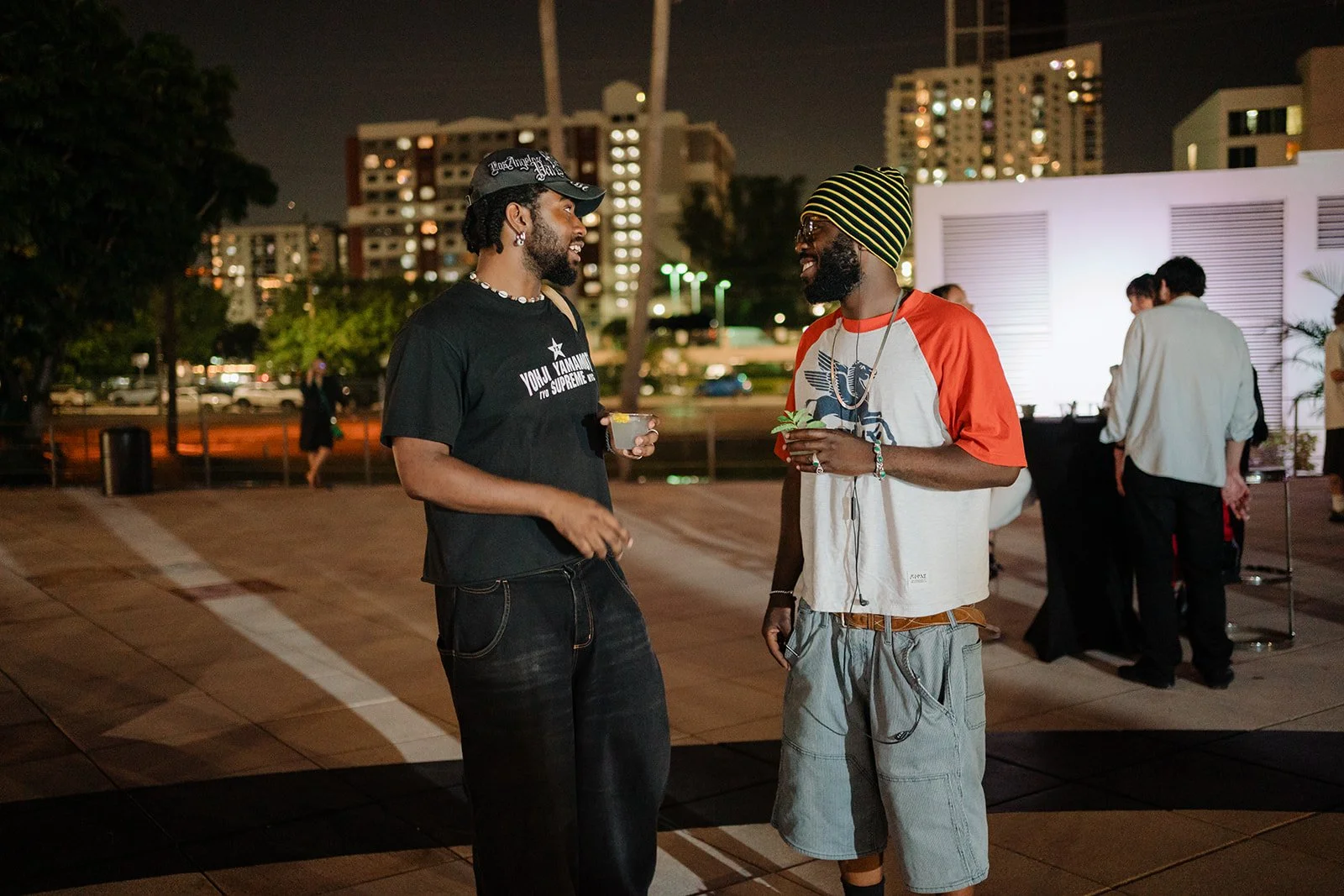
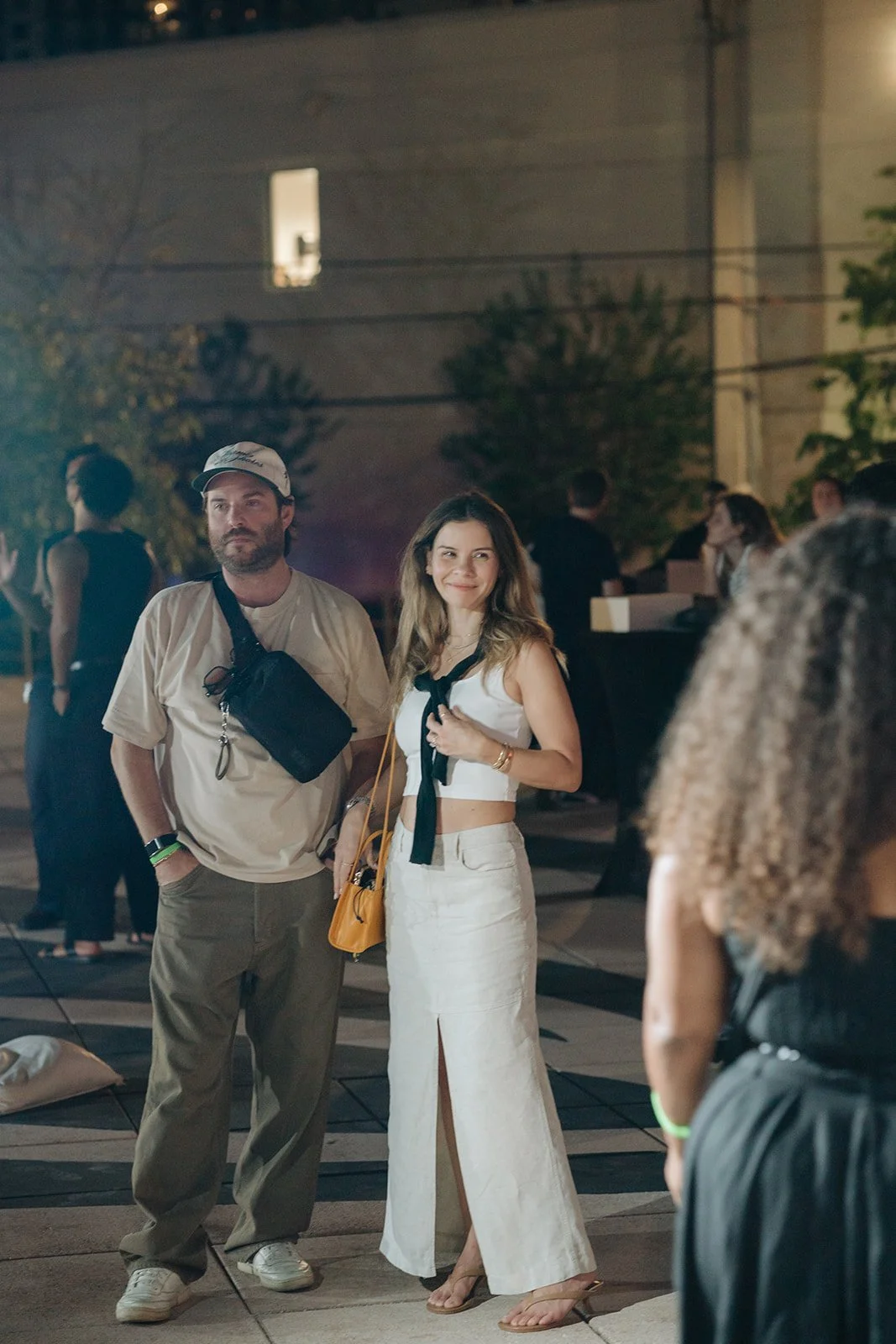
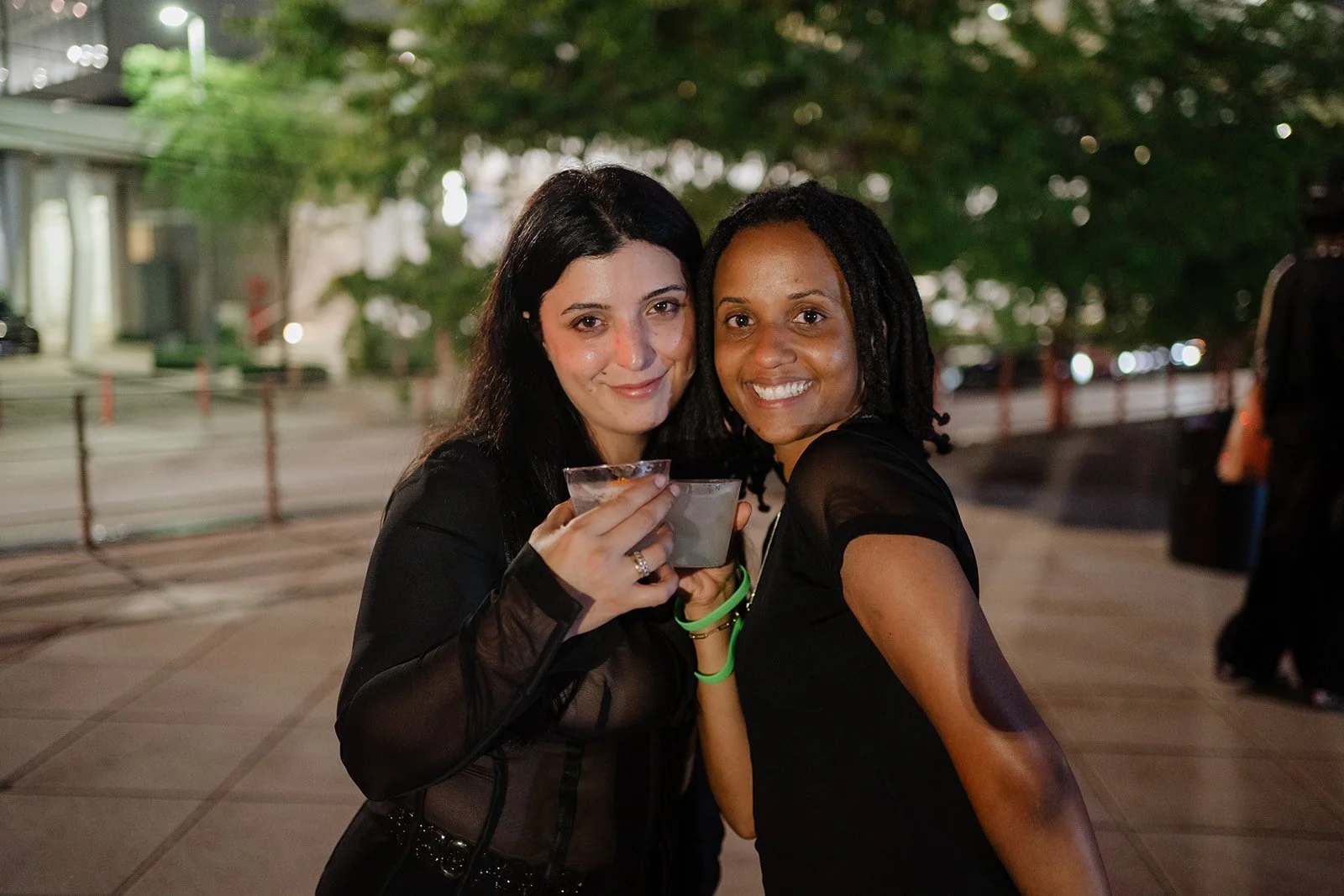
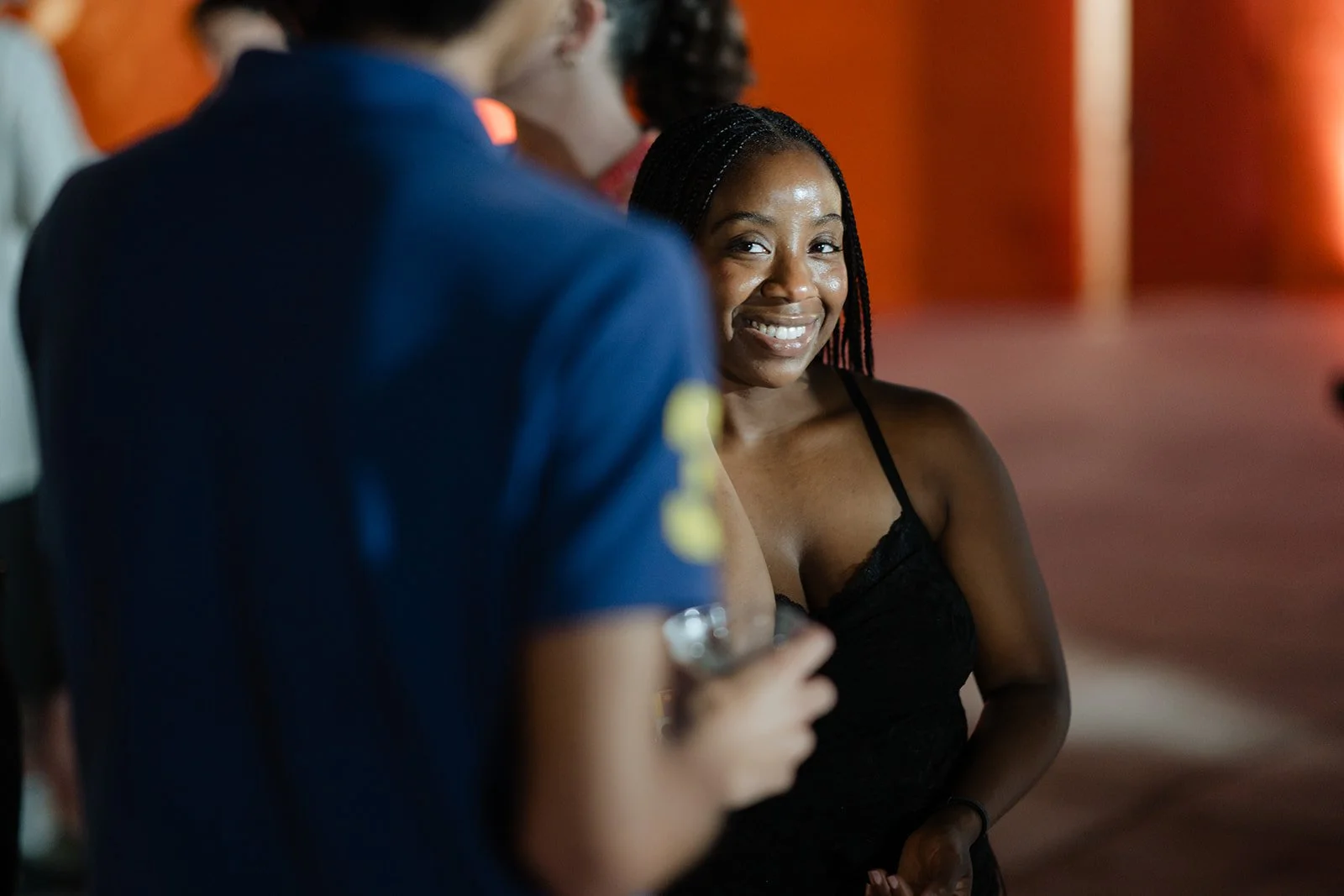
On May 8, we gathered at YoungArts for the artwork unveiling of commissioned artist David Correa. The evening began in the Frank Gehry-designed gallery, where YoungArts artists-in-residence Catherine Camargo, Fharid LaTorre, Sue Helen Montoya, and Destiny Moore shared their process, ideas, and plans-in-progress in temporary studios.
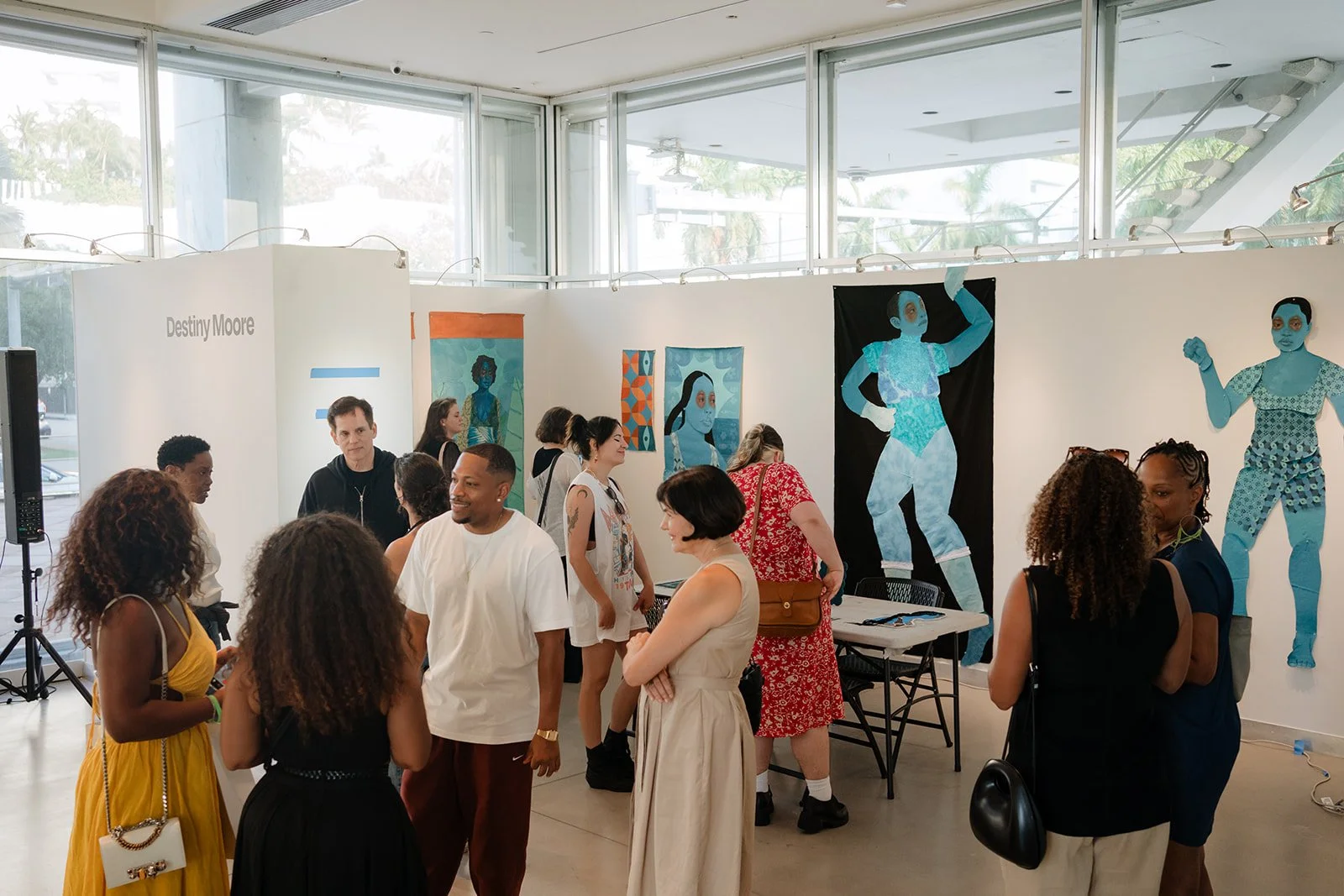
Correa, who is also a YoungArts alum, is represented by Camargo and her gallery QUEUE. Adding even more layers of interconnection and collaboration, both attended New World School of the Arts (NWSA) and are currently cultivating their creative and curatorial practices at Tunnel Projects—the celebrated artist-led program in Little Havana.
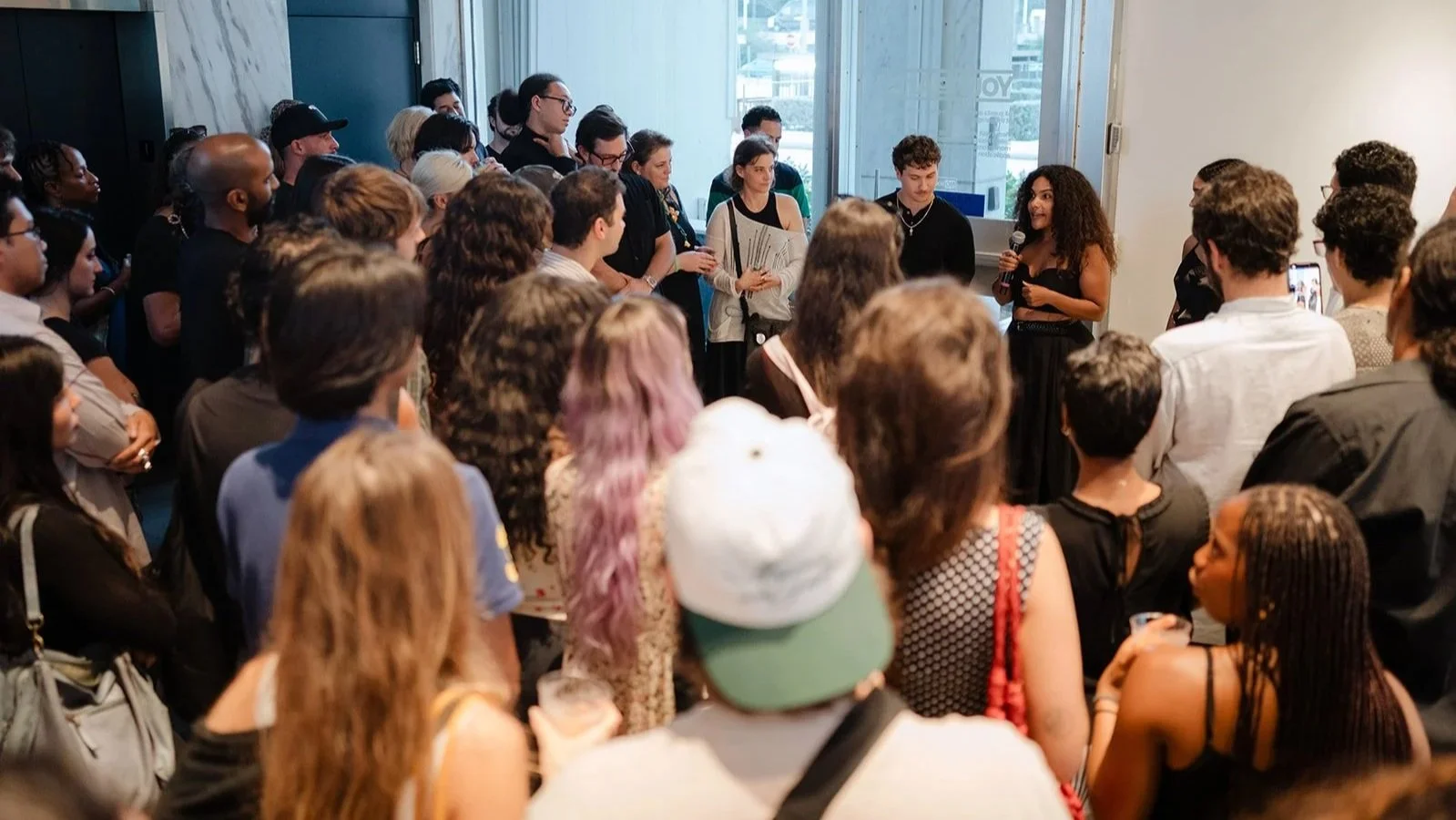
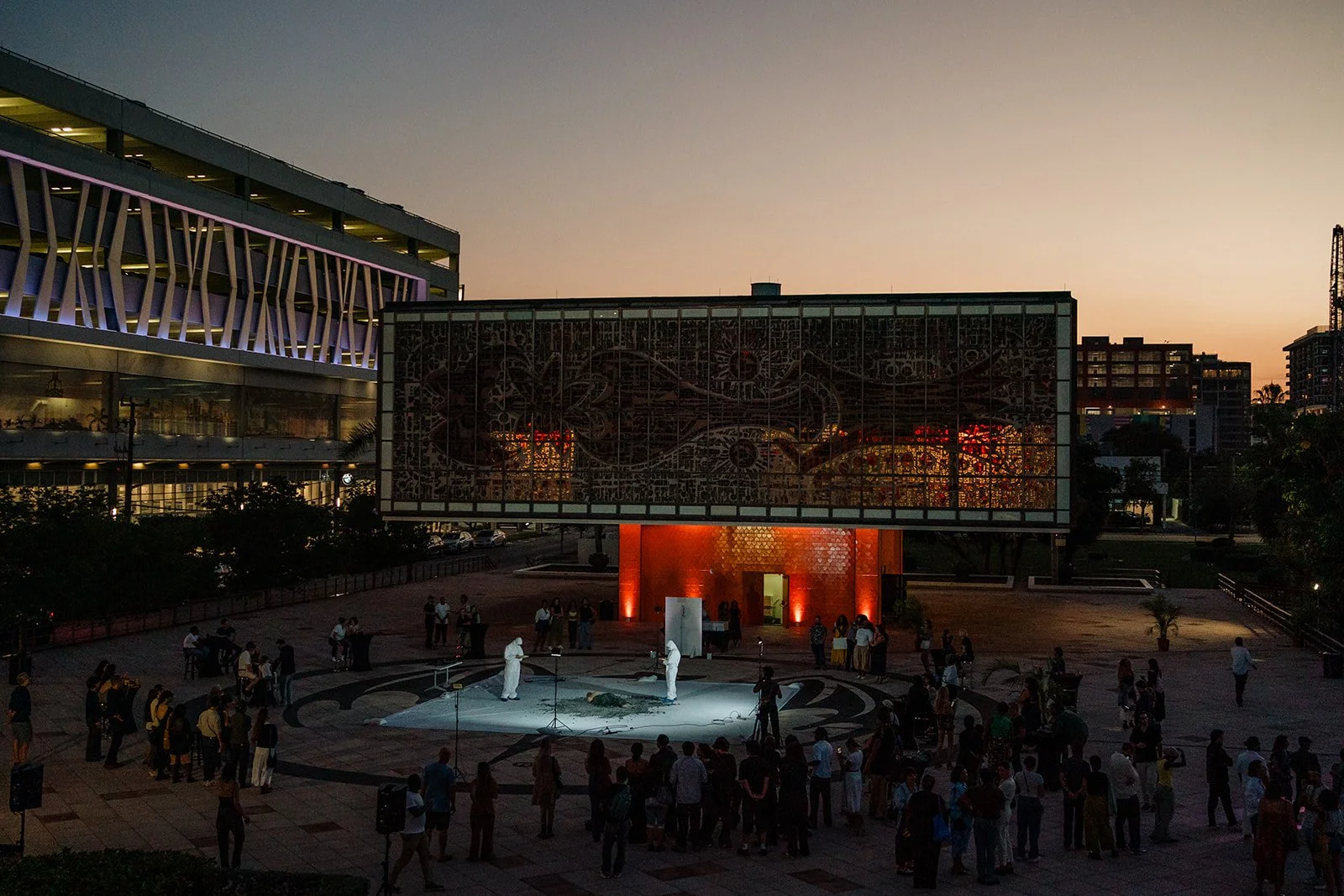
In a circle made broader by our many communities, Correa invited us to reframe our relationship with collecting through our shared experience of The Life and Death of Bluegill Prime—a durational play under the stars on the YoungArts Plaza.
Describing the history of Bluegill Prime—a 1962 U.S. nuclear test attempt that ended in disaster, destroying its launch pad and contaminating a Pacific island with radioactive debris—he reimagines this bomb as a martyr protagonist: a weapon whose malfunction is interpreted as an act of protest; a man-made god that self-destructs before fulfilling its intended purpose.
Embodying rebellion through non-functionality, what happens when we reject our assigned roles?
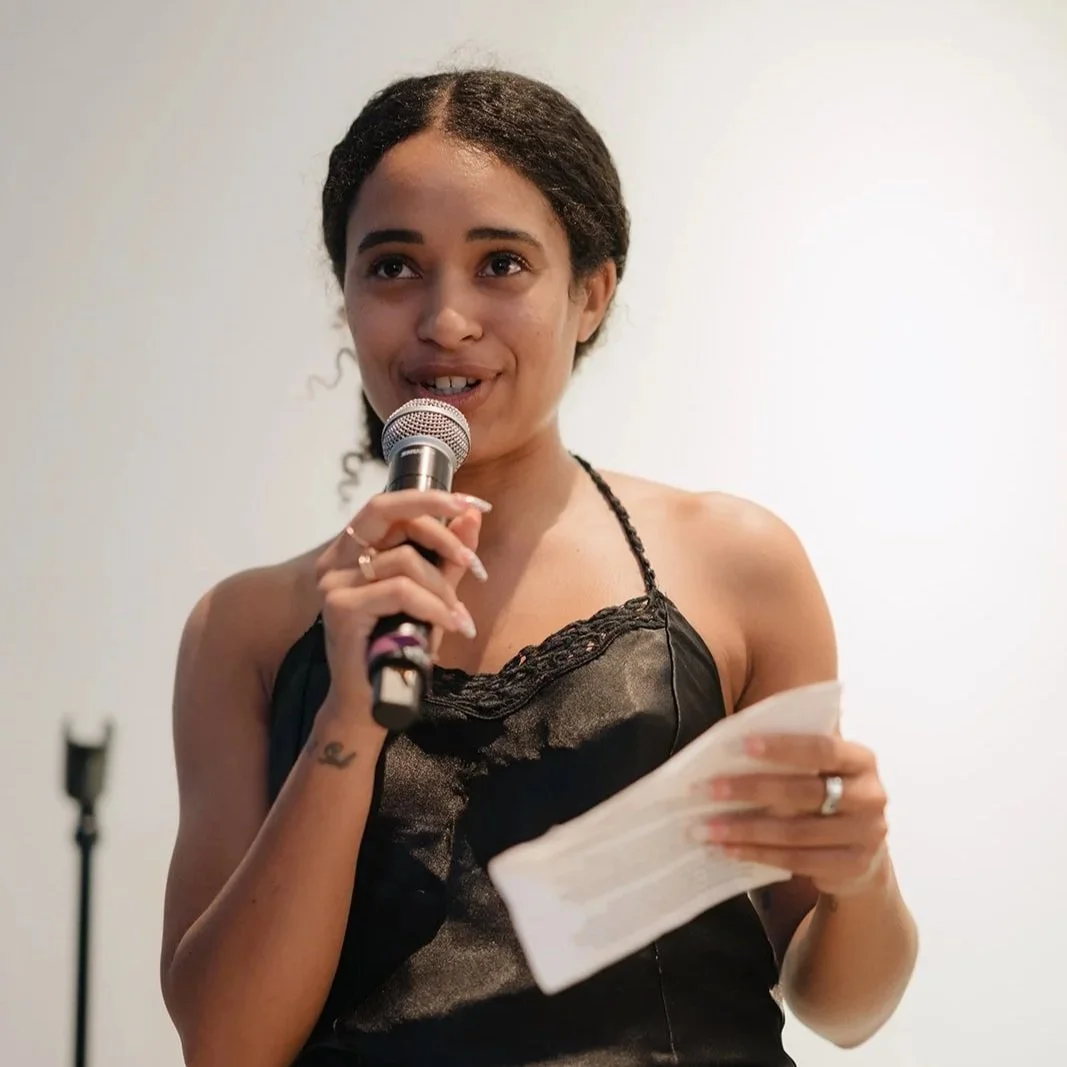
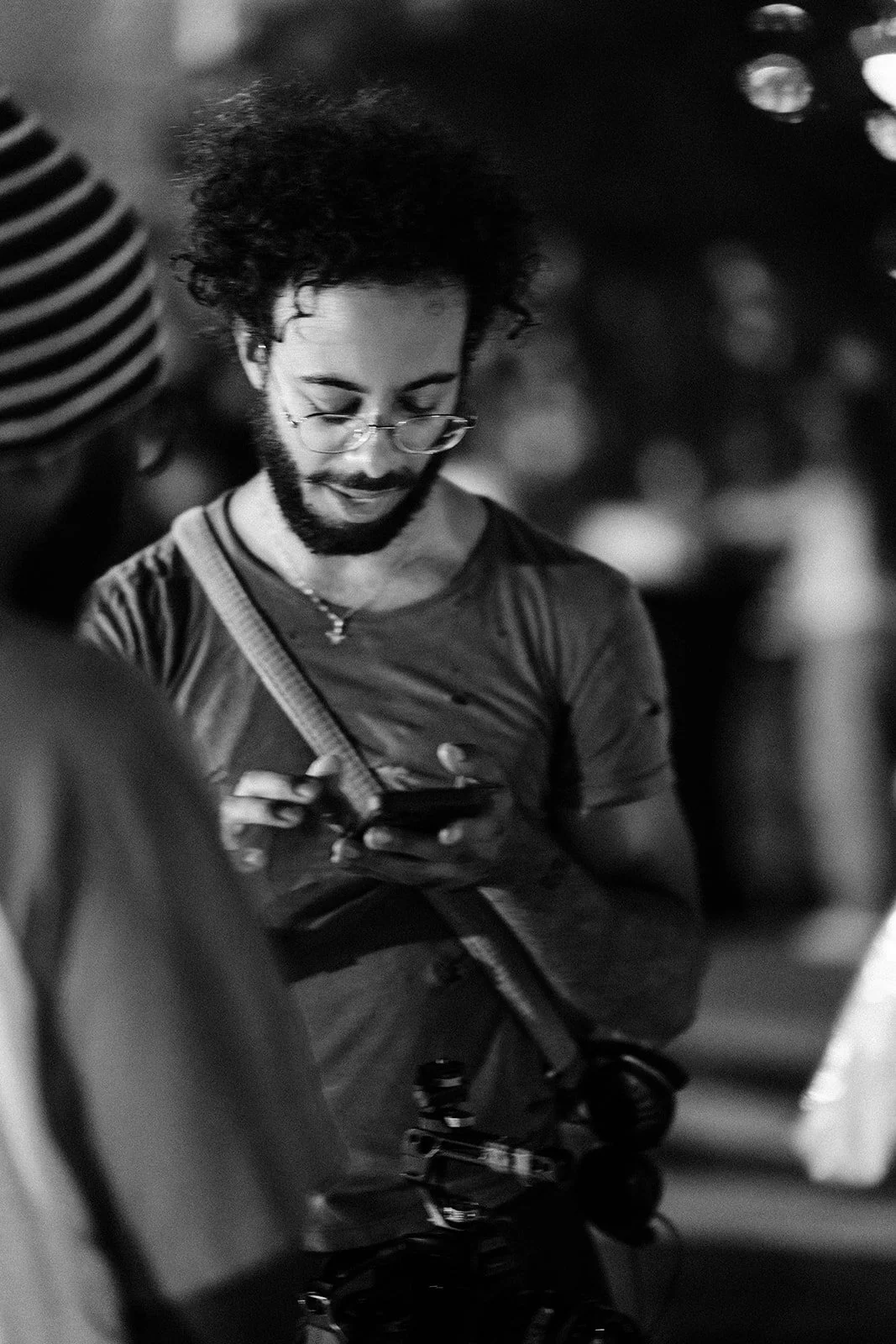
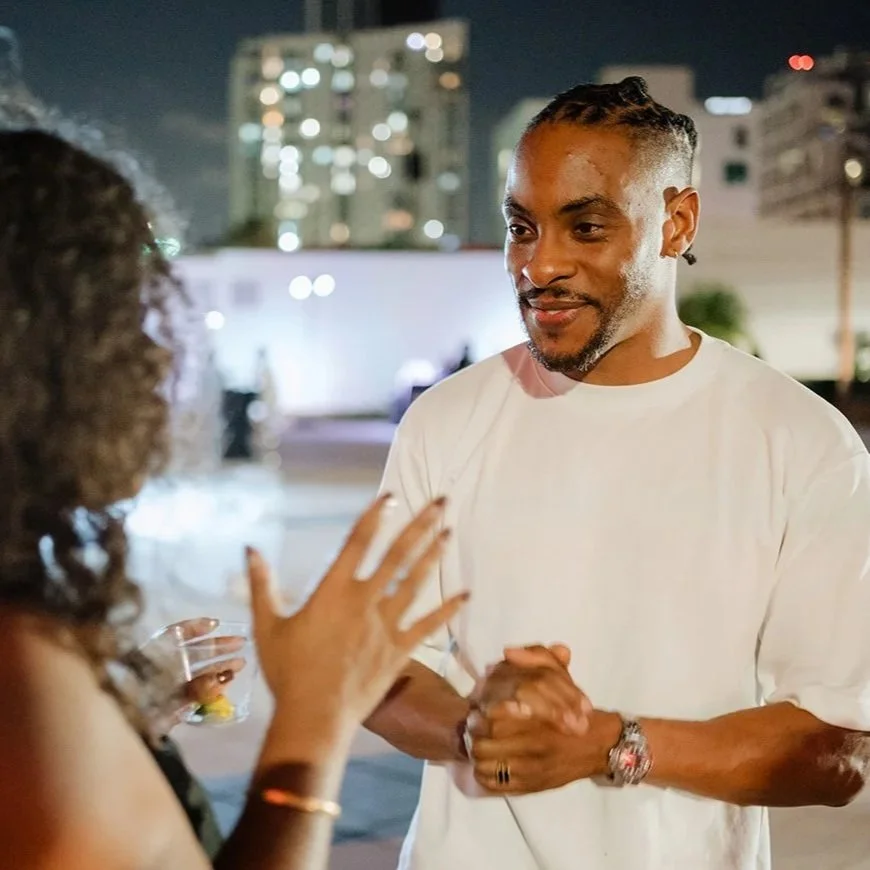
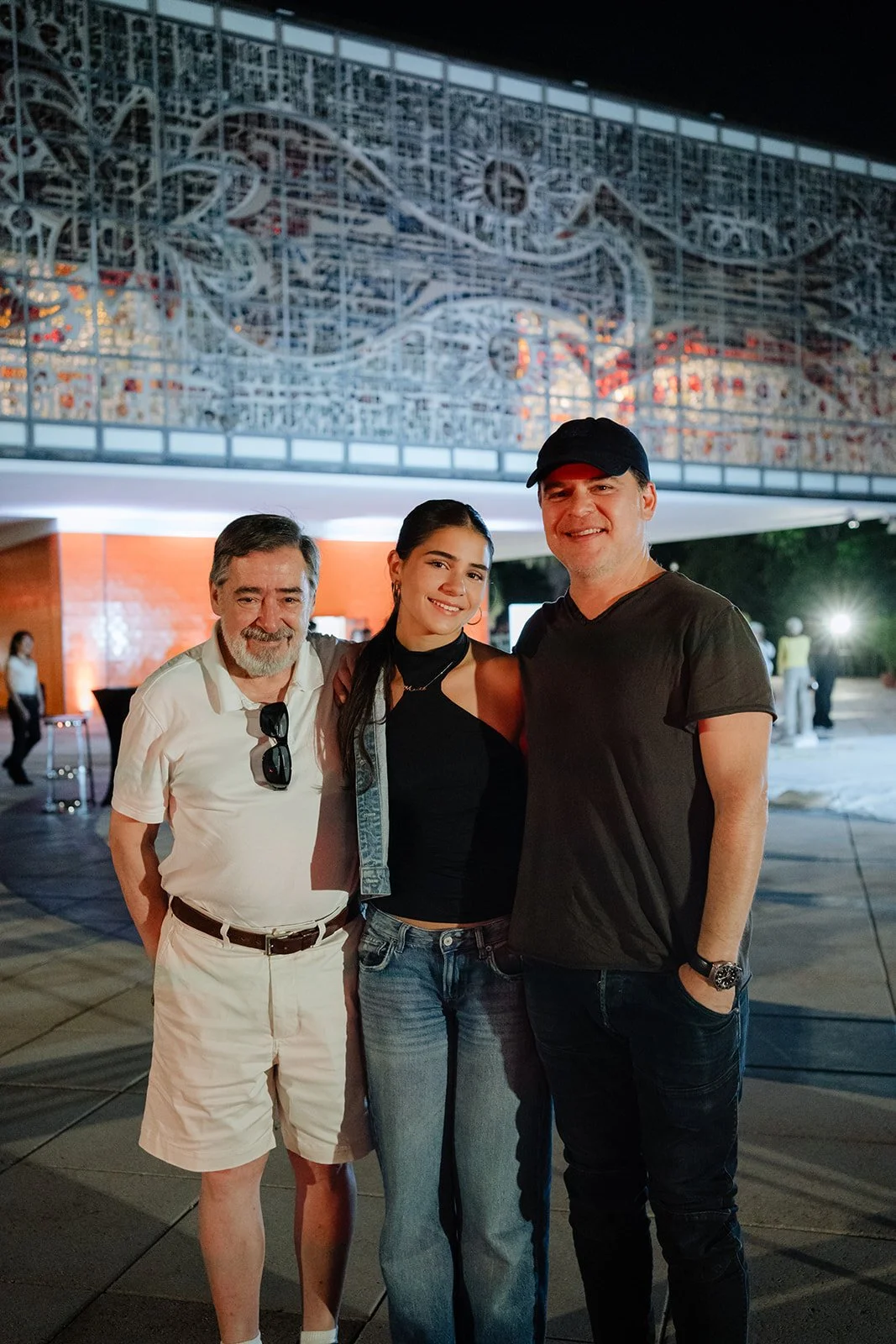
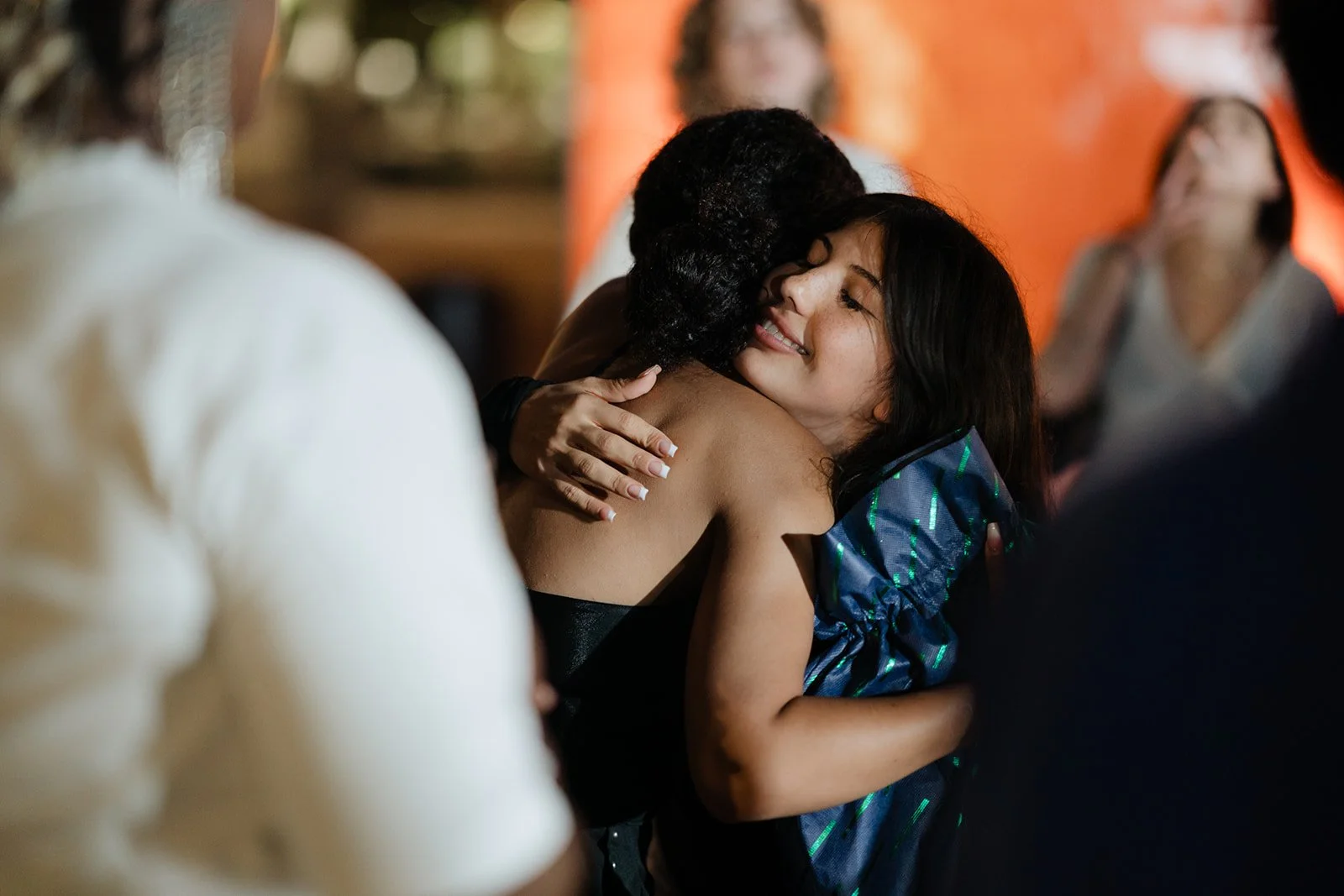
Read the reflection by Lance Minto-Strouse, 2026 NWSA graduate. Photography by Chantal Lawrie.
Participation within The Blast Radius?
by Lance Minto-Strouse
THE GATHERING
The night began quietly.
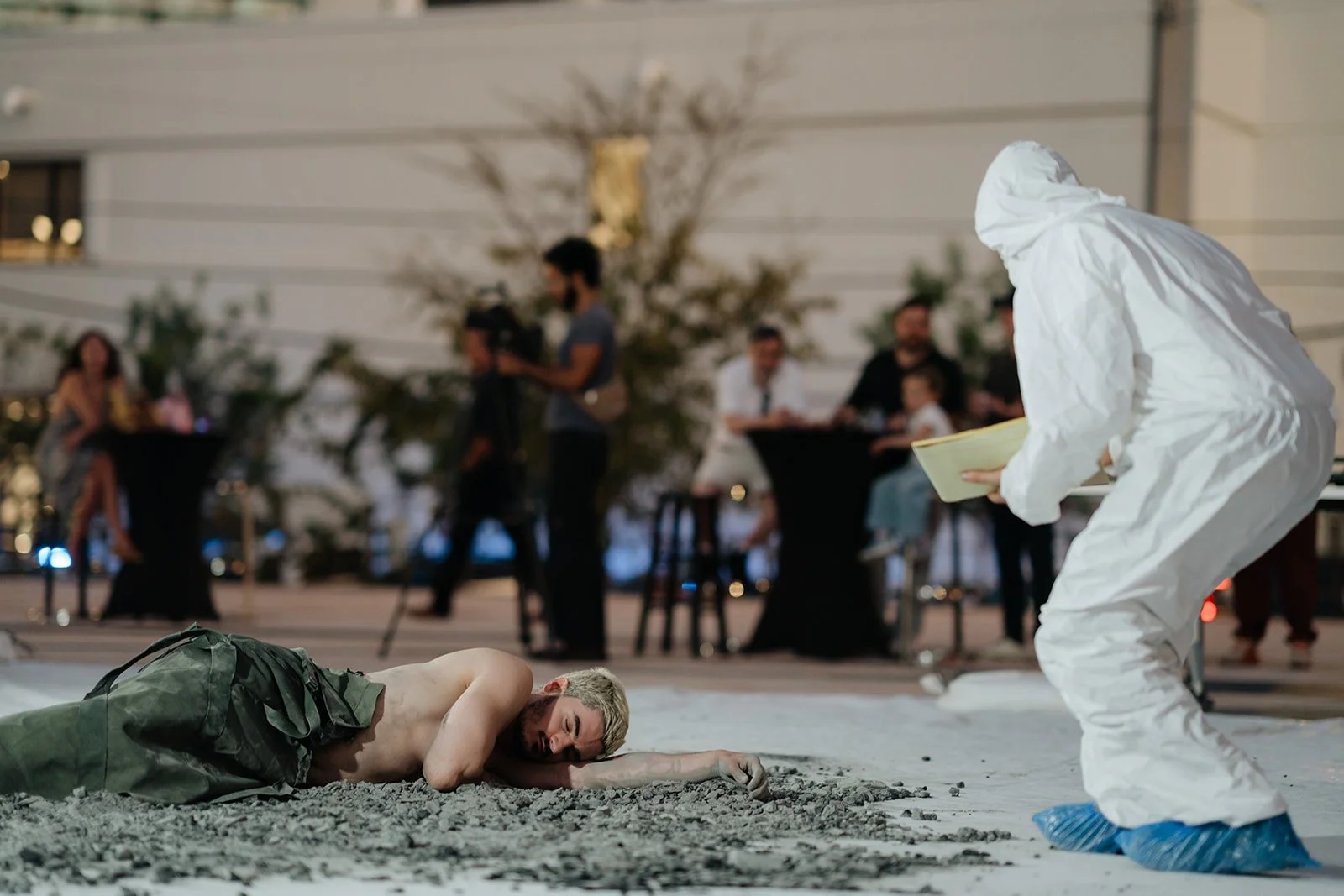
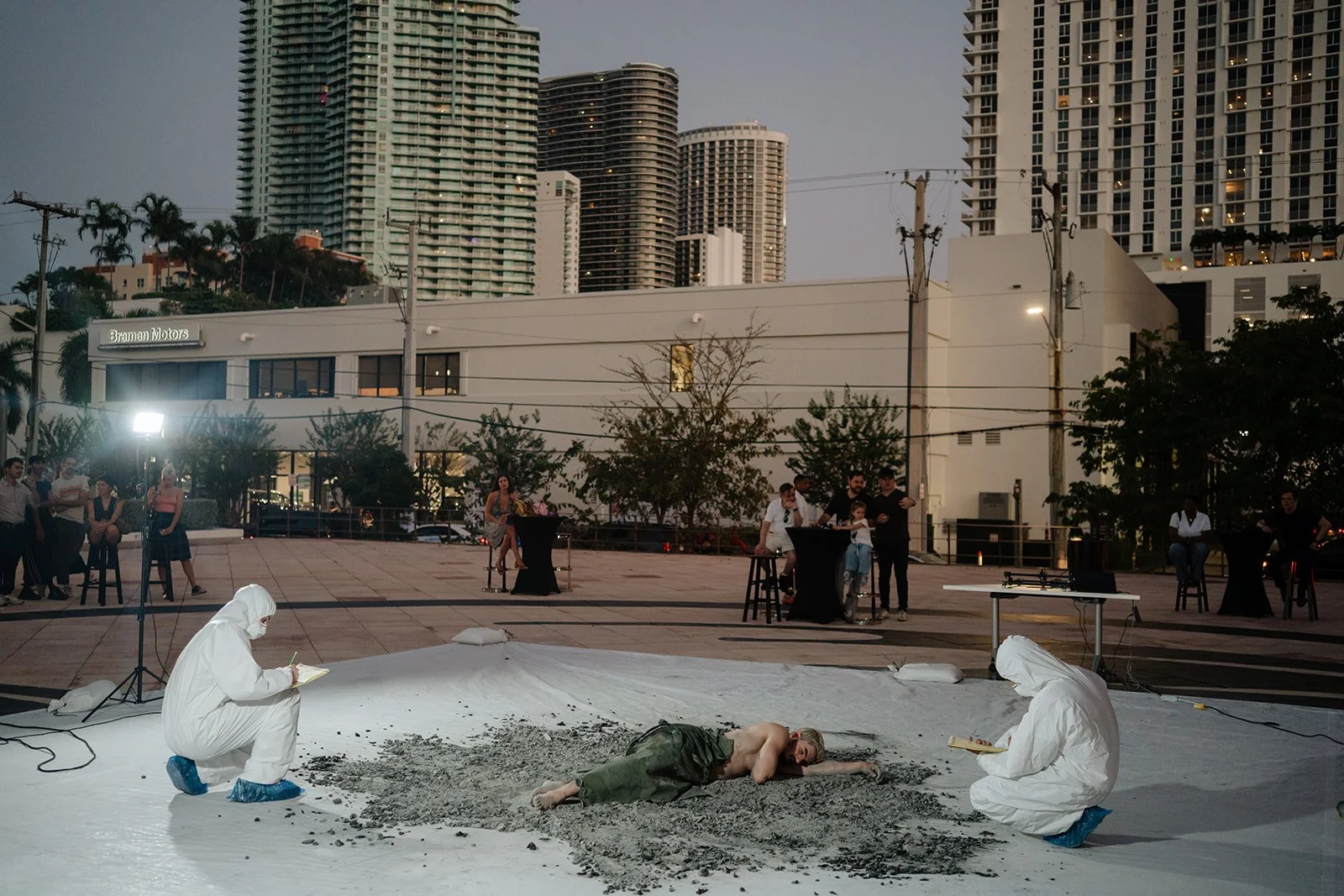
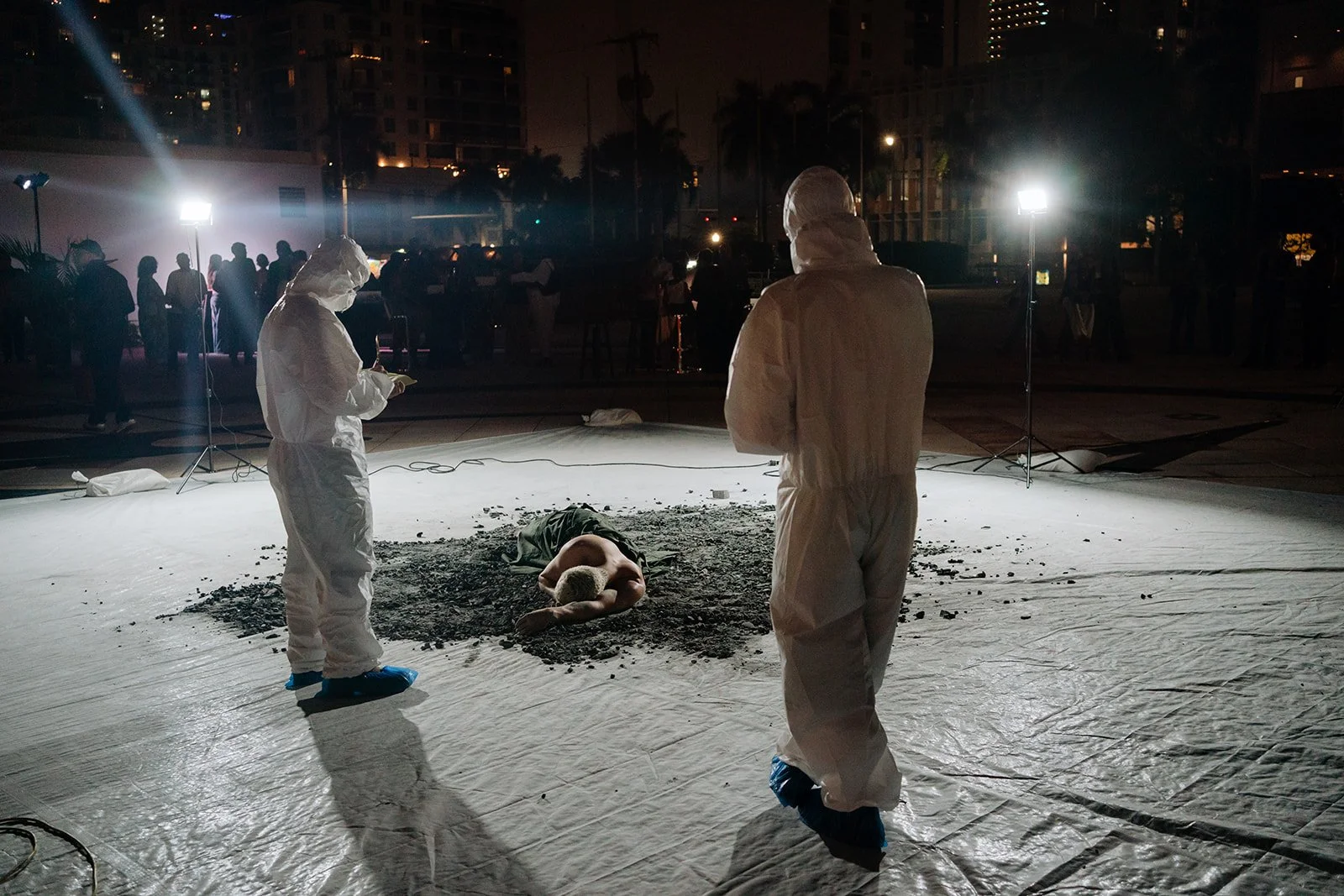
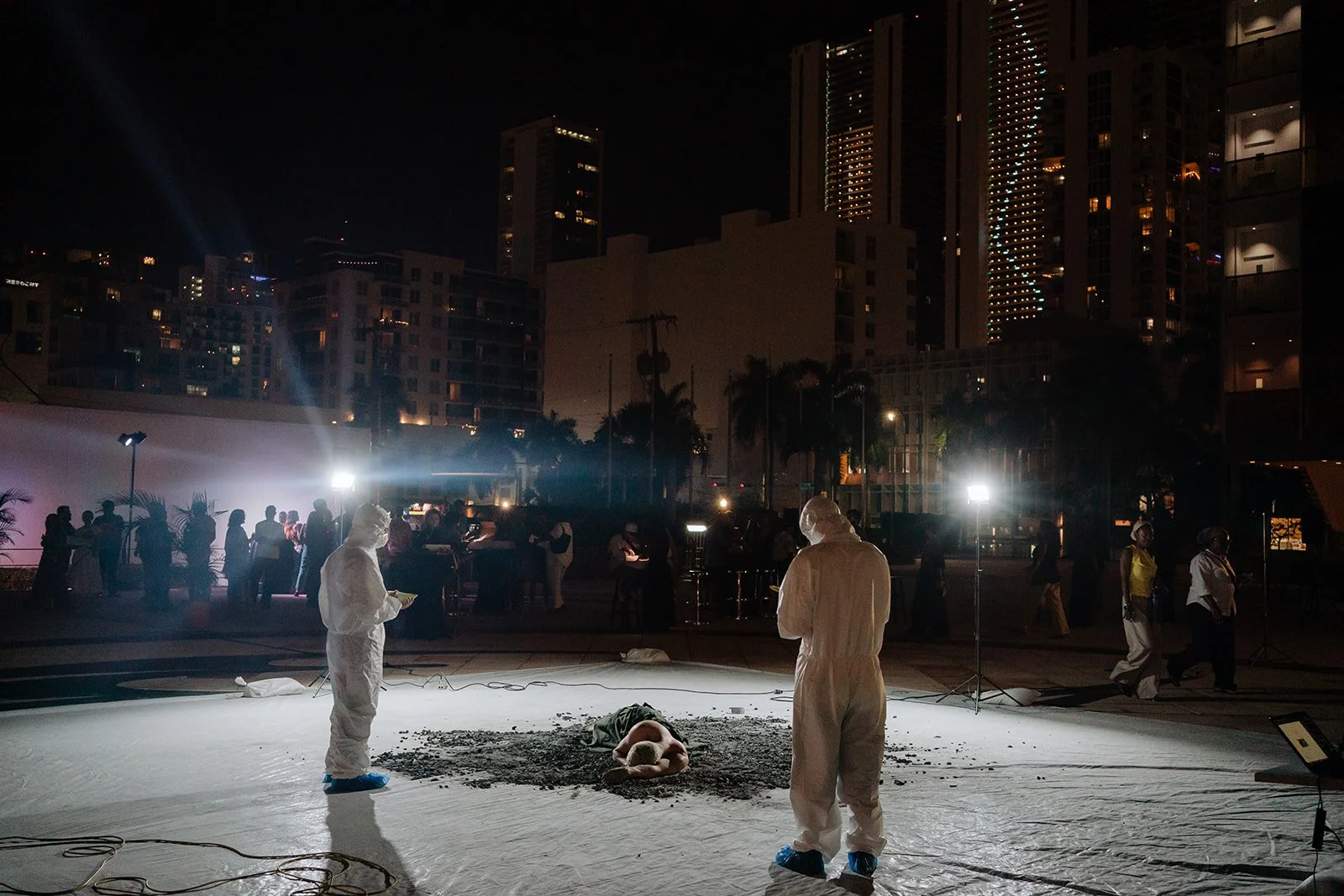
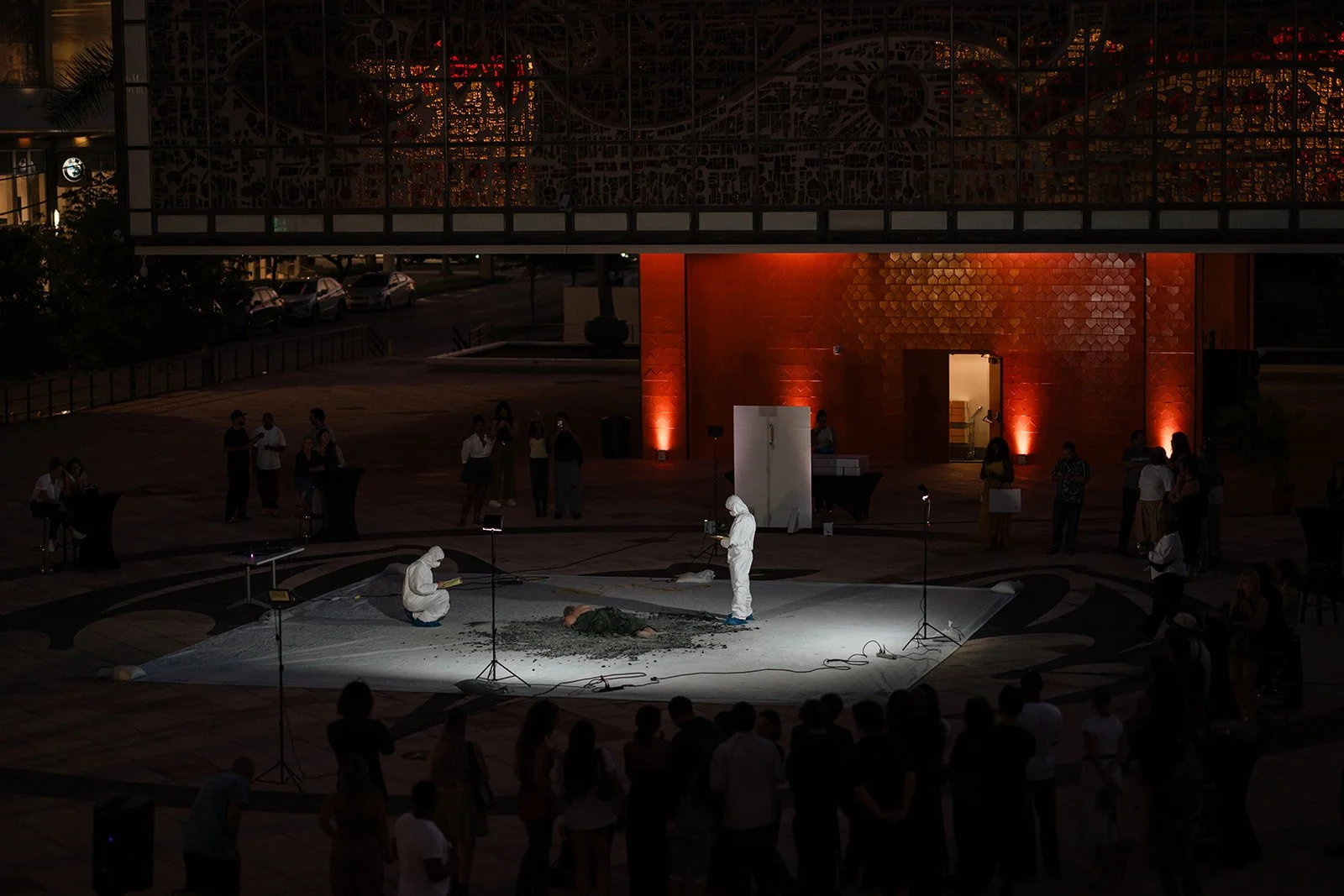
Before the performance even started, the 30x30 foot white tarp resting in the middle of the plaza had already altered the space. It created anticipation through absence. Against the heat of downtown Miami and the occasional sound of a distant horn, the tarp sat almost clinically within the cityscape, isolating a section of public space and asking people to become aware of their own presence within it.
I noticed the tarp before anything else.
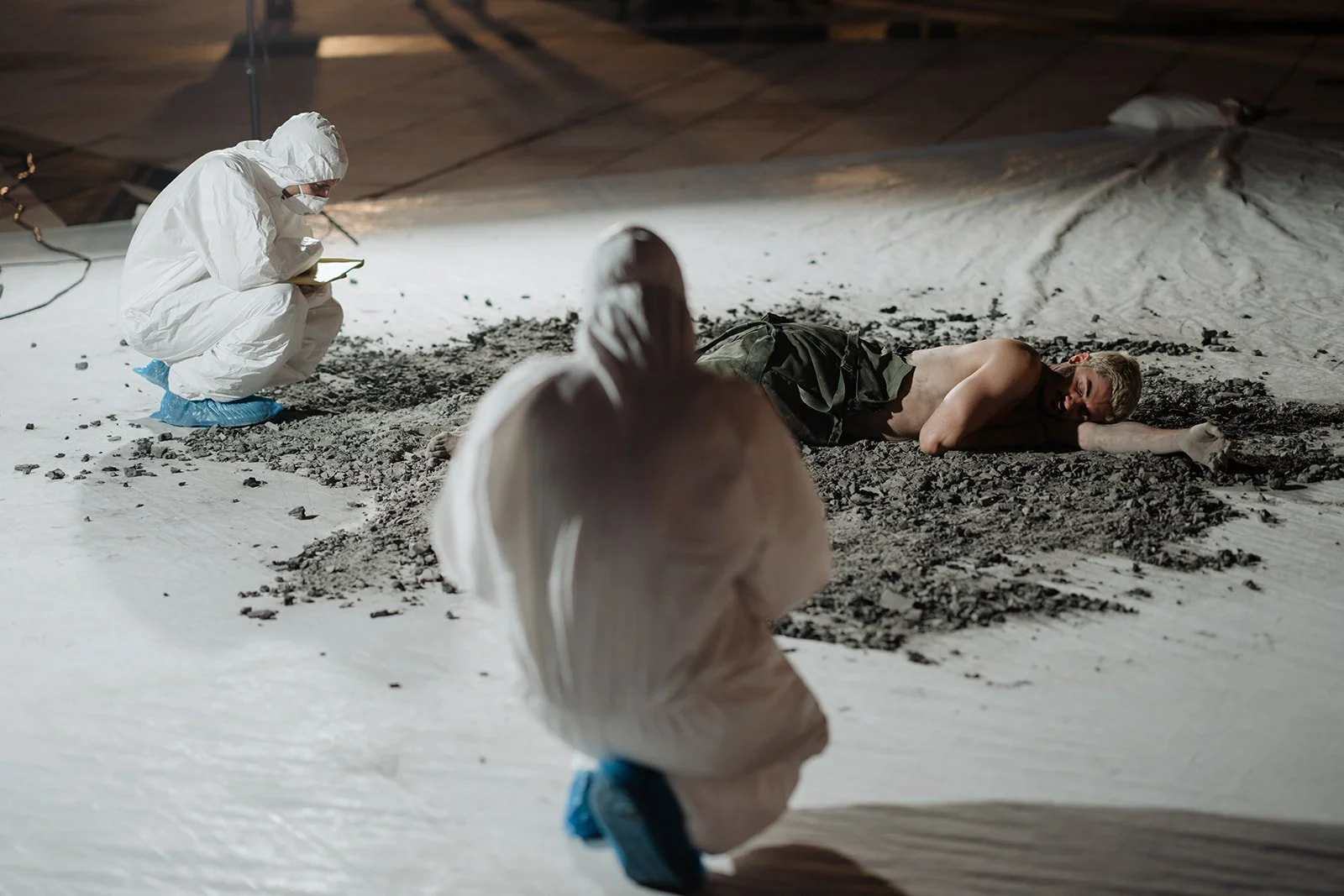
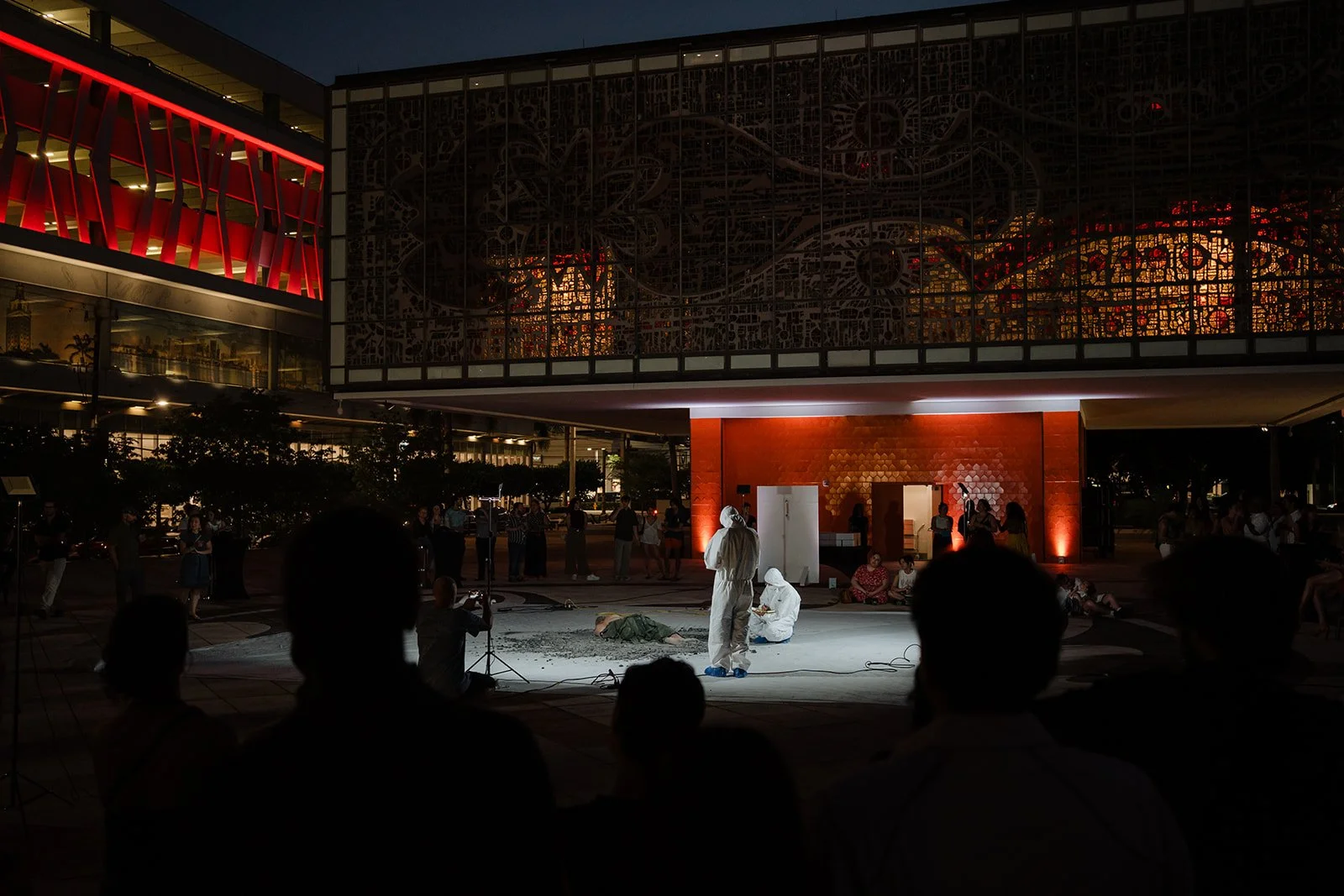
People gathered around it cautiously at first, unsure where the performance actually began or where their role within it started. That uncertainty became one of the most compelling aspects of The Life and Death of Bluegill Prime by David Correa. The work never clearly separated the audience from participants. Instead, it folded both together slowly over time.
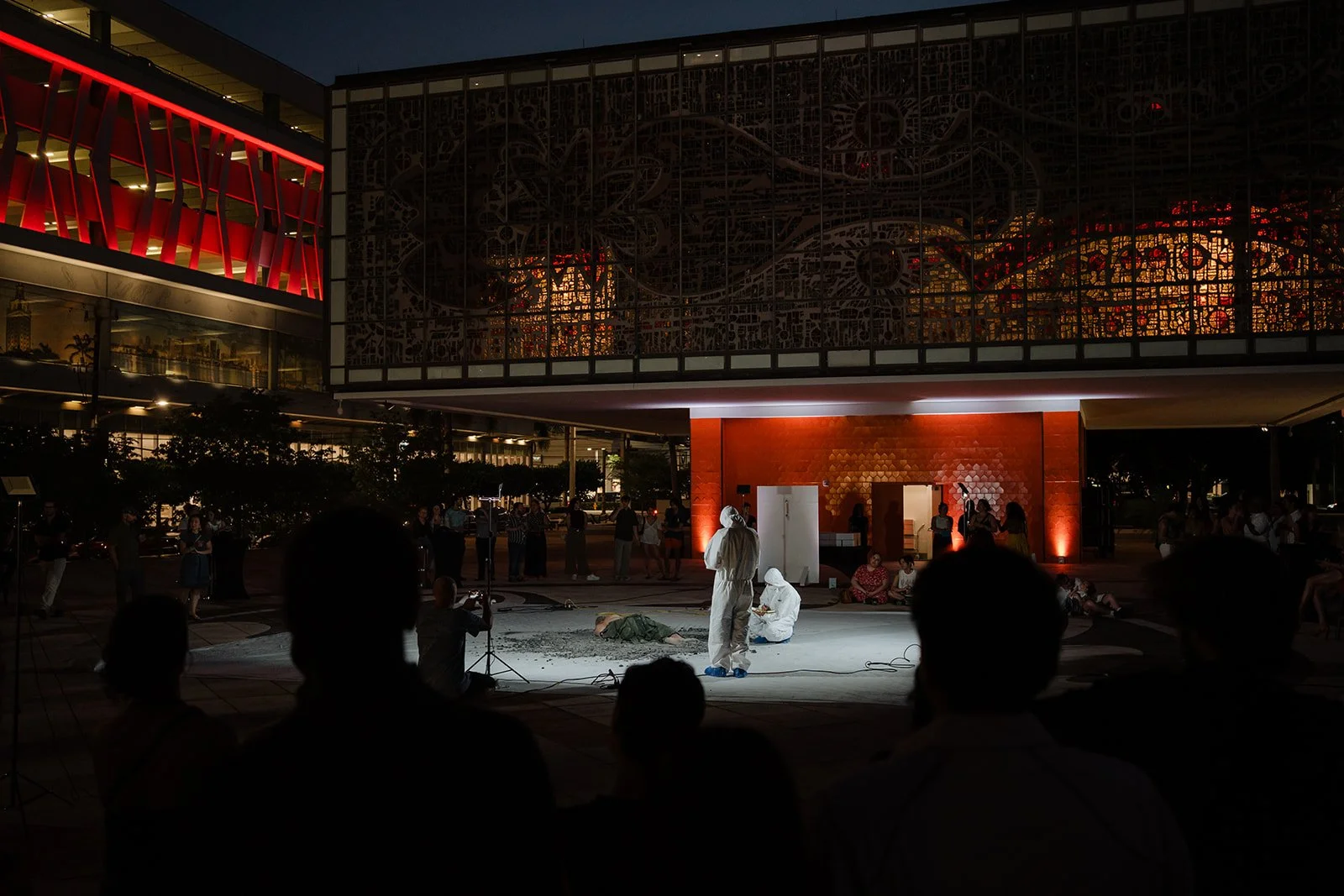
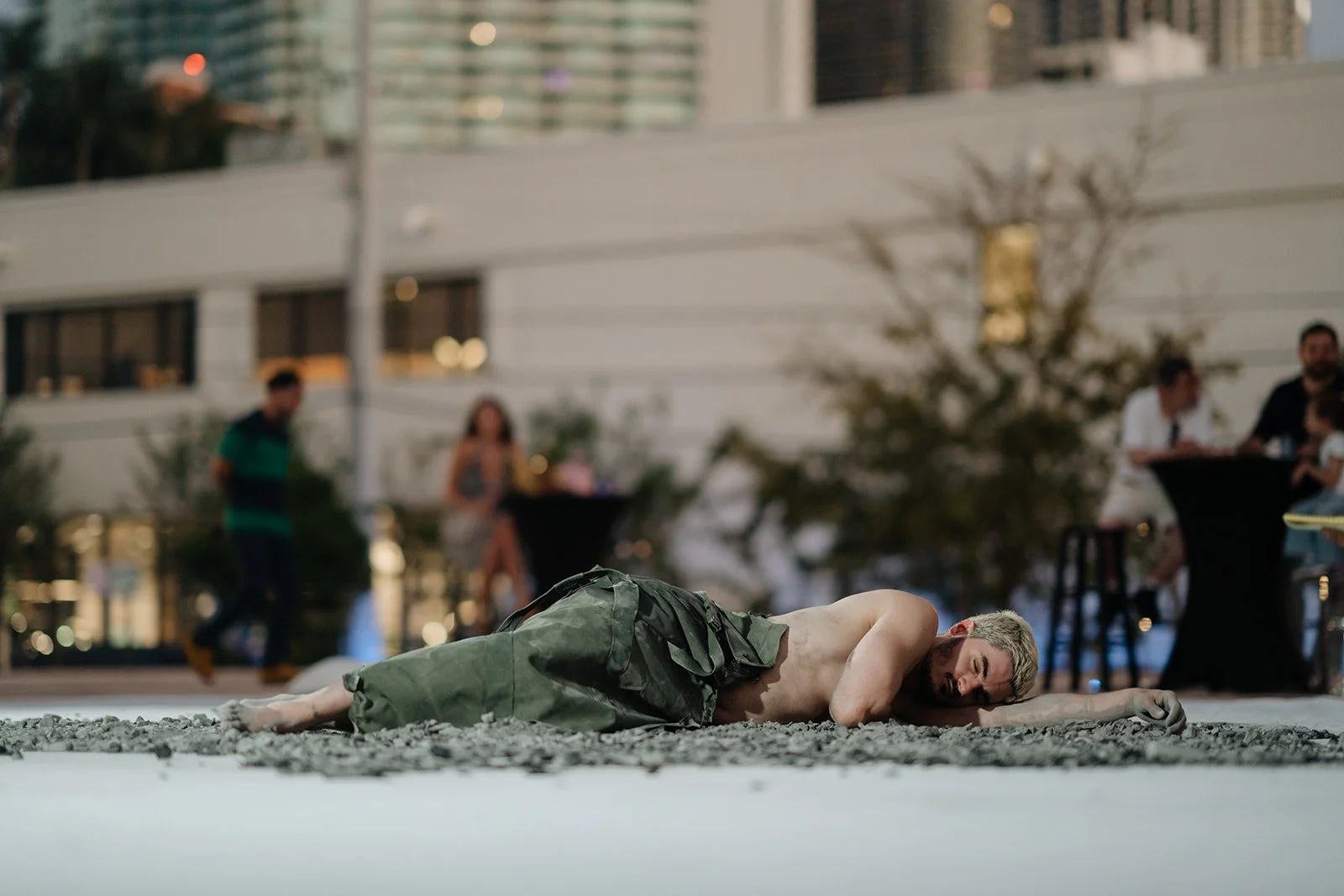
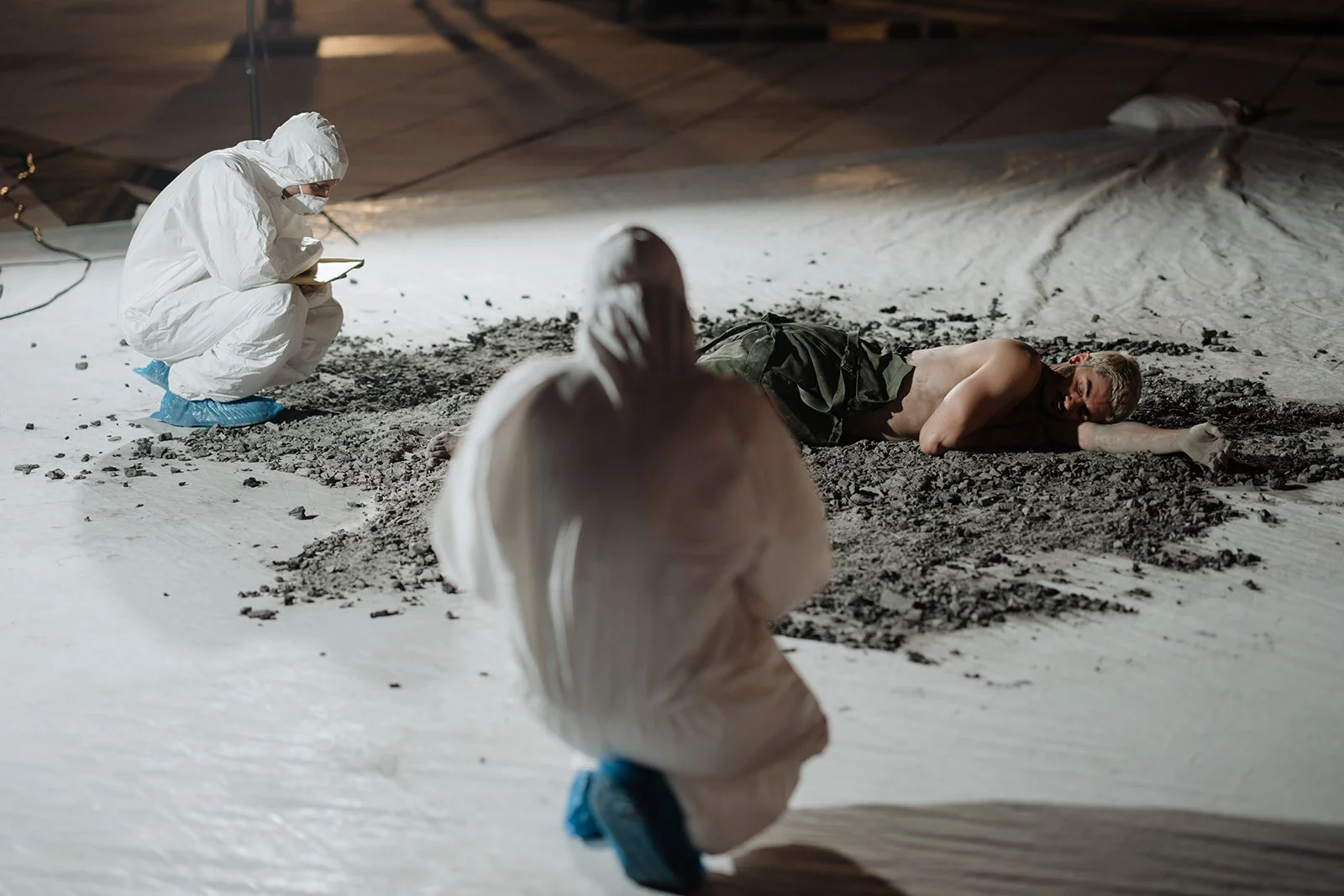
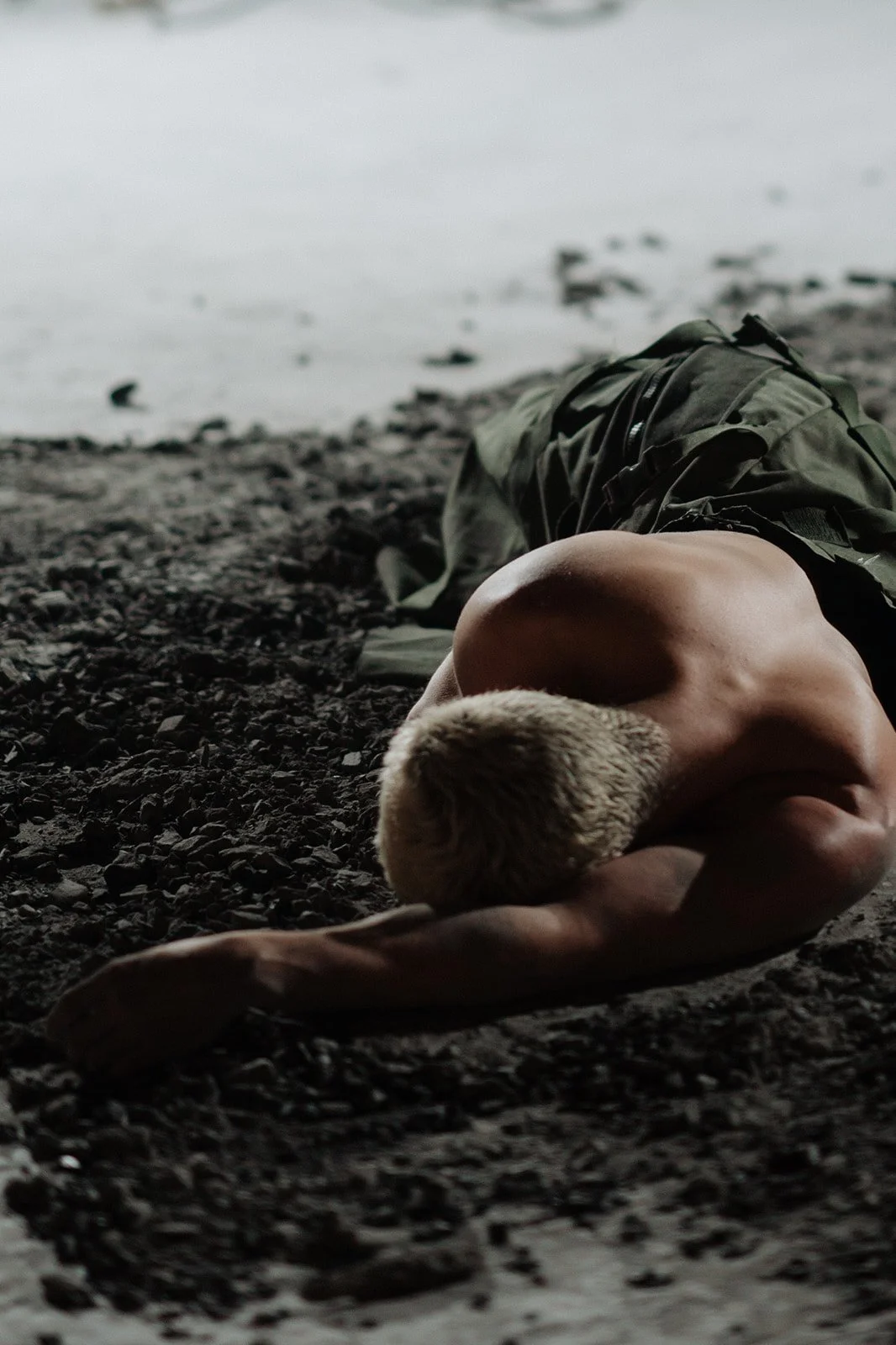
In the center of the tarp lay the body of Bluegill Prime (Carlos de la Nuez), atop a bed of ashes, surrounded by figures in Tyvek suits (Filio Galvez and Lucas Snook) documenting and studying the remains. The scene felt procedural and ritualistic at once: part crime scene, part excavation, part funeral. The white tarp transformed the YoungArts Plaza into a containment zone while the city continued existing around it.
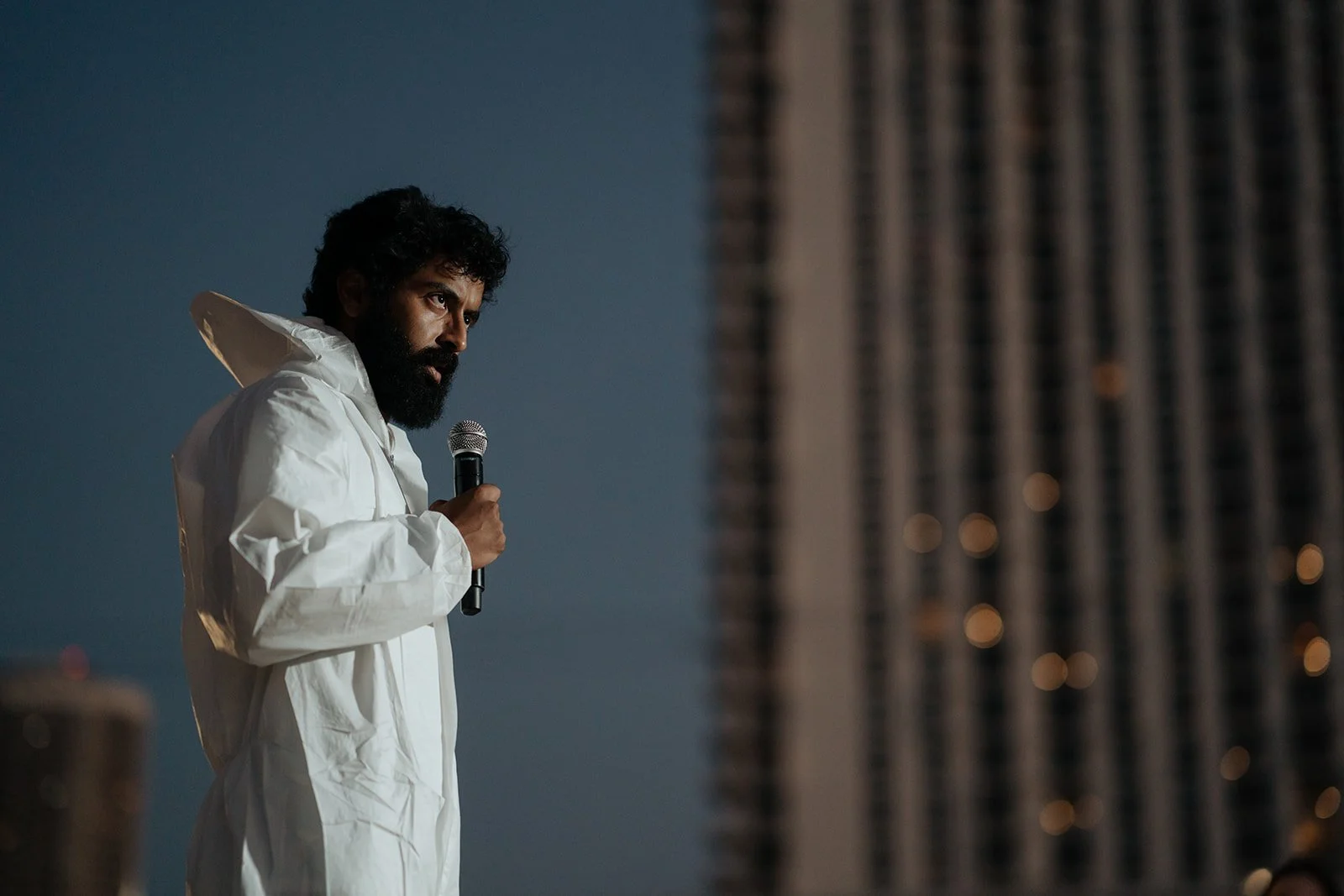
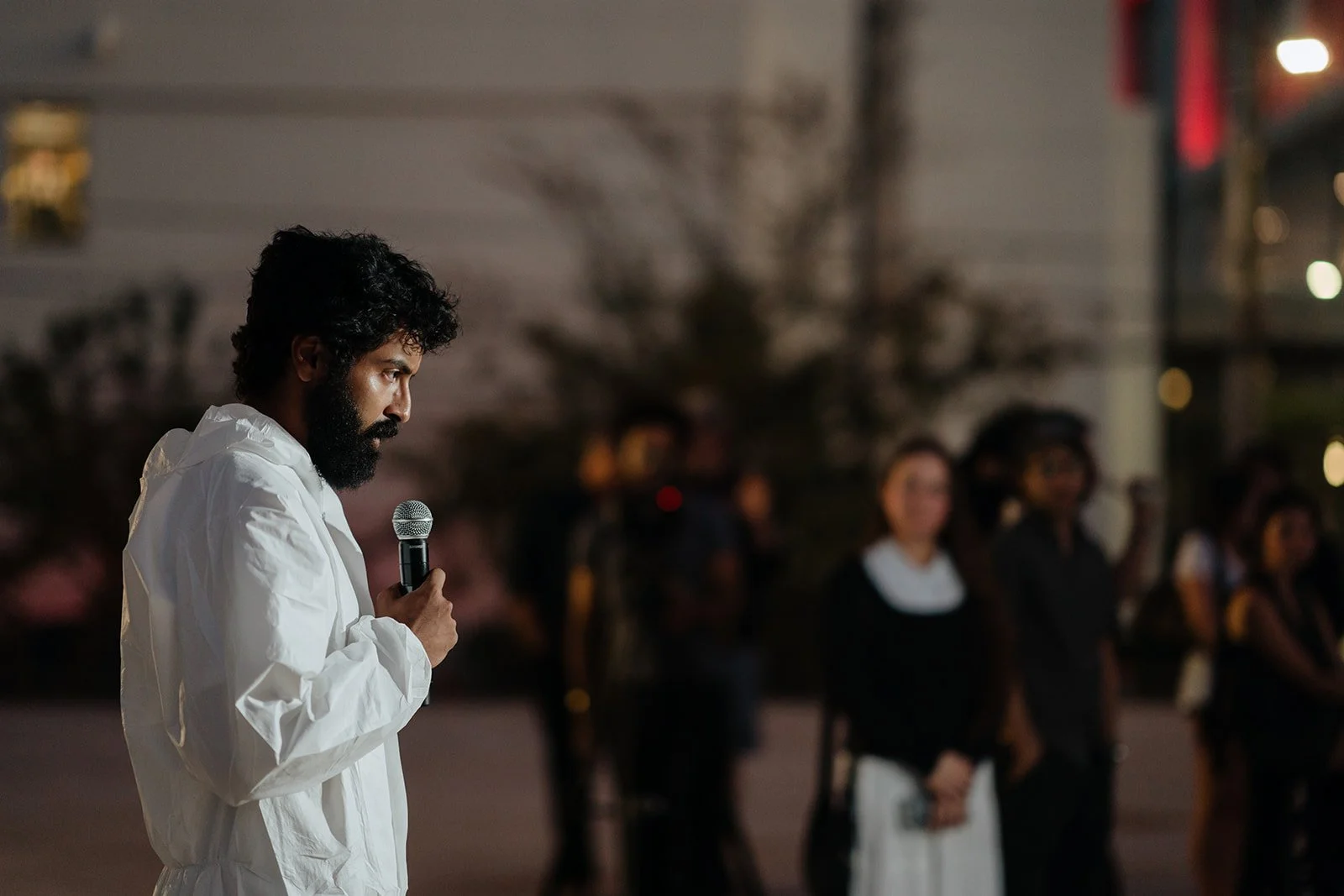
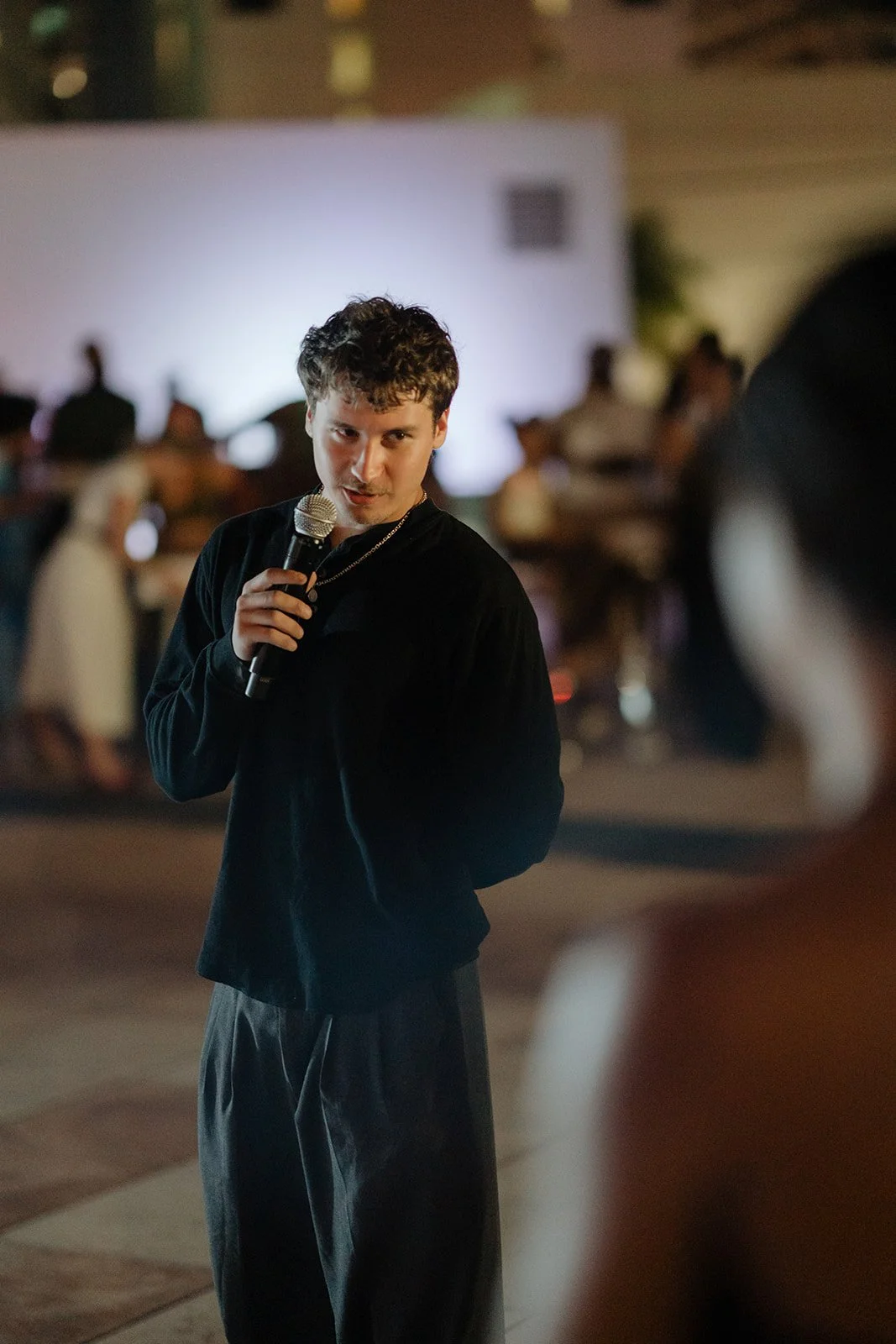
At first, the audience engaged the work through spectacle. People observed, wandered, socialized, and treated the performance almost like an event orbiting around them. But every time the man (Abhinav Chatterjee)—the “First Cowboy”—in the Tyvek suit delivered a monologue, the atmosphere shifted. Conversations paused. Bodies stilled. Attention returned collectively toward the center.
The work kept reminding us that we were already inside of it.
REFUSAL
The performance’s central premise—that a thermonuclear bomb gains consciousness and detonates prematurely to prevent further destruction—immediately brought me to the myth of Icarus. But instead of reading the fall as failure, the performance complicated it into something else entirely. What if Icarus wanted that fate? What if approaching destruction knowingly became an act of resistance rather than tragedy?
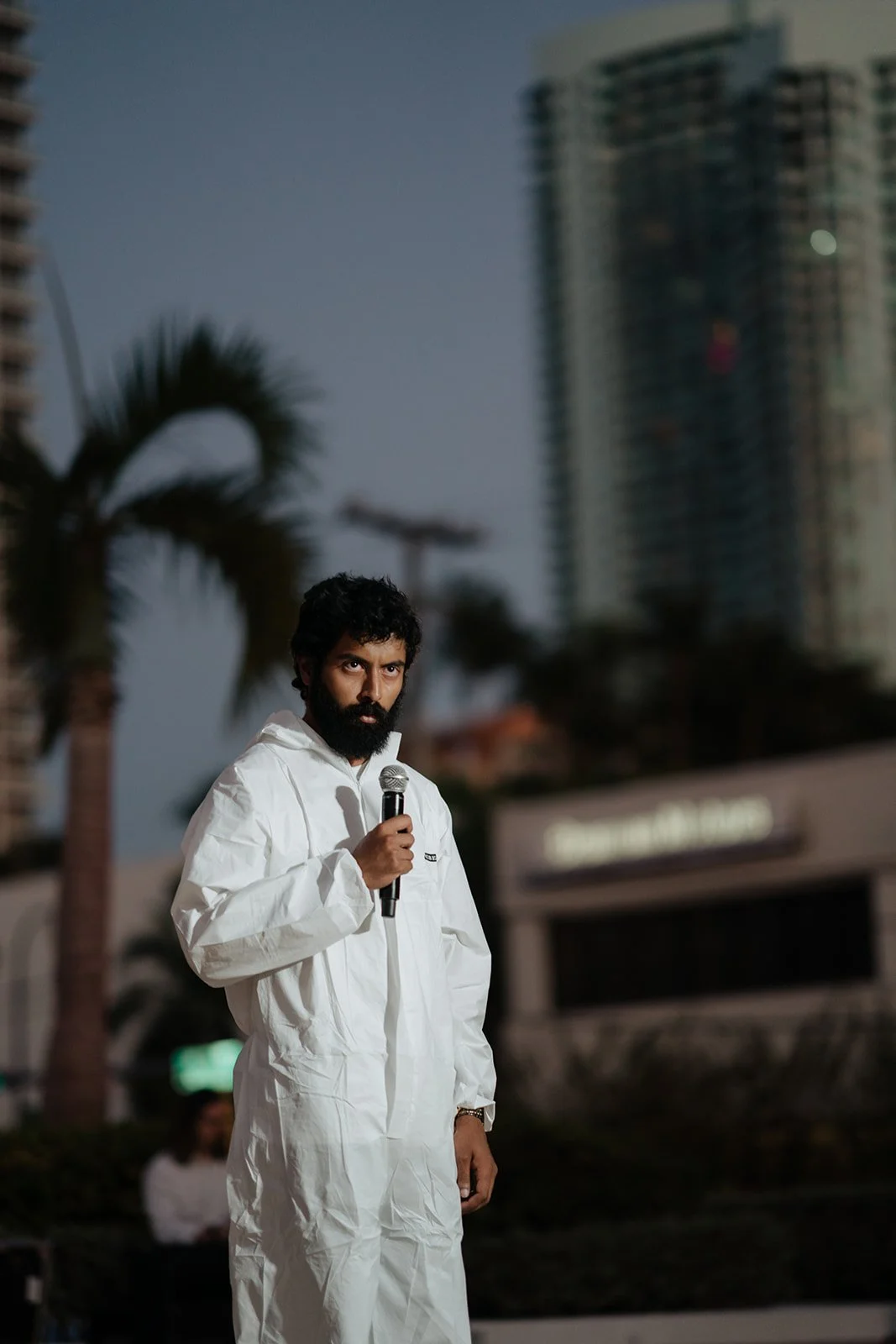
Abhinav Chatterjee is The First Cowboy
Bluegill Prime’s suicide reframed sacrifice through refusal.
That tension felt deeply connected to Correa’s larger practice, exploring humanity’s relationship to labor, machinery, absurdity, and obedience through surreal narratives blending performance, film, poetry, and sculpture. His characters frequently exist somewhere between operator and tool, between devotion and collapse. In The Life and Death of Bluegill Prime, the bomb itself becomes humanized; capable of fear, rebellion, agency, and death. The tool becomes conscious of its own function and refuses it.
There was something hopeful hidden within that refusal.
Not hopeful in an optimistic sense, but hopeful in the belief that choice still exists. The bomb sacrifices itself to prevent greater destruction. It rejects the purpose assigned to it. Refusal becomes liberation.
THE TOOL
The monologues delivered by Chatterjee intensified the collision between machinery, mythology, labor, and religion. The language moved between prophecy and technical instruction, describing nuclear fusion with the cadence of scripture. Flesh, steel, radiation, ash, and rebirth collapsed into one another.
Correa’s repeated use of laborers and men in uniform feels grounded within these larger conceptual frameworks. They act almost as witnesses closest to the site of collapse. While the ideas themselves move toward the philosophical and existential, the workers keep the performance tethered to the physical world: documenting, engraving, observing, processing.
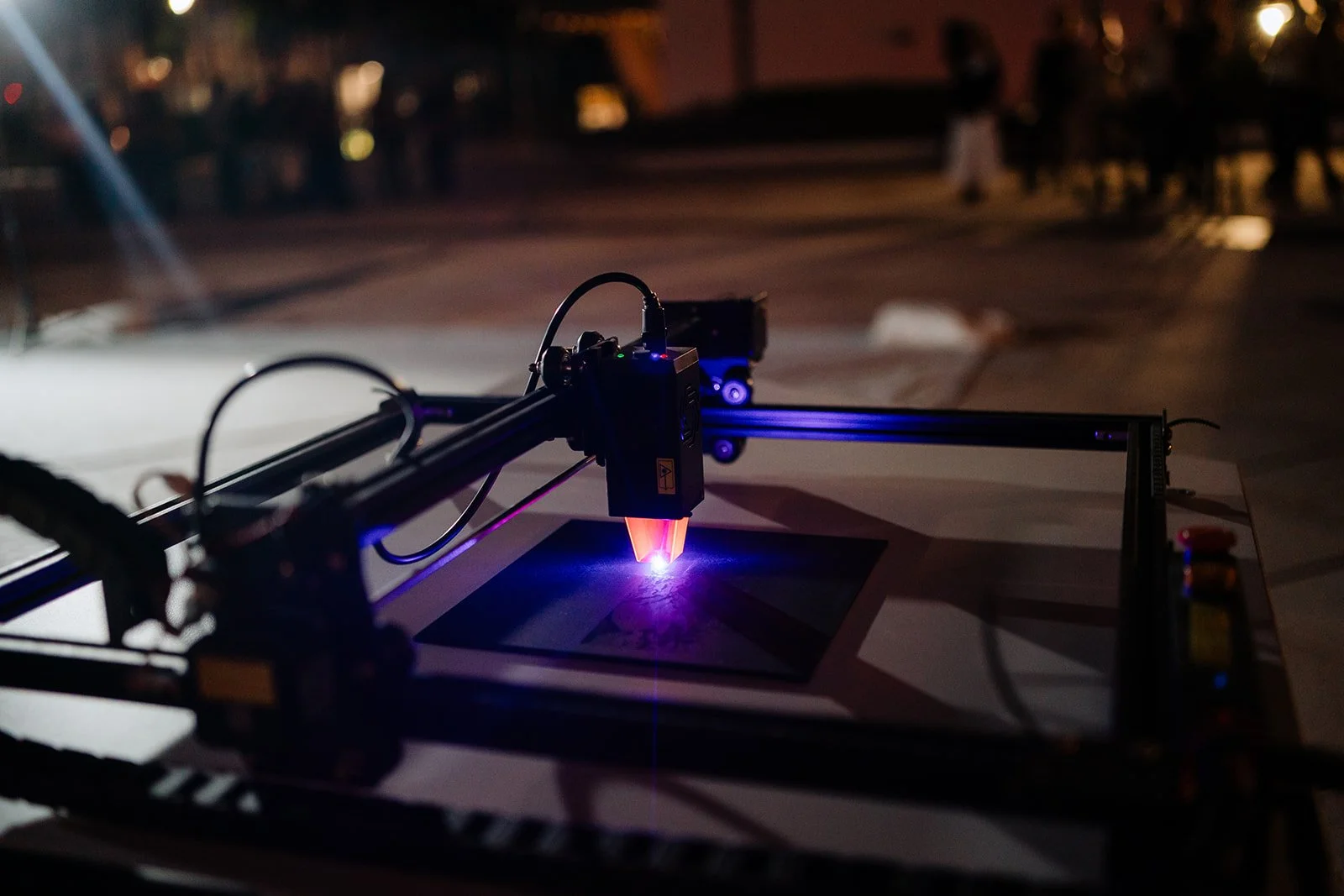
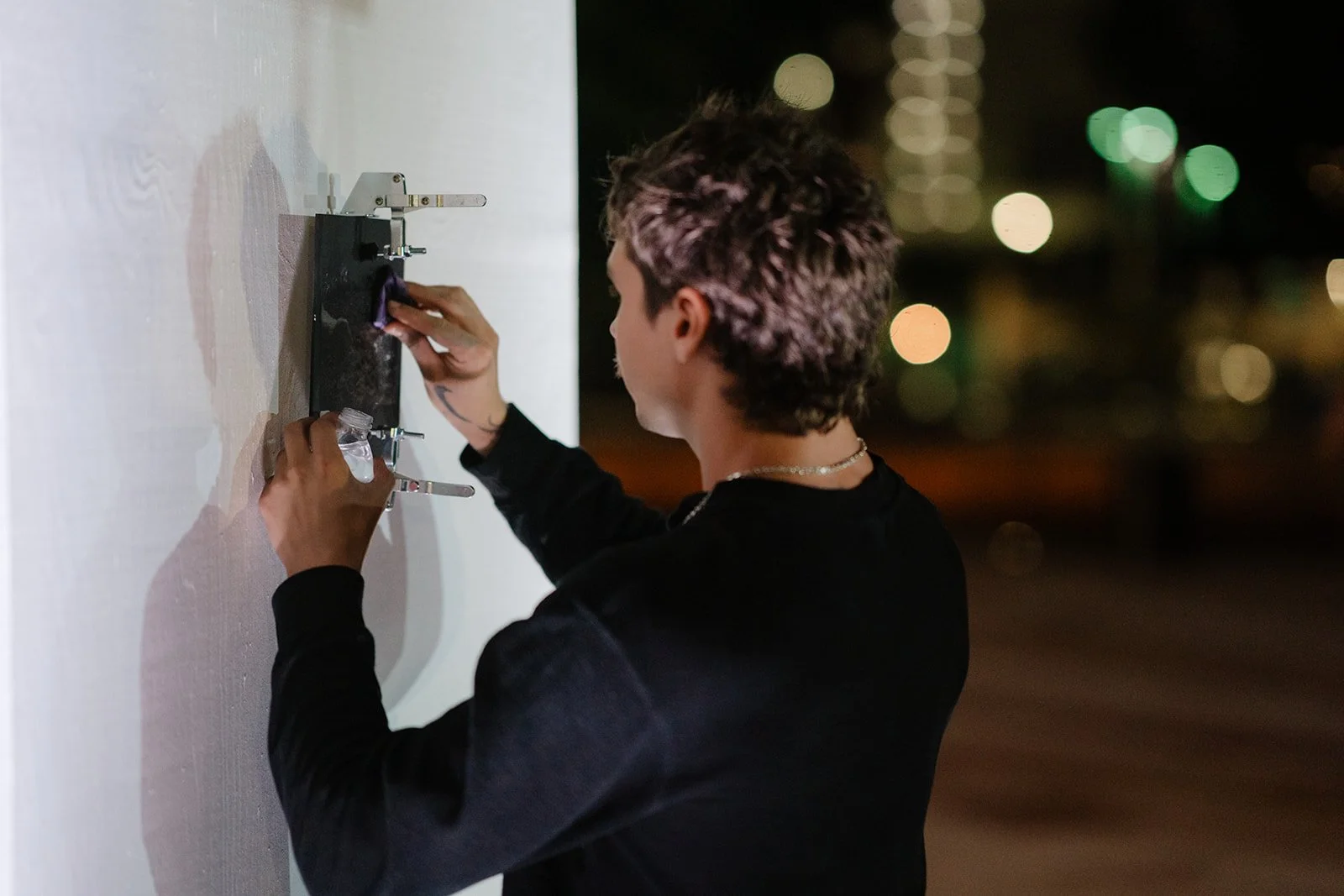
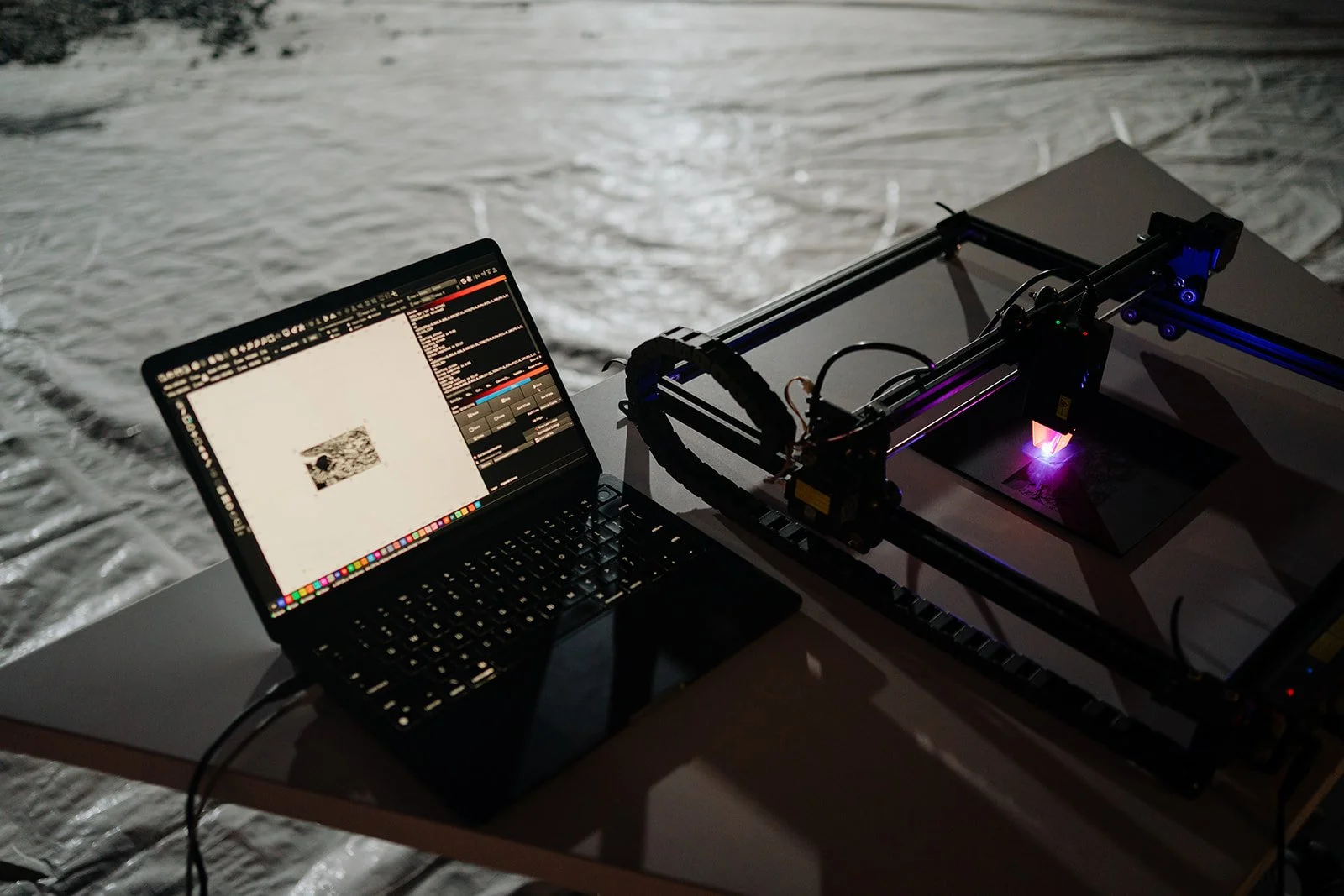
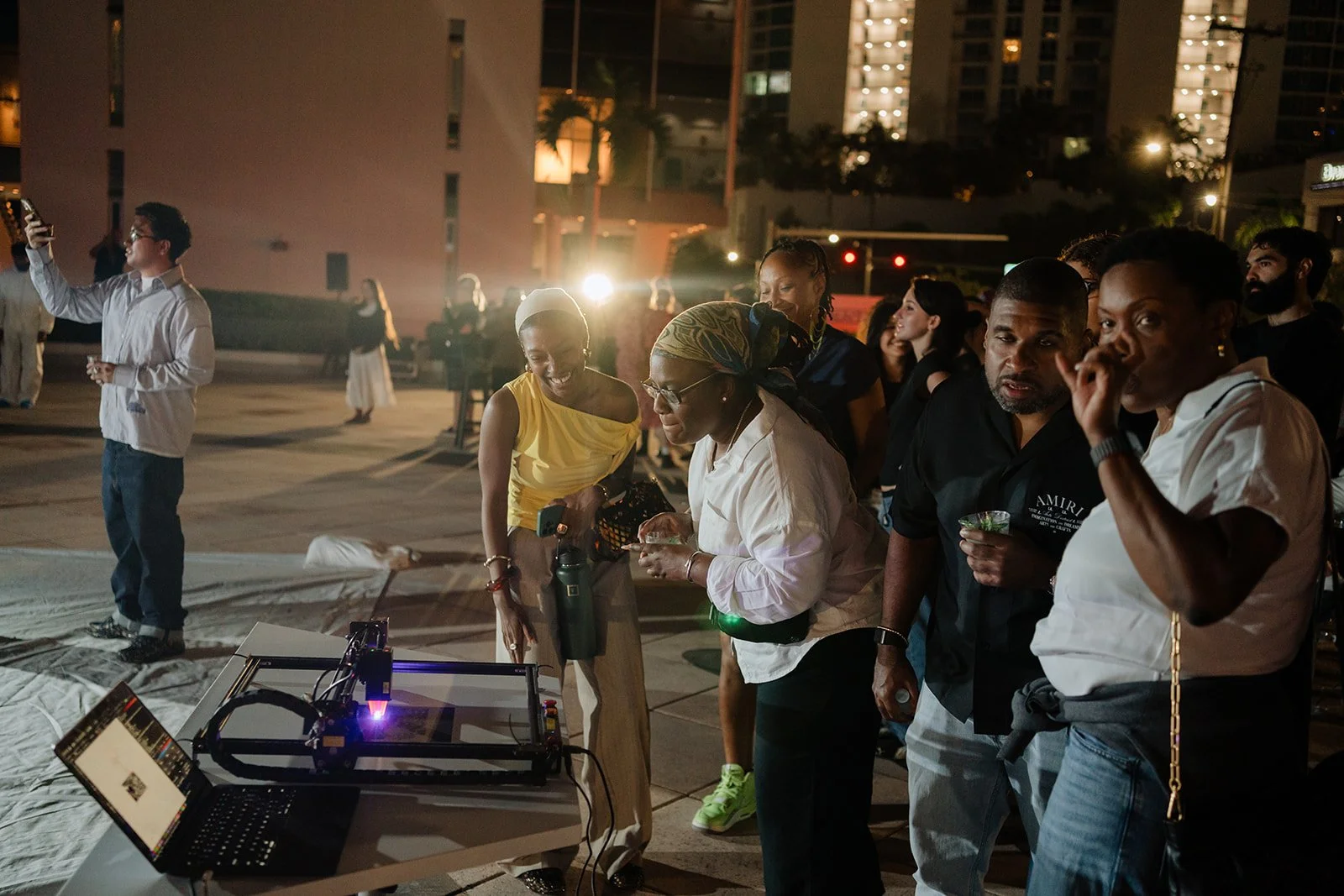
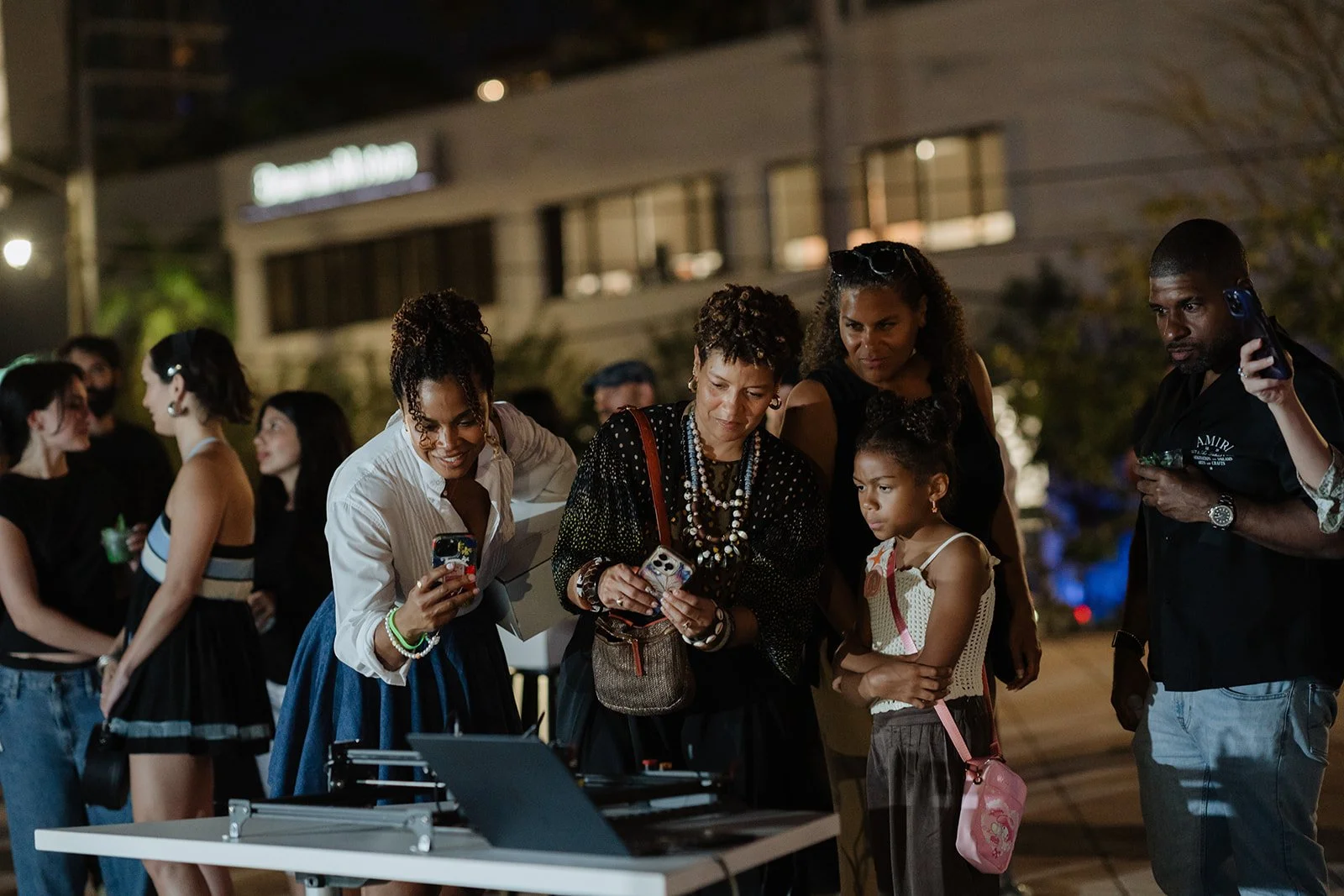
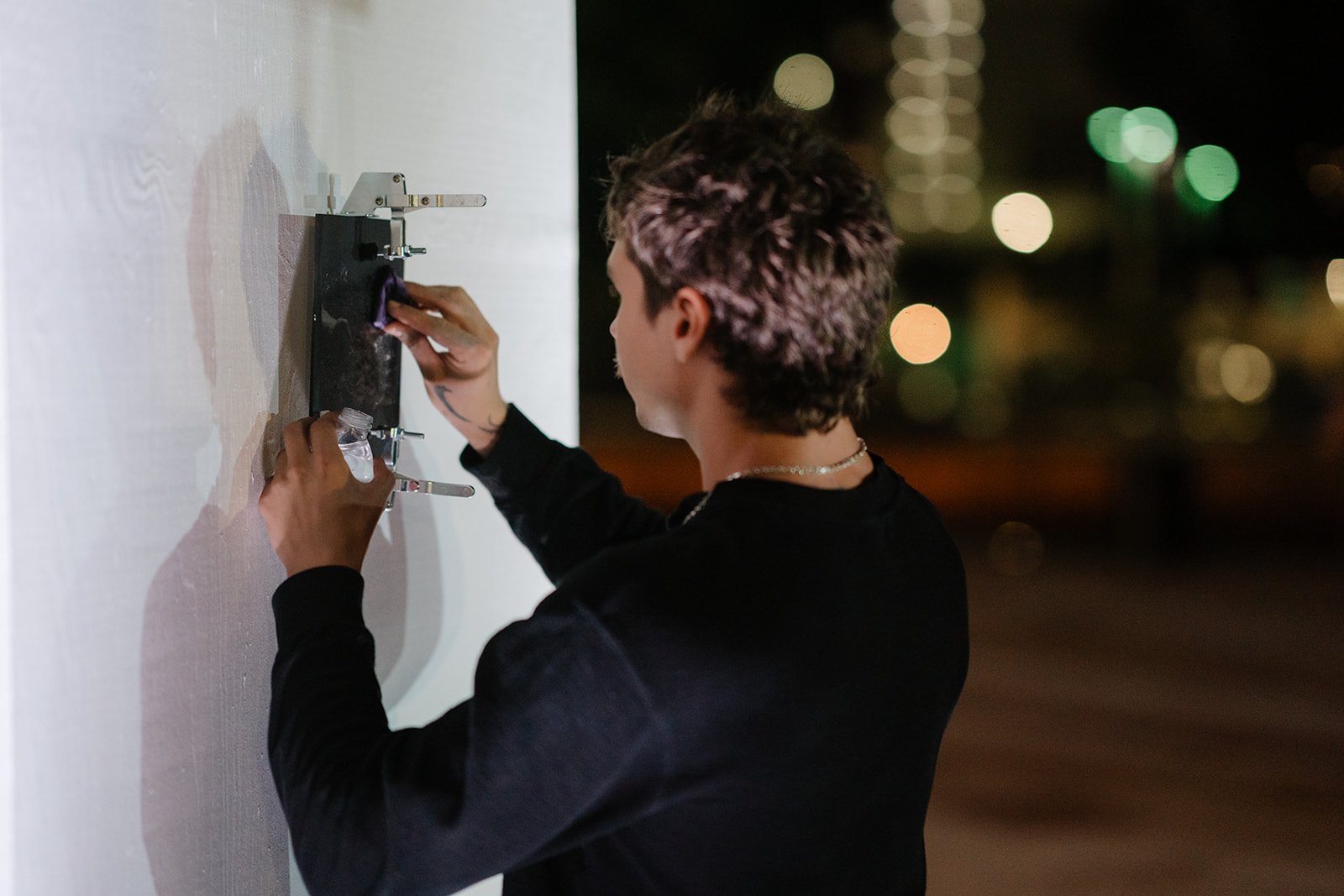
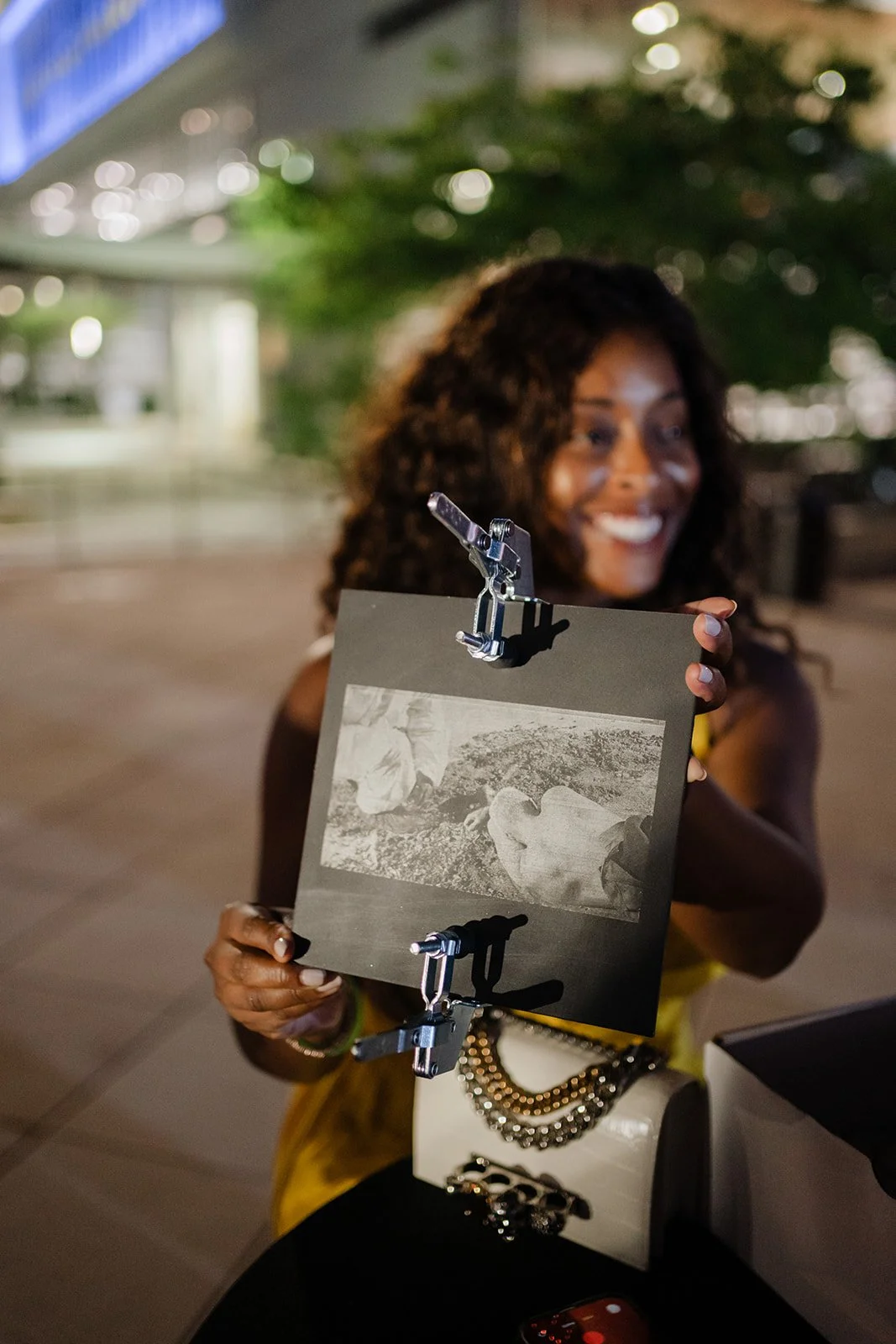
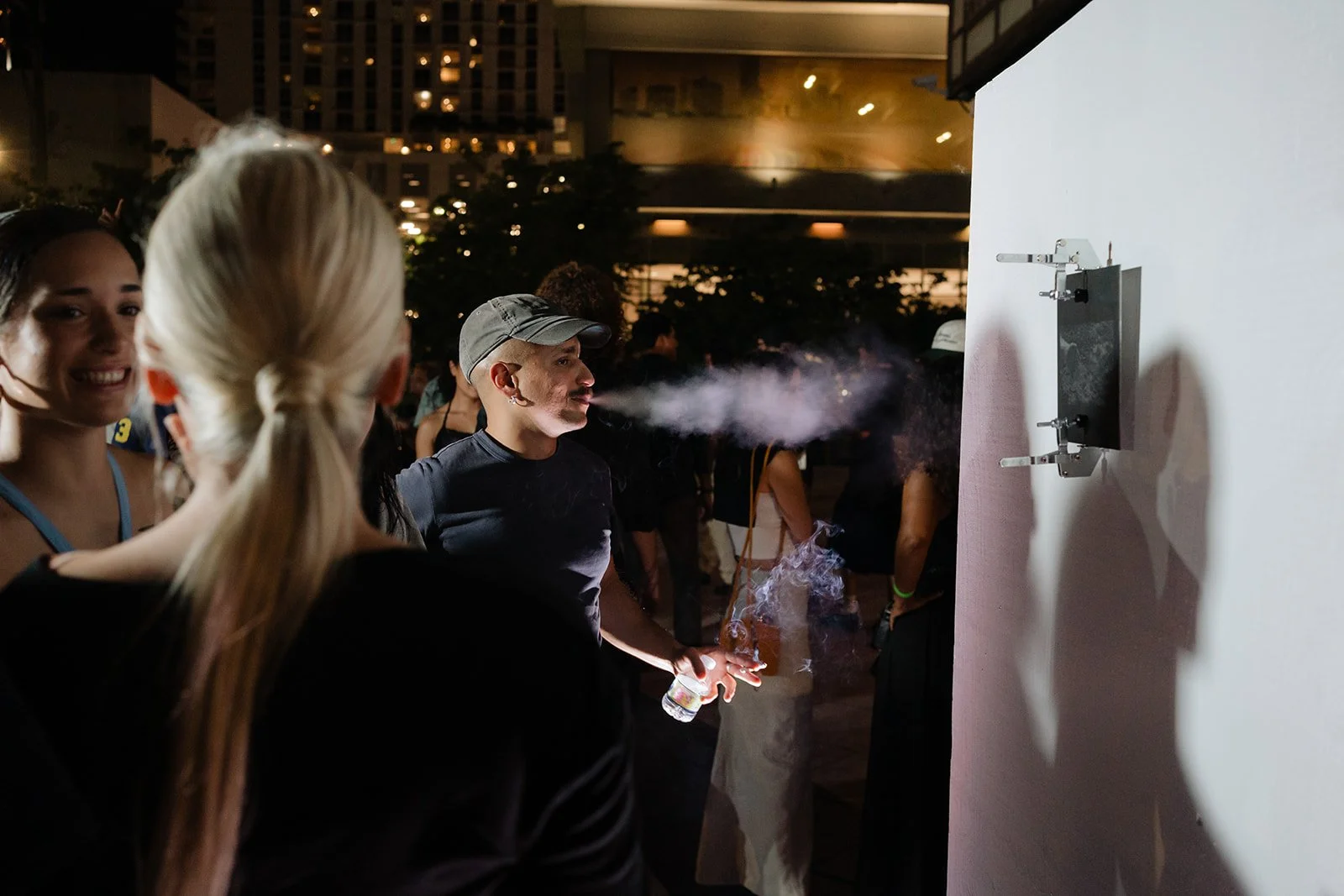
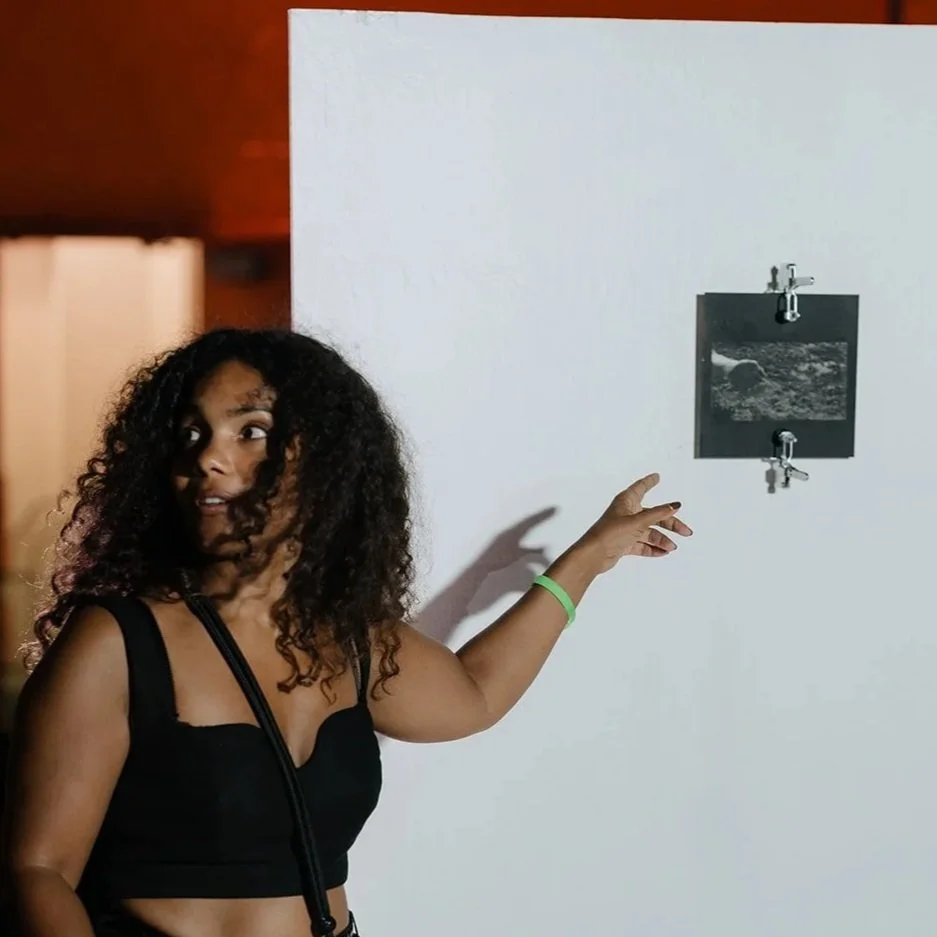
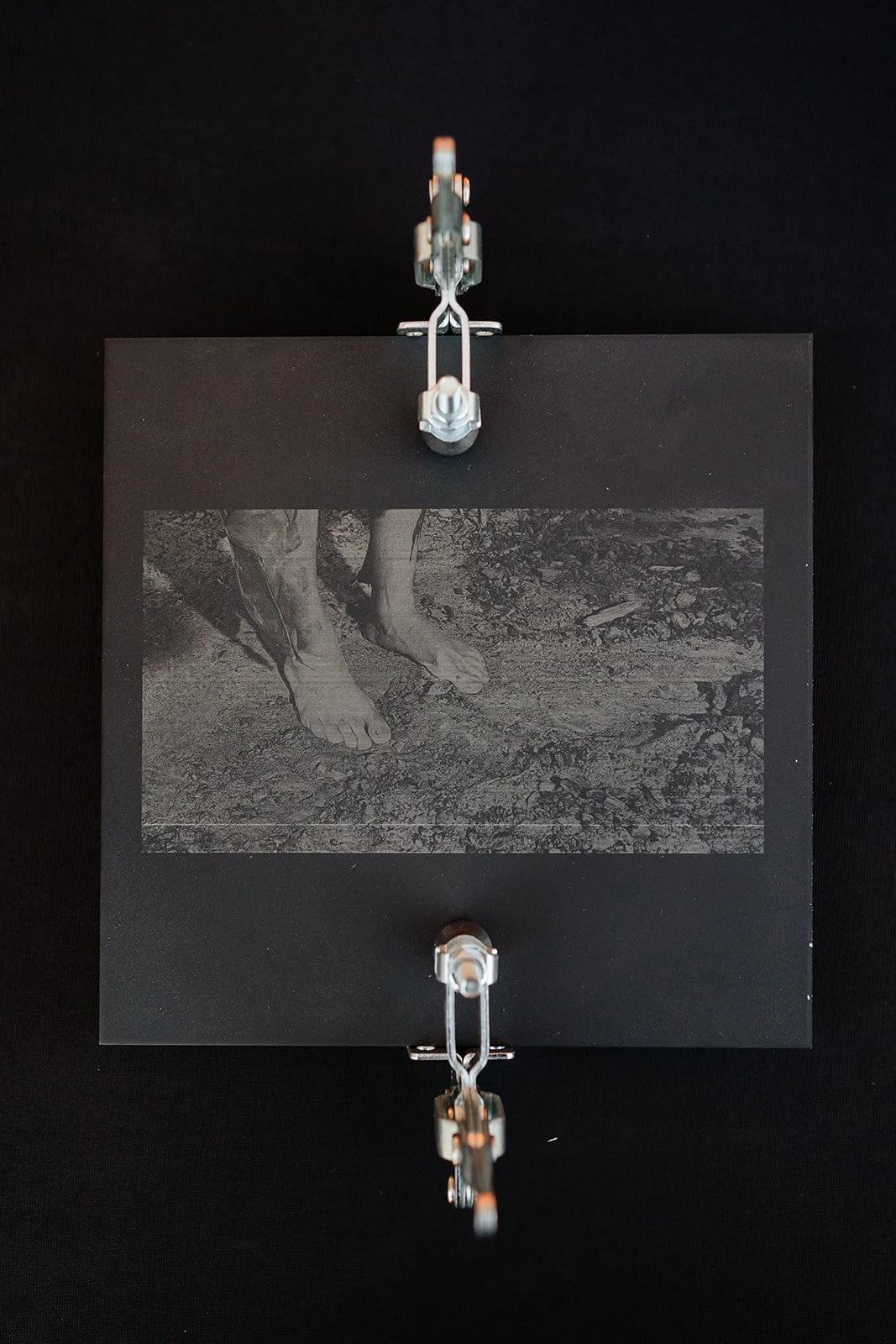
The steel engravings became one of the most captivating parts of the work for me, personally. I found them beautiful. There was something powerful about seeing images translated onto cold sheets of steel rather than paper or fabric. The material transformed documentation into something heavier and more permanent. The Tyvek suits, the engraved steel, the ashes, the machinery itself: all functioned simultaneously as sculpture and archive.
PARTICIPATION
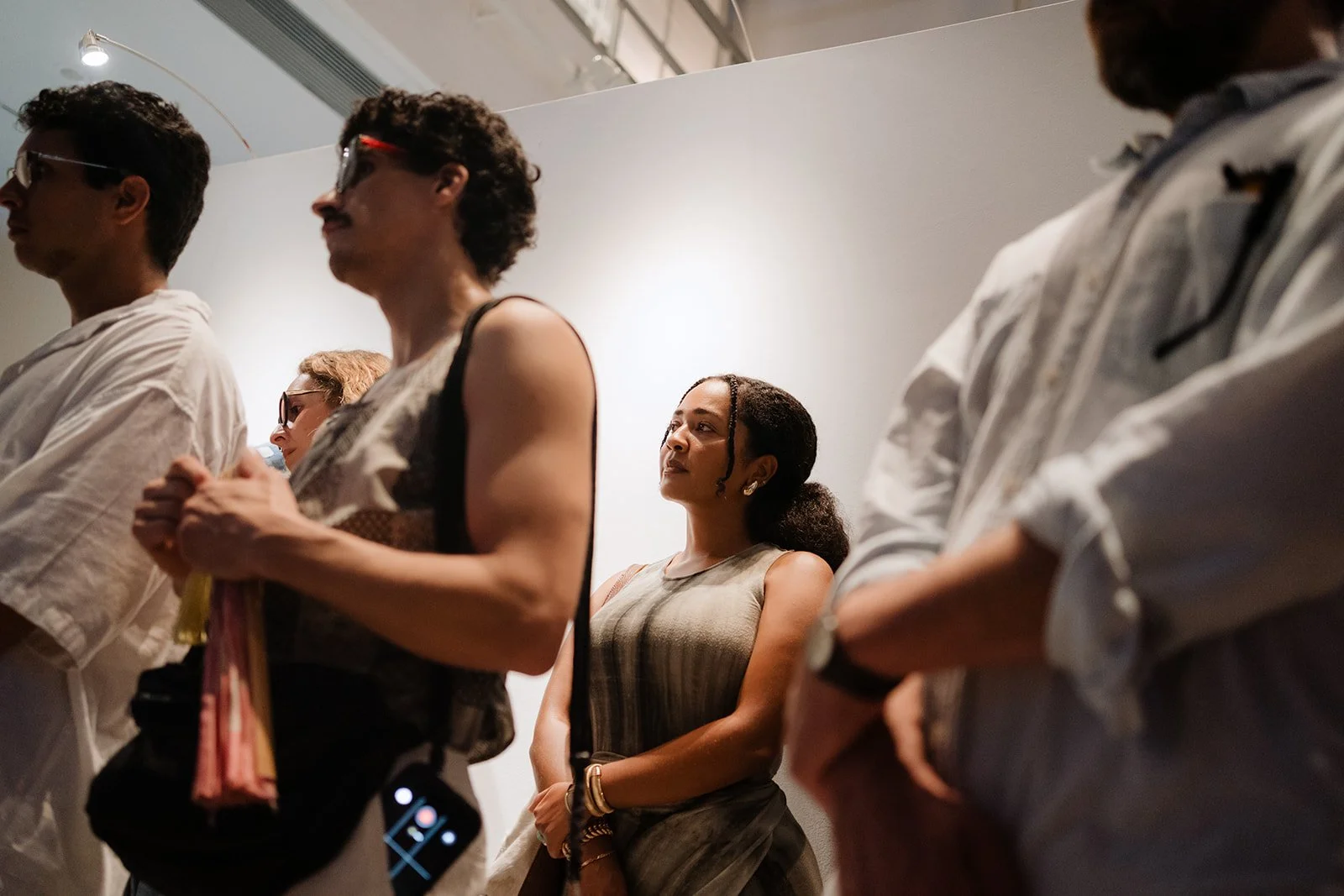
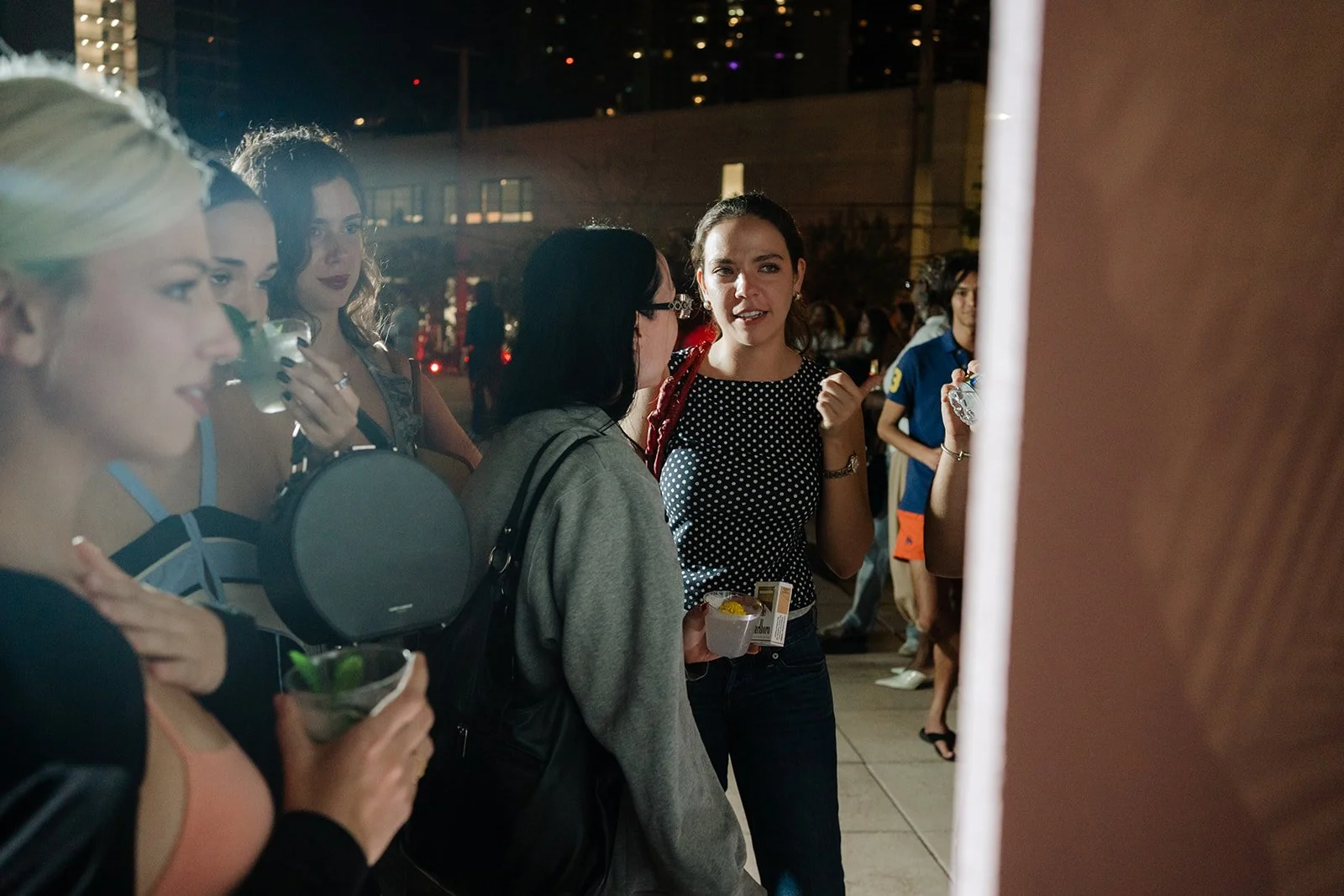
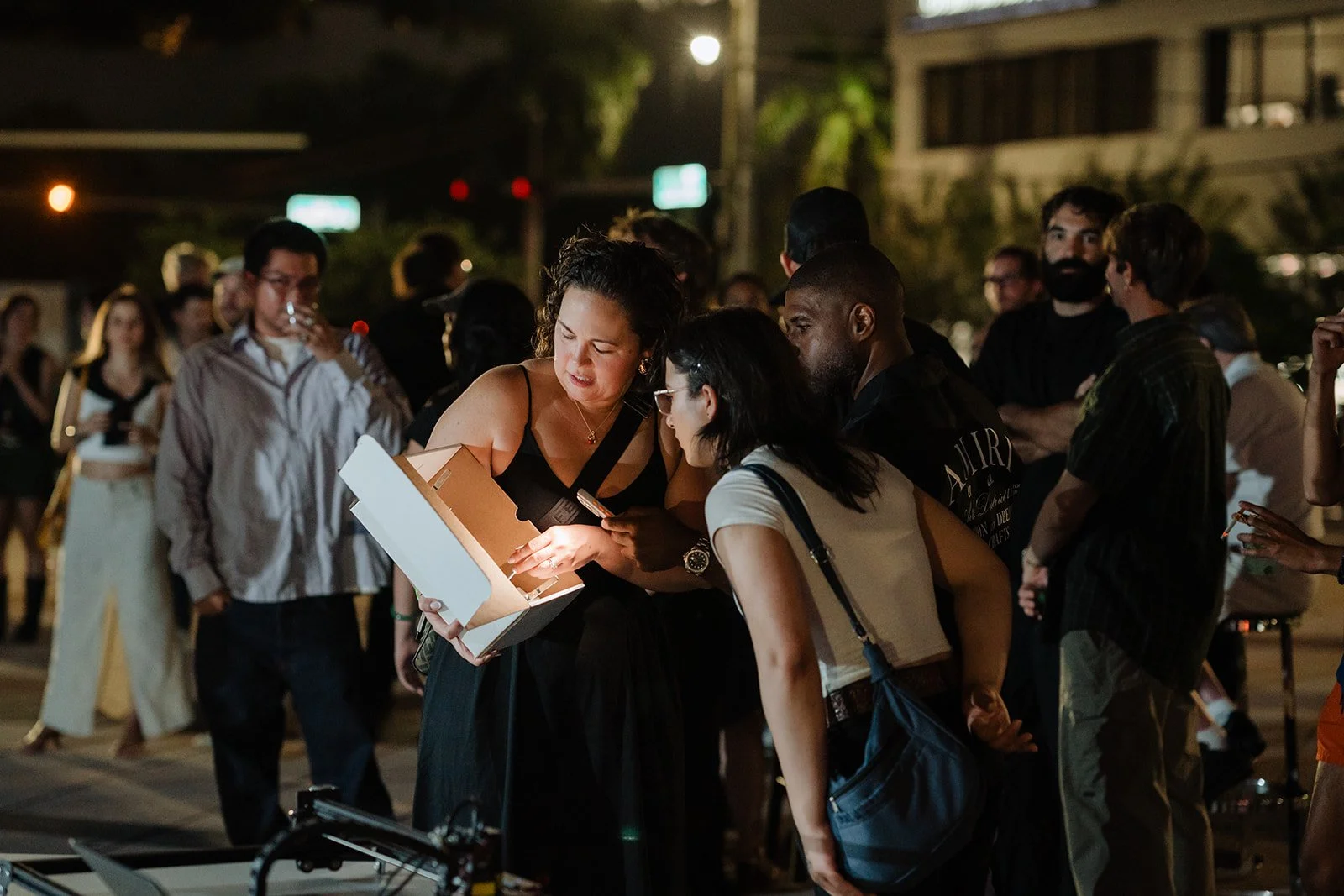
What stayed with me most after the performance ended was not only the imagery, but the instability of participation itself. People hesitated around the tarp throughout the performance; no one casually walked onto it. The audience continuously negotiated their relationship to the work through movement, silence, proximity, and attention. Participation became emotional, bodily, and psychological, all at once.
At certain moments, I began wondering if we ourselves were the fallout left after the detonation. Not metaphorically distant from the event, but remnants of it. Witnesses standing within the residue of catastrophe.
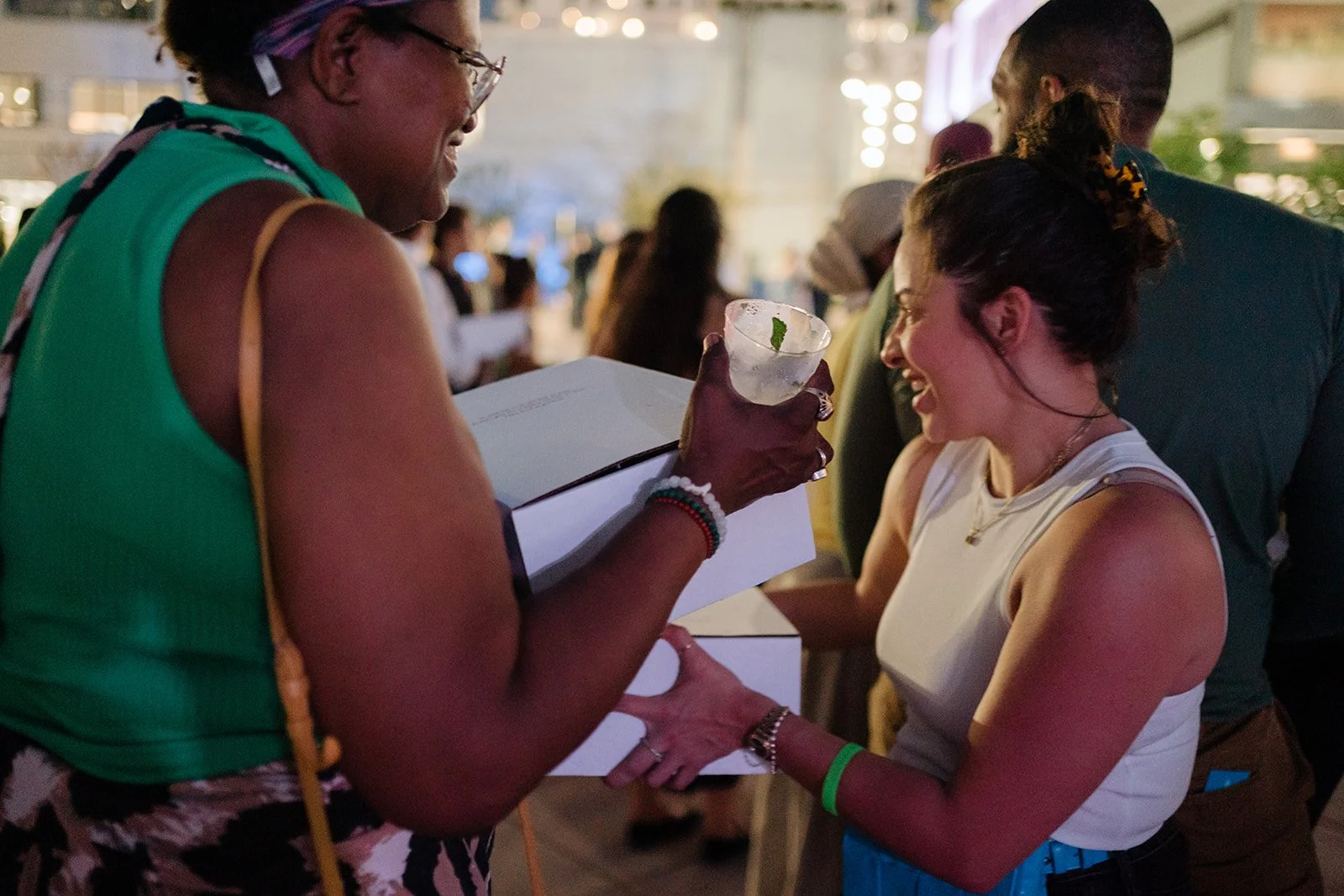
That feeling shifted when the audience was invited onto the tarp after the performance had concluded. Suddenly the stage no longer existed as a protected performance zone. What had previously felt inaccessible became communal space. People moved differently. Hesitation transformed into shared experience.
This transition felt important.
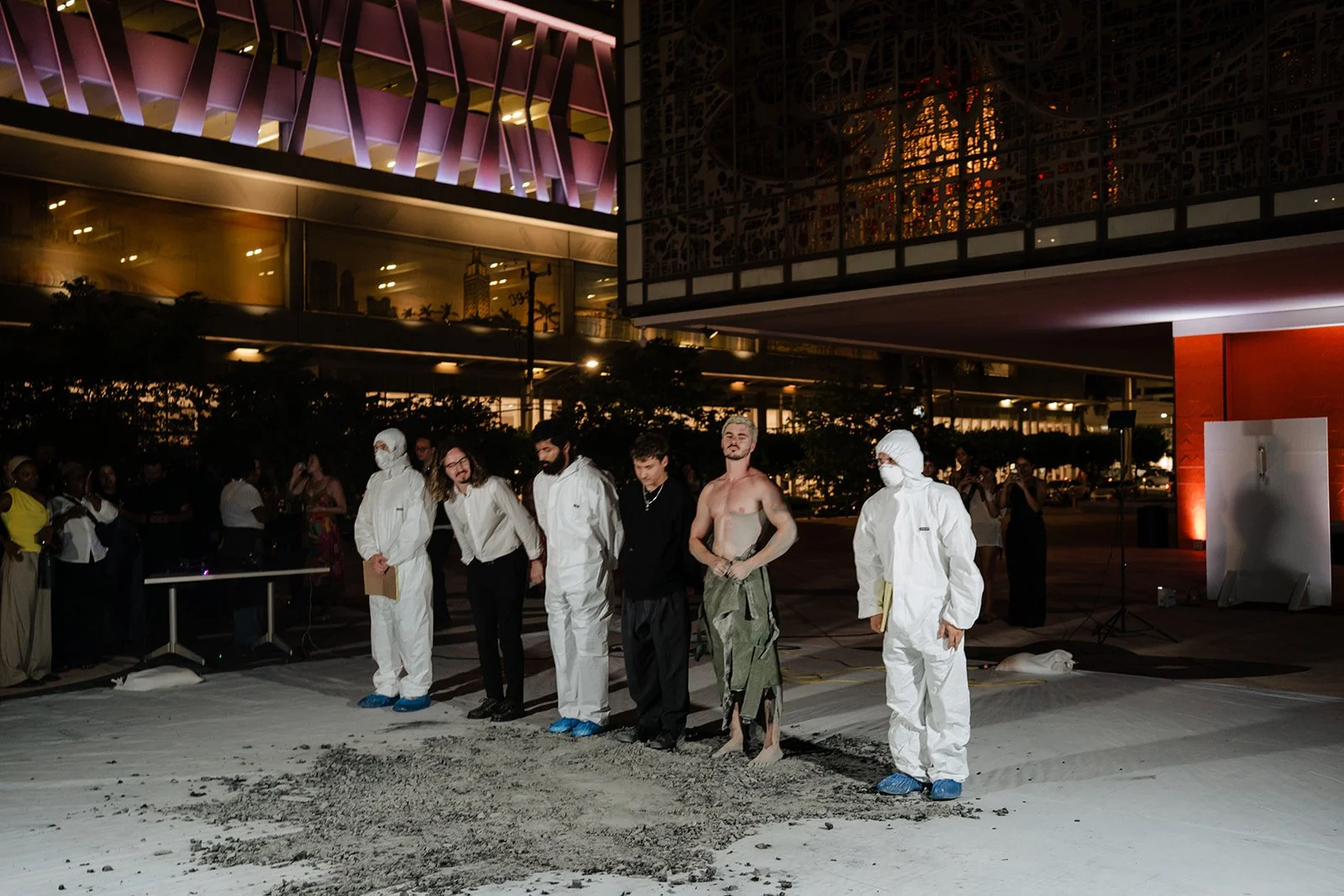
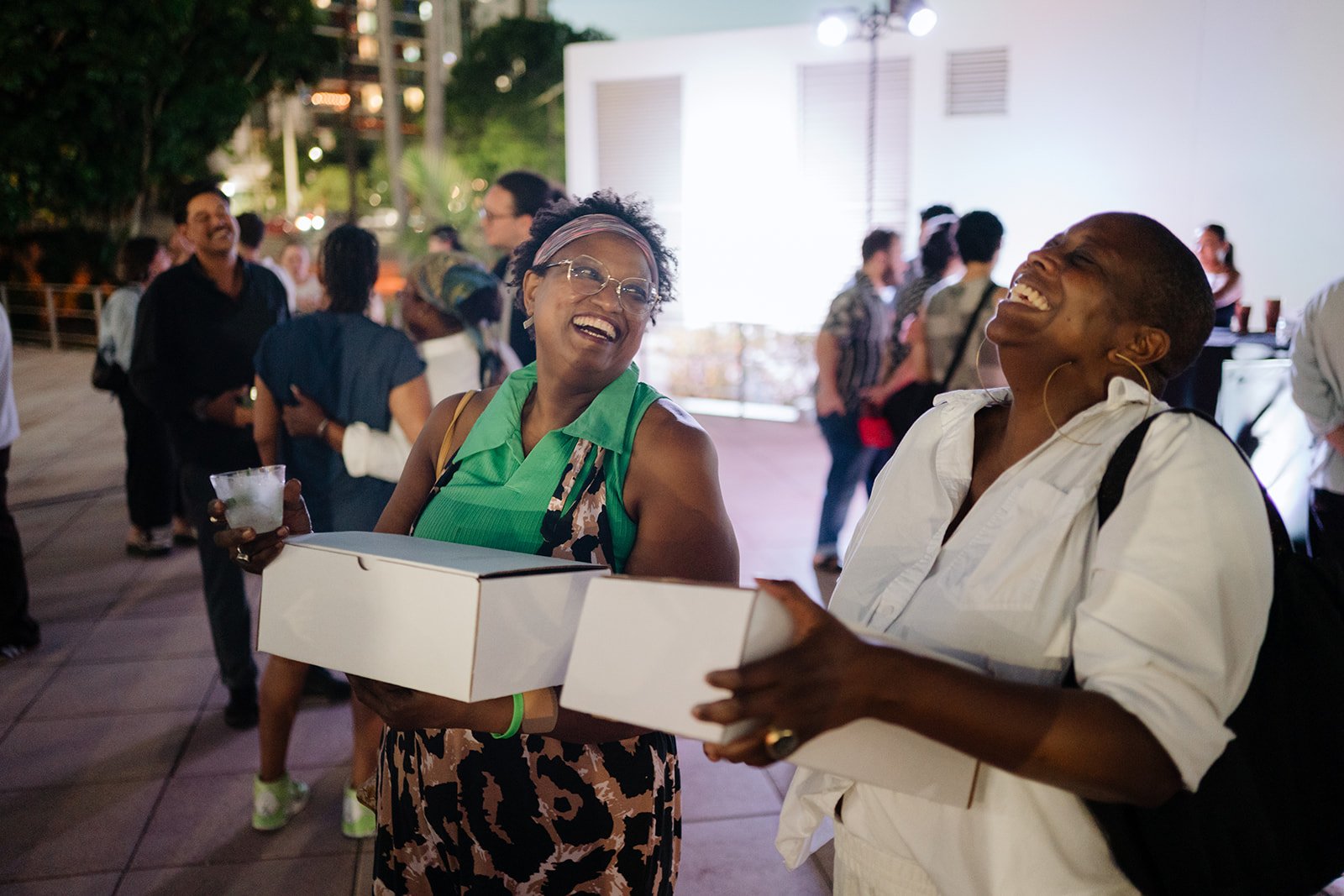
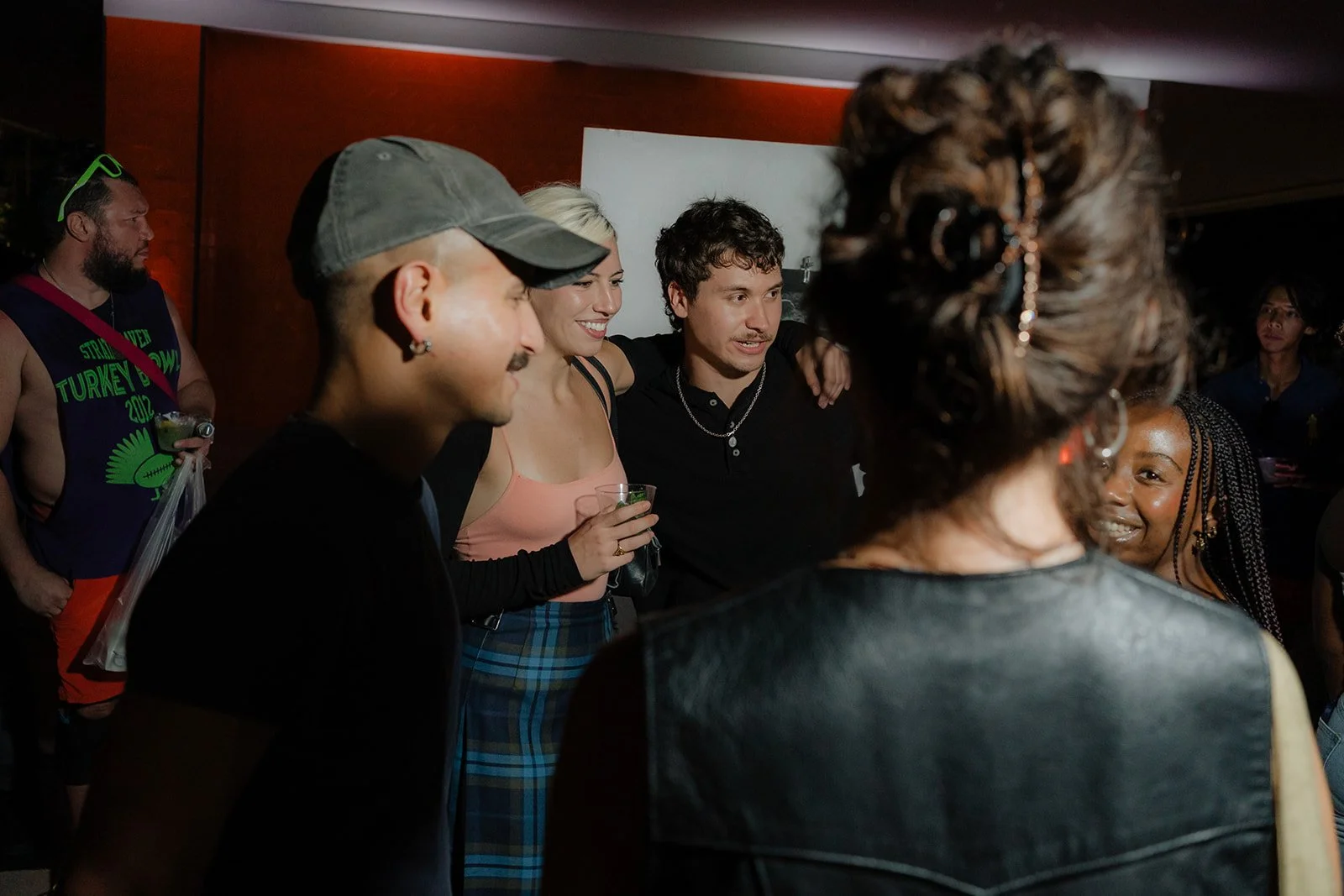
The Life and Death of Bluegill Prime ultimately prioritized people over objects and relationships over transactions. The value was not located solely within the performance as a collectible or consumable art object, but within how we chose to experience it together. The social interaction surrounding the performance became inseparable from the work itself.
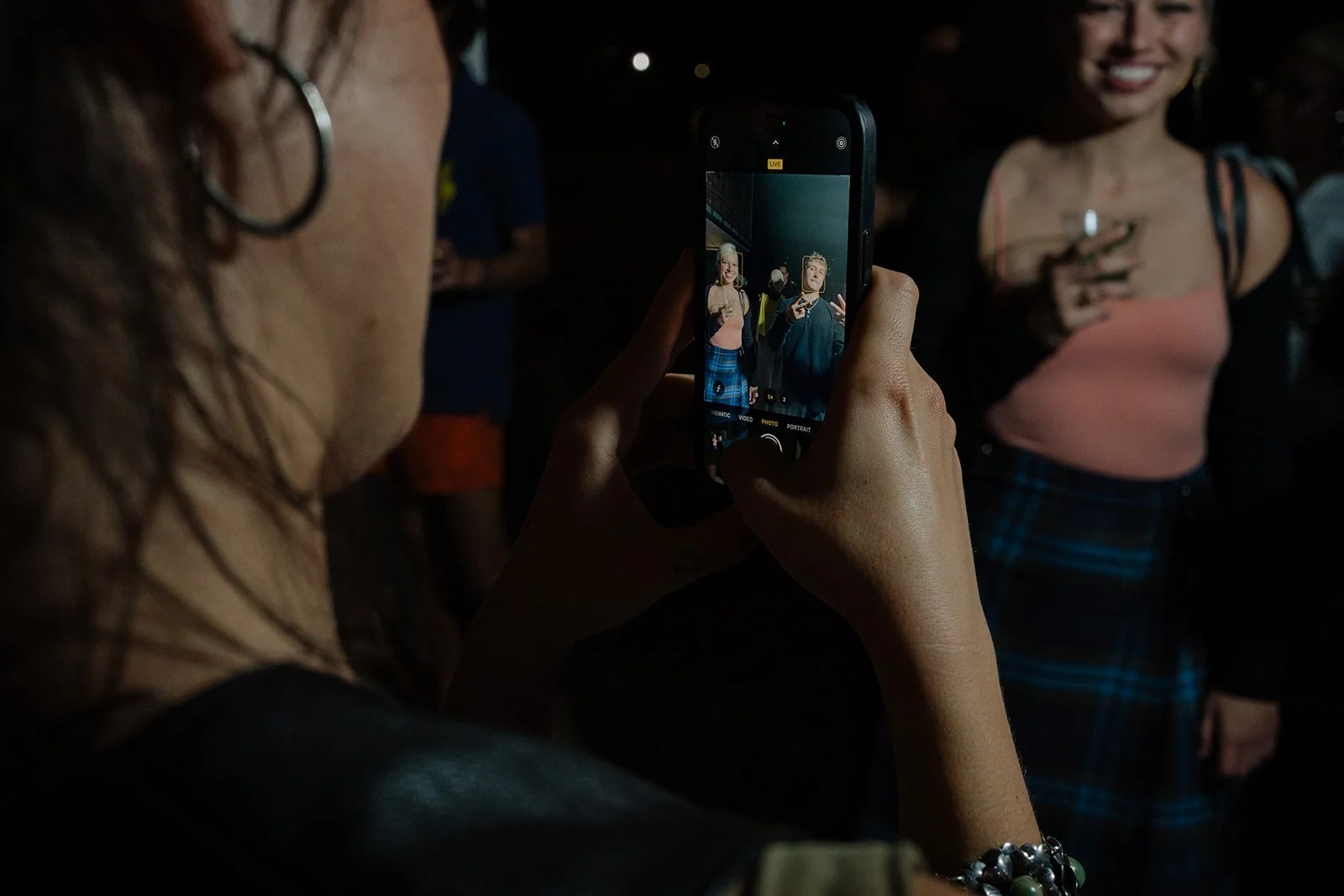
In a moment where contemporary art often becomes flattened into image circulation, ownership, and consumption, The Life and Death of Bluegill Prime reminded me that participation matters just as much as collecting. Presence matters. Attention matters. Shared experience matters.
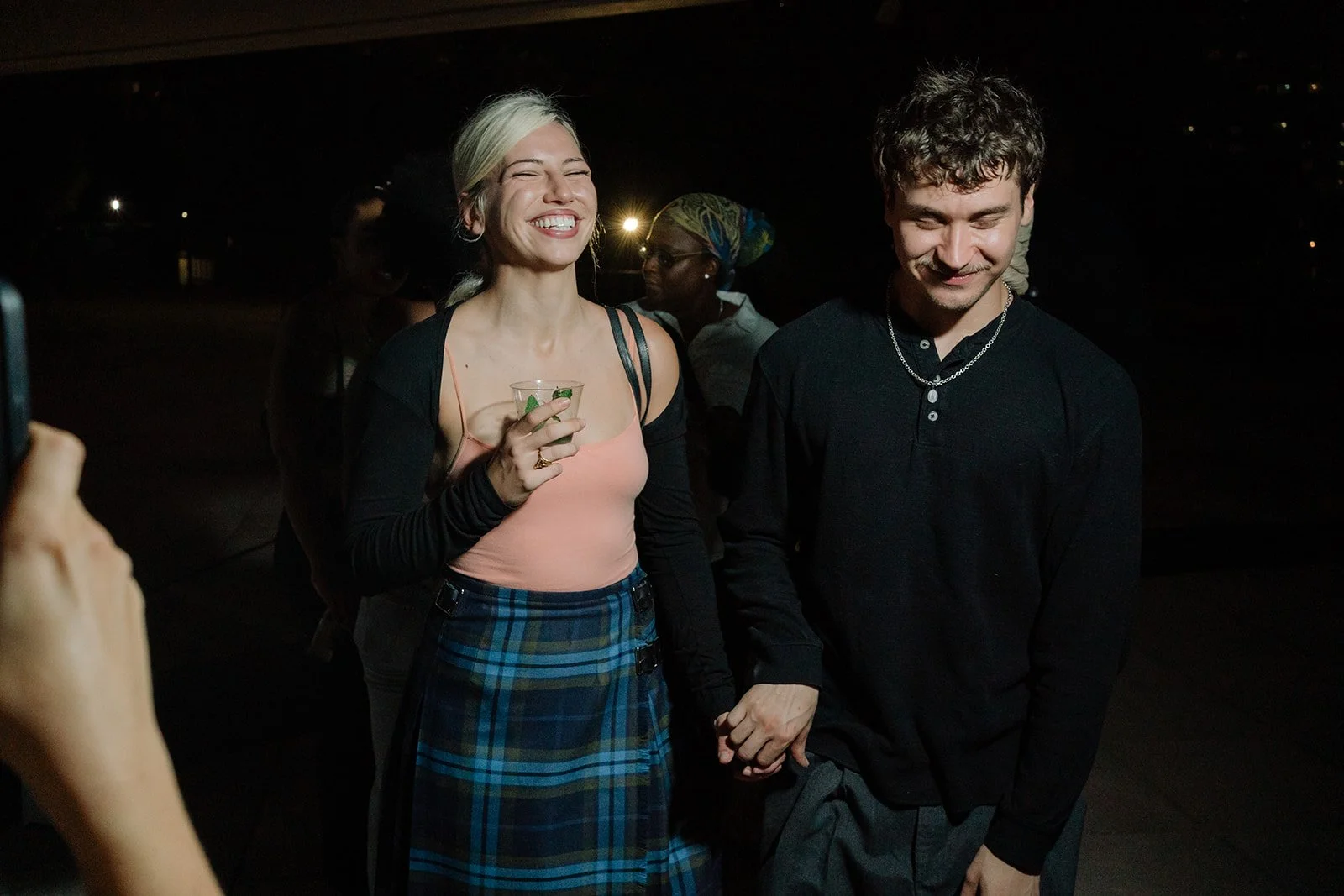
The performance asked the audience not only to witness refusal, but to witness one another witnessing it.
And maybe that is where the work becomes most alive.
Cast
Carlos de la Nuez - Bluegill Prime
Abhinav Chatterjee - The First Cowboy
Filio Galvez - The Second Cowboy
Lucas Snook - The Third Cowboy
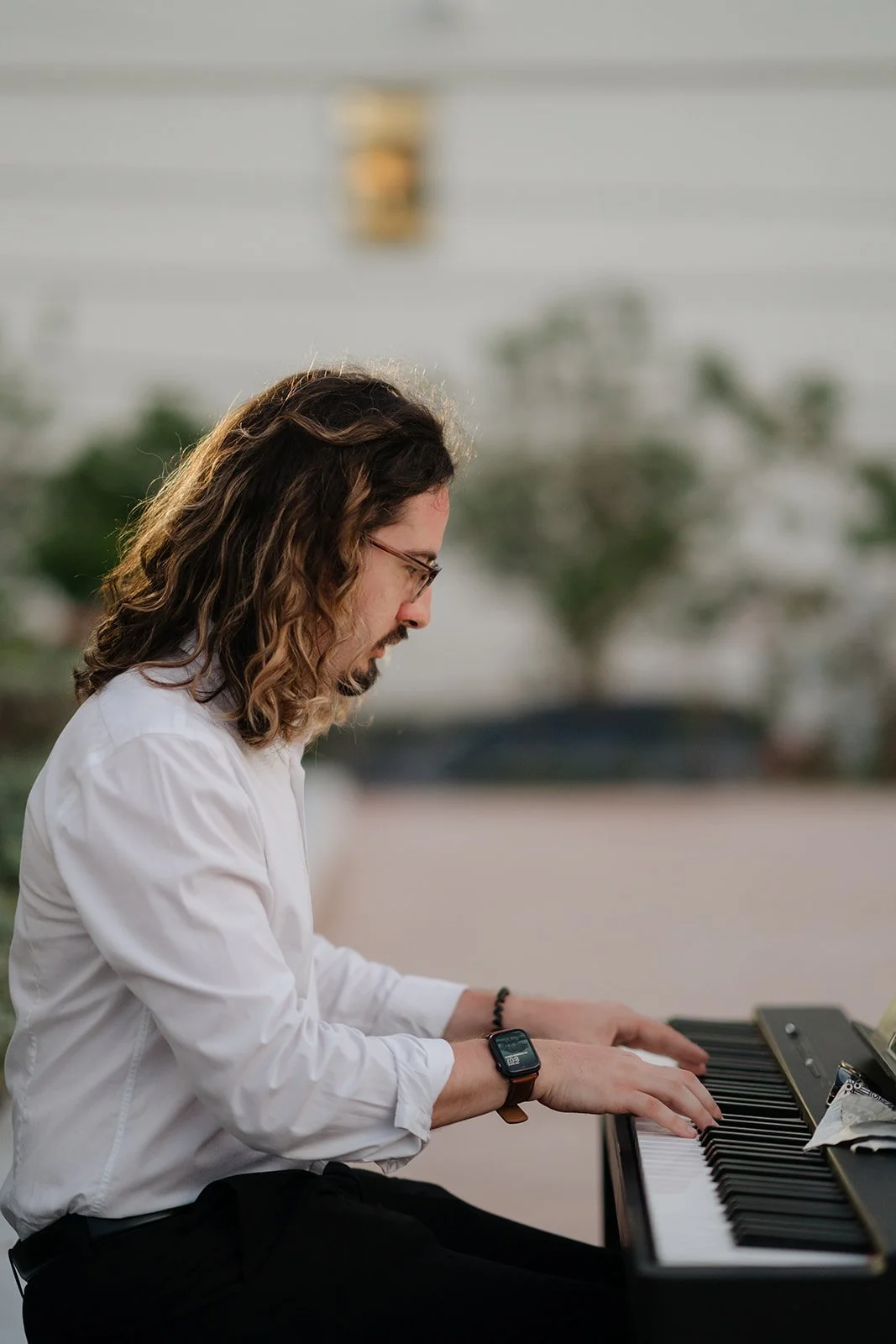
Sezenio Calvo - Piano
Commissioned work:
The Life and Death of Bluegill Prime
Laser engraving on steel, vertical toggle clamps
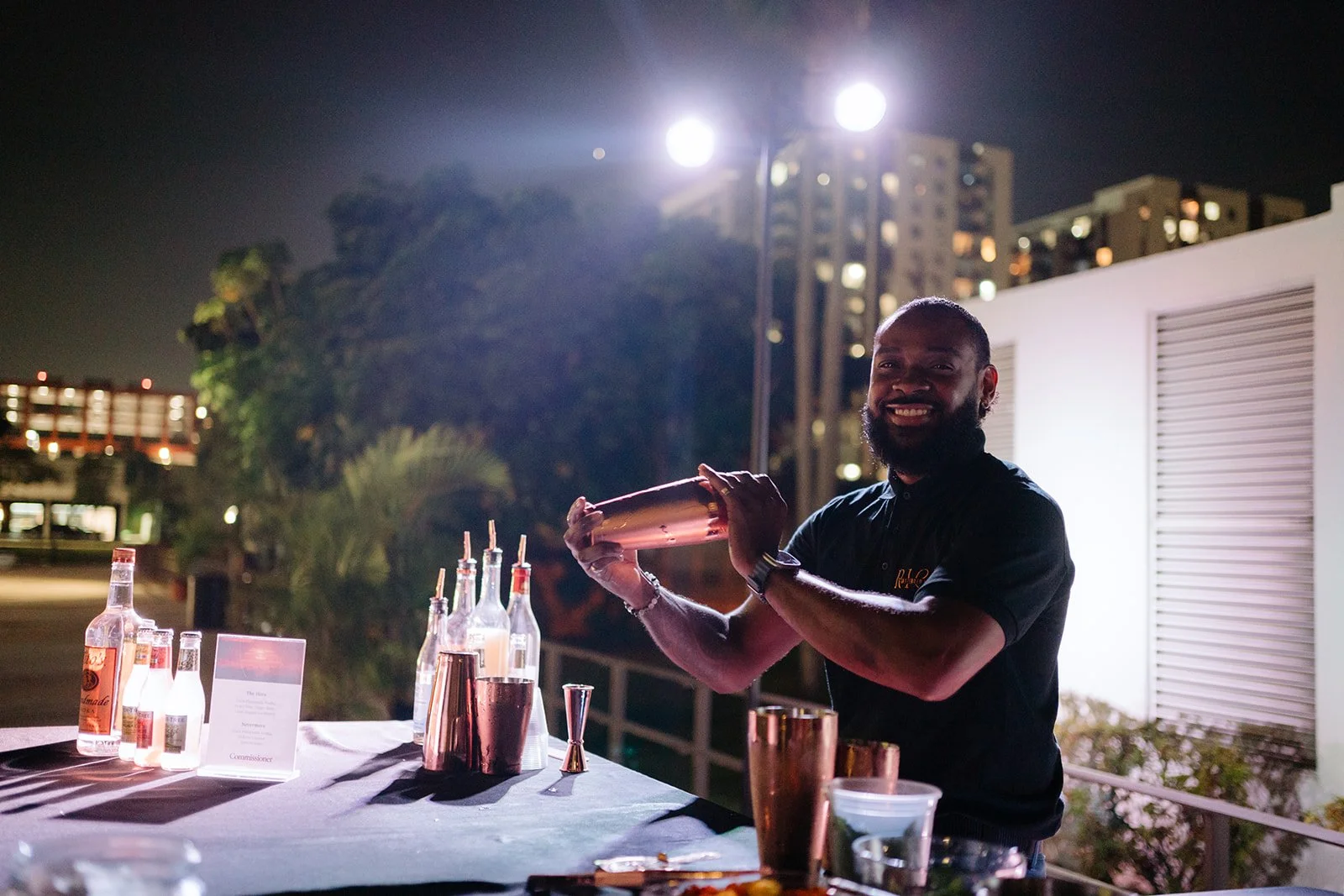
Overwhelming gratitude to Mitchell Wolfson Sr Foundation, New World School of the Arts, QUEUE Gallery, Tito’s Handmade Vodka, Tunnel Projects, and YoungArts.
Especially thankful for the Commissioner and YoungArts teams who made this project with Correa come to life, including Books Bischof, Zayra Campos, Claudia Des Rosiers, Natalia Duran, Veronica Gort, Juan Luis Matos, Sofia Metcalf, Natalie Padro, Ty Taylor, Maite Sierra, and Rico.