
Some Quiet Elsewhere with Matthew Forehand
The holiday edition
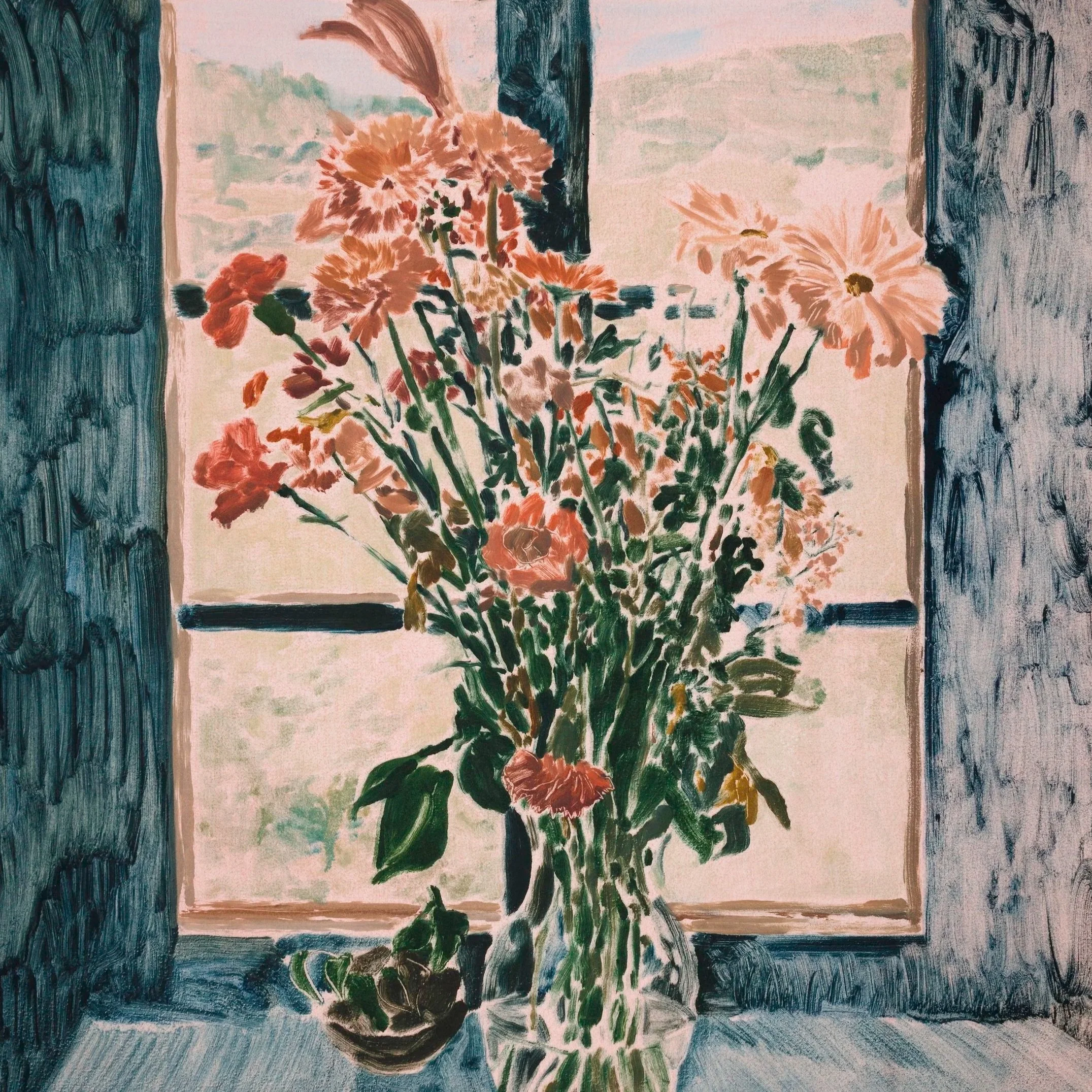
Matthew Forehand, Some quiet elsewhere, monotype, 25 5/8 x 23 1/2 inches (2023). Image courtesy of Homework Gallery
Our annual tradition is in full bloom with painter Matthew Forehand—the artist behind this year’s seasonal postcard.
Inspired by the Museum of Modern Art's Junior Council, which initiated its holiday card program in 1954 to foster a shared appreciation for the arts, this collaboration with Forehand marks our eighth iteration and follows in the footsteps of alums including Jared McGriff, Isabela Dos Santos, Mark Fleuridor, Nicole Salcedo, Alex Nuñez, Harumi Abe, and Carrington Ware.
With the aim of bringing the work of local artists into the homes of our community, these holiday cards have allowed us to explore time-based media with artists such as Ware and Dos Santos. They’ve also provided an opportunity to send snail mail, embracing the slowness and archival nature of the medium—a gentle cue for members to check the mailbox.
Learn more about Forehand and his holiday wish for us, Some Quiet Elsewhere, in the Q&A below with Creative Director and writer Mariana Pariani. She wonders, “Perhaps now more than ever, we are in need of the safe spaces—those we are born into and those we choose. Through a blend of painting, collage, and photography, Forehand’s work invites us to return to those intimate familial landscapes, shaped by heritage, identity, or spirituality—places where love, care, and community hold us. “
Q&A with Matthew Forehand
by Mariana Pariani
Mariana Pariani (MP): Your practice is deeply shaped by memory, place, and cultural heritage. Can you tell us about your creative process? How do these threads come together, and in what ways does your multicultural, nomadic upbringing manifest in your work?
Matthew Forehand (MF): The process of creating an image begins with a memory, which leads me to search for imagery that aligns with that initial recollection. Once the structure of the image—the basic elements of the composition—is established on the canvas or print matrix, I begin to move away from the original memory. This departure is intentional. It’s the point where intuition takes over and the work starts to assert itself.
This shift is especially present in painting, where the physical nature of paint—its weight, transparency, and resistance—guides decision-making in ways that memory alone cannot. The process becomes a kind of wandering, shaped by material and instinct rather than a fixed plan. That nomadic movement mirrors my own life experience, where place, identity, and meaning are formed through motion, adaptation, and repeated return rather than a single point of origin.
MP: When you shared the artwork for our holiday card, you mentioned that it can be framed around the idea of a nurturing feeling that grows in the space where home, memory, and community come together. How does that space look for you, personally, and how does it take shape in your work?
MF: These thoughts came directly from the circumstances in which the piece was made. It was created shortly after revisiting a place from my childhood that I had not been to in years. The memories felt persistent, almost like ghosts, resurfacing as I moved through familiar spaces.
Being there with my family allowed those memories to shift. Sharing that space made room for new memories rooted in care, love, and continuity. That overlap of past and present is what I think of as a nurturing space, and it’s what the work tries to hold through atmosphere and layering.
MP: You work across collage, painting, drawing, and printmaking. How do you decide which approach belongs to a particular idea? Do certain techniques feel more connected to memory, sensation, or themes you find yourself returning to?
MF: Each medium gives me a different way to work with memory. Photography acts as memory in a physical form, a fixed reference I can return to. Using photographs helps me rebuild environments and pull those memories further into the physical space of the work.
Painting, drawing, collage, and printmaking allow the image to shift. These processes introduce layering and change, moving the work away from documentation and closer to sensation. The medium I choose depends on how close I want to stay to the original memory and how much I want intuition and material to guide the image.
MP: You’ve come a long way to become a full-time artist. What helped you keep going, even when the path was difficult? And is there anything you’ve learned along your journey that you’d like to share with others pursuing a career in the arts?
MF: What has helped me keep going is staying in a constant state of searching. Even when I have a process or way of working that feels comfortable, I try not to become complacent and instead look for what the work needs next.
I’m fueled by a balance of historical and contemporary references, which helps me stay grounded while continuing to push forward. What I would share with younger artists is that the work has to be made for yourself first, not for the pursuit of something else. The concepts need to be honest and necessary to you. When the work comes from that place, it has a better chance of sustaining both the practice and the artist over time.
MP: You have a background in teaching, and have recently taken the Printmaking Residency at Oolite Arts. Are there ways in which being an educator reflects or affects your own work or studio practice?
MF: Teaching has elevated my work in a very direct way. It continually challenges me to question what I know and how I make decisions in the studio. Explaining process and intent forces me to think critically about why I’m doing what I’m doing. The roles of arts educator and practicing artist are never fully separate for me. That overlap inevitably carries into the studio, shaping how I approach process, experimentation, and discipline.
MP: Do you have any events or exhibitions coming up? And where can people go to see more of your work?
MF: I’ve worked with Homework Gallery for several years, and they’ve been an important collaborator in showing and placing my work.
Much is also produced through the Oolite print shop, which is a great place to stay connected to what I’m working on.
Please note this interview was edited for brevity and form.
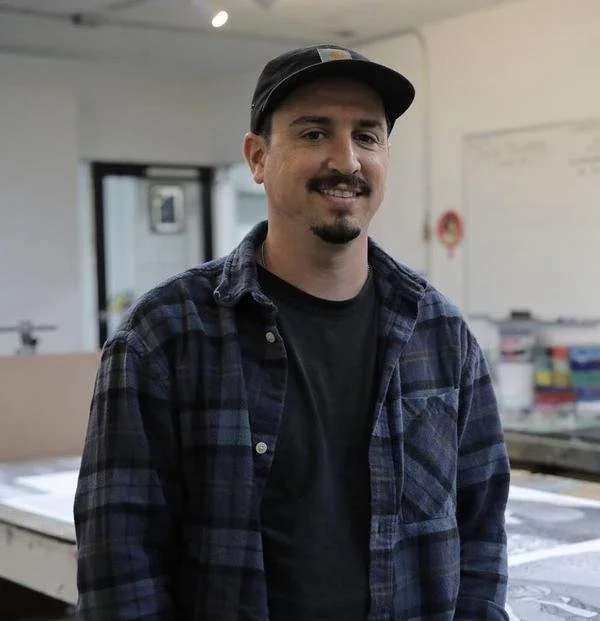
Matthew Forehand is a visual artist whose work is shaped by a life of movement, cultural diversity, and resilience. Born to an American father and Colombian mother and raised across multiple countries through his parents’ military service, he developed a deep awareness of place—an awareness that continues to inform his interest in how natural and built environments shape identity. His journey ultimately brought him to Miami, where reconnecting with his Colombian heritage proved pivotal to his growth as an artist. Through teaching, residencies, and a committed studio practice—including his role as Printmaking Resident at Oolite Arts—Forehand has built a career defined by perseverance, cultural curiosity, and a dedication to elevating embodied, lived experience through his art.
Learn more here or on Instagram @matt.4hand.