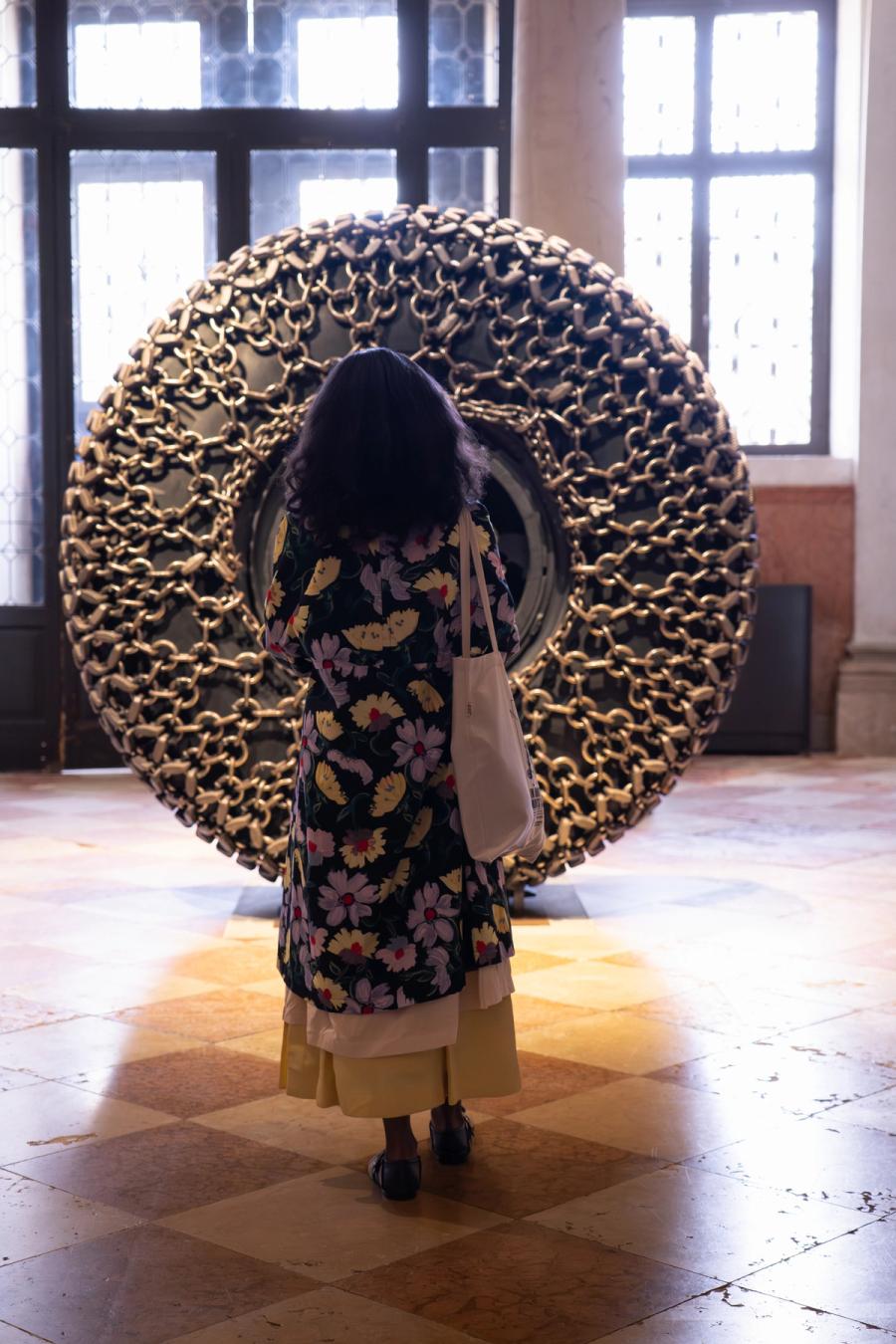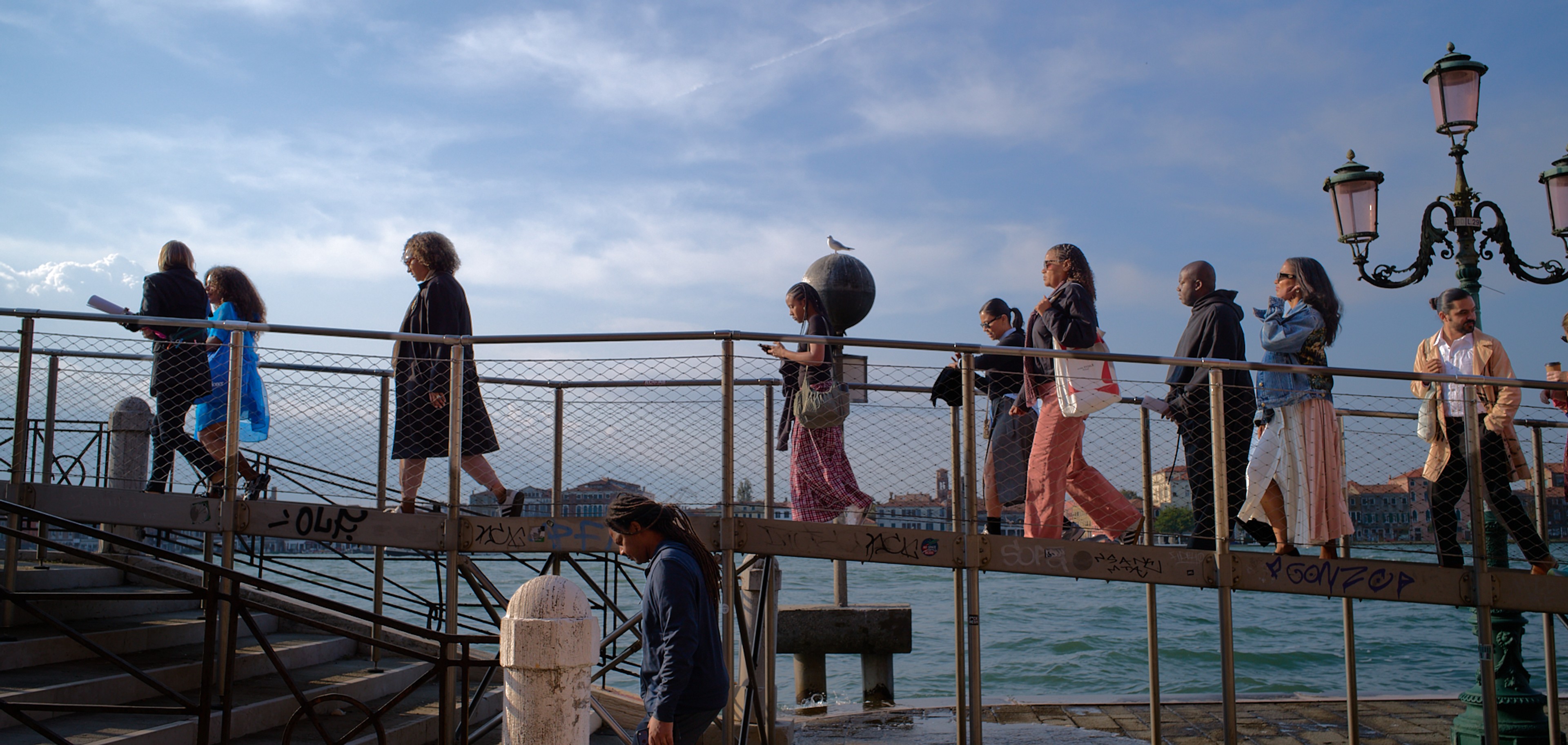
Welcome to Venezia.
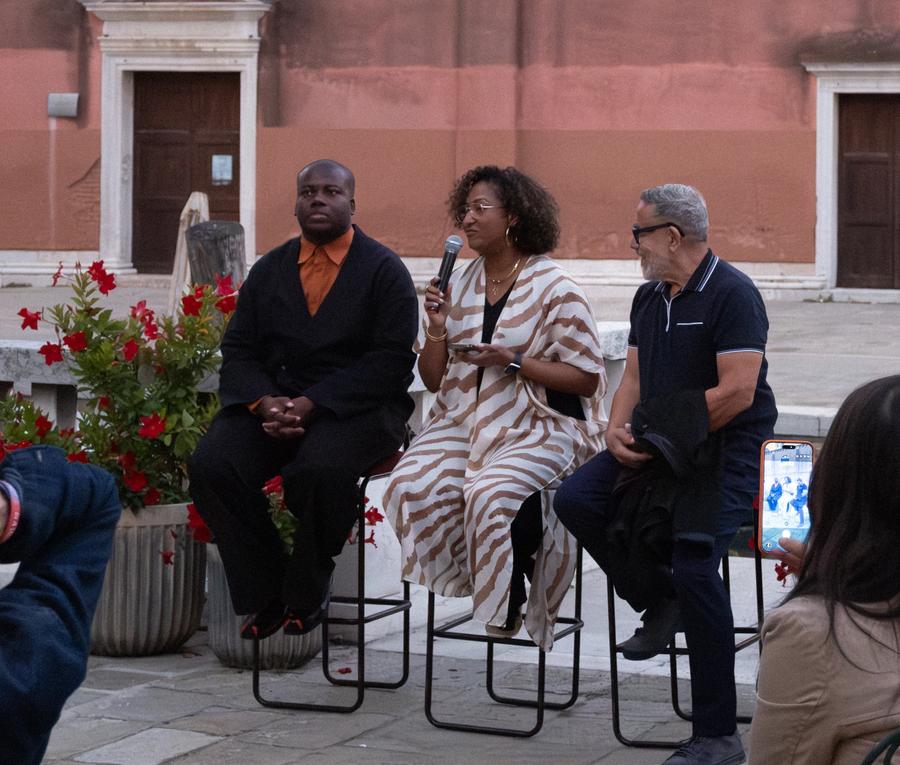
On October 6, 2026, we gathered approximately 30 travelers from six cities across the U.S. and Canada at the Experimental in Dorsoduro for a conversation.
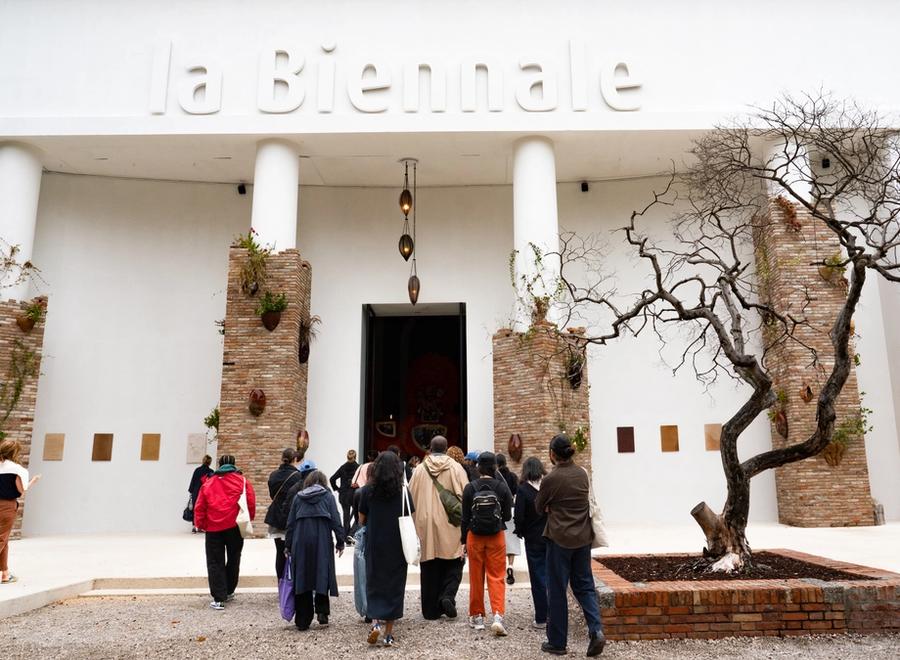
Since its founding in 1895, La Biennale di Venezia has grown into one of the world’s leading art events, bringing together a major international exhibition and national pavilions. To broaden our perspective on its 61st edition, we spoke with artist Edouard Duval-Carrié, featured in Season Seven and In Minor Keys; multidisciplinary artist Cornelius Tulloch, AIRIE Foundation’s global creative director; and Kristina Newman-Scott of the Knight Foundation. Along with an introduction by collaborator and independent curator Claire Breukel, together they encouraged us to lead with our senses. Over the next four days, we took their advice to heart.
Moving with intention.
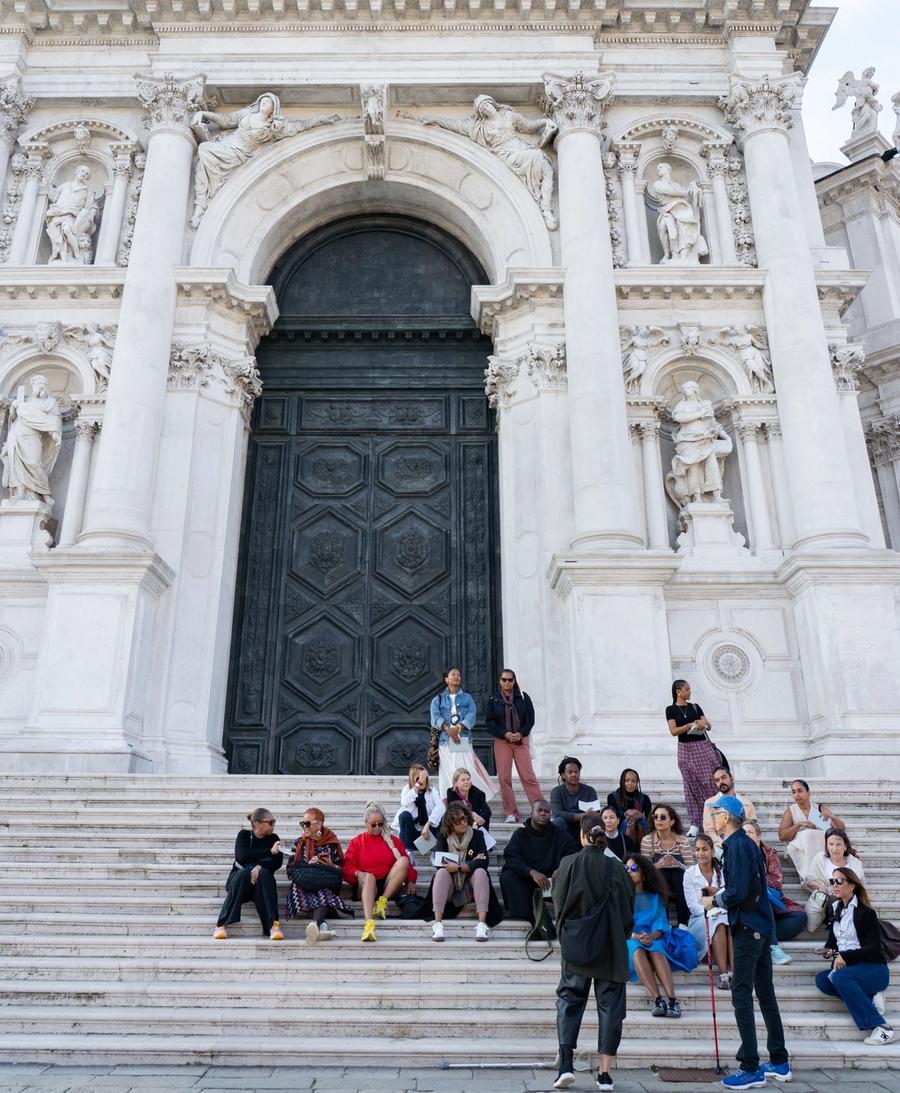
For our first full day of adventure, curator Francesca Rolla greeted us on the steps of the Basilica di Santa Maria della Salute to ground us in intention. The invitation: Allow perception to enter another rhythm.
“The knowledge held by In Minor Keys does not emerge through explanation alone. It also arises through atmosphere, proximity, sound, silence, memory, and the relations that form between works, bodies and histories.
A minor key becomes a way of inhabiting the present: attuning yourself to quieter frequencies; to what might otherwise remain at the margins of perception; to gestures of repair; and to forms of joy, solace and hope that persist within difficult times.”
See our journey from Lorna Simpson: Third Person, Marina Abromovich: Transforming Energy and the Bahamas Pavilion exhibition, In Another Man’s Yard, to Erwin Wurm: Dreamers, Michael Armitage: The Promise of Change, and a private cocktail reception at Akka Project.
In Minor Keys.
Koyo Kouoh’s work, always tuned to the global and collective frequency, permeates this year’s International Art Exhibition.
In an article for The New York Times, her team member and curator Marie Helene Pereira explained that while “minor keys” in music often evoke strangeness, melancholy, and sorrow, in this context, they embody “joy, solace, hope, and transcendence.”
Time traveling.
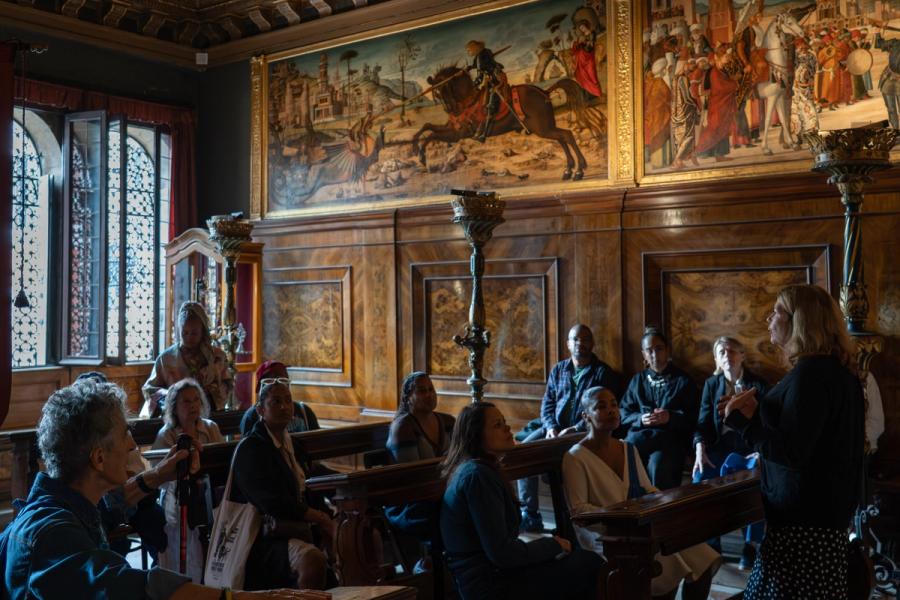
Founded in 1971 in response to the devastating November 1966 floods, Save Venice Foundation has helped restore more than 2,000 works of art and historic objects, many dating to the 16th and 17th centuries. Their work raises a pressing question: Who will save Miami? New Orleans? Haiti?
The conversation felt especially timely as we visited the Haitian Pavilion for Yelena’s Garden by artist Enock Placide. Composed of canvases, a double-sided panel, a glass sphere and a video, the exhibition follows an open hexagonal structure suggesting a relational mental geometry. Set against our experience of Save Venice at the Scuola Dalmata di San Giorgio di Schiavoni, Placide’s installation offered an important counterpoint, shifting the focus from European histories to speculative geographies.
Searching for the minor key.
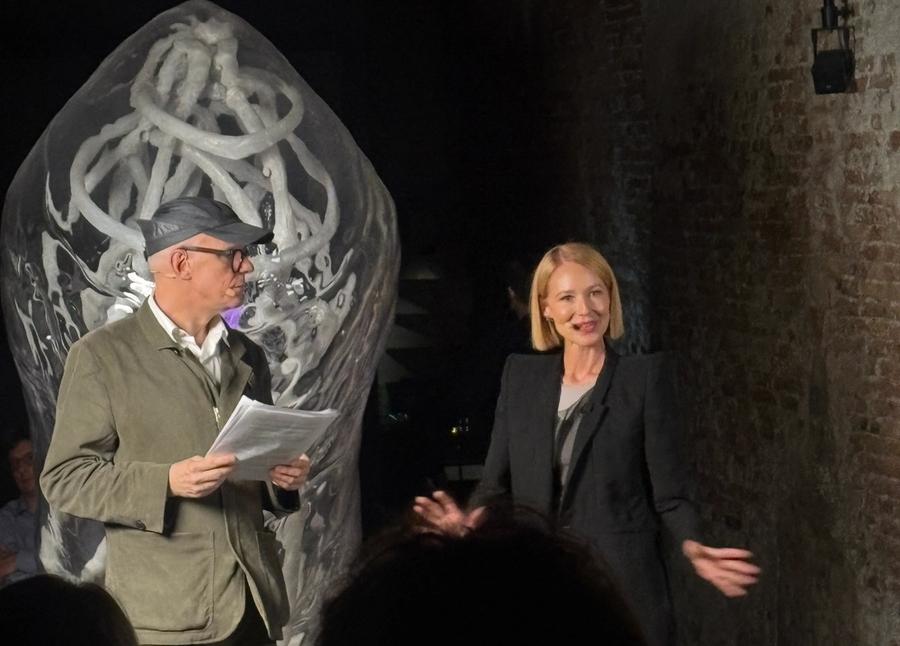
We arrived as students for Matriclysm: An Archaeology of Connections Lost, an exhibition by multidisciplinary artist Jewel Kilcher, known as the singer Jewel, at Salone Verde, Art & Social Club for her first-ever solo exhibit.
There, we joined the artist and acclaimed curator and writer Hans Ulrich Obrist for an intimate conversation. Through neuroceutical science, which uses audio frequencies to shift brain activity, Jewel shared some the experiences and conditions that informed her desire to explore emotional regulation, reduce anxiety, and the nervous system.
Local ecosystems.
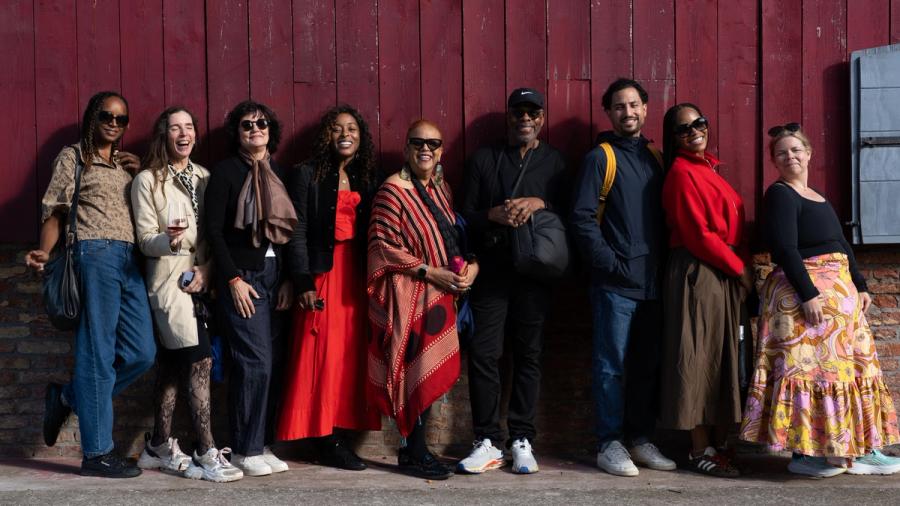
A quick jaunt to Sant’Erasmo, long known as Venice’s “vegetable garden,” brought us to Orto di Venezia with Michel Thoulouze. Organized by member and fellow wine lover Frances Lalas, the excursion offered as a meaningful opportunity to connect with local winemakers and stewards of the land. Lalas shared, “I love finding ways to experience a place through its wine—meeting the people behind it, and understanding the landscape and how the wine is made. Now I’m looking for the next excuse…maybe Tuscany, wine and hip-hop in Burgundy, or something else we dream up together.” Let’s go!
Gratitude.
Fellow traveler and Executive Director of CultureSource News Omari Rush shared in his October newsletter:
“I arrived in Italy a bit battered by the U.S. election season and economic environment. The wear on me, though, quickly started to be undone as I encountered the currents of Koyo Kouoh's exhibition—including the ambition of its widened aperture, creativity, and novel connections.
Predictably, when I returned stateside, the U.S. environment had not changed—but I had. I had been influenced. I felt newly inspired about and driven by what could be, even while being re-immersed in cultures of polarization and contraction.”
In Helter Skelter by Arthur Jafa and Richard Prince, Amafo Boako: It doesn’t have to always make sense, and Jenny Saville’s Gianmaria Potenza, we saw ourselves anew.
Deepest gratitude to curator Claire Breukel for shaping our experience with such care. We are also thankful to curator Francesca Rolla; artists Edouard Duval-Carrié, Cornelius Tulloch, and Oscar Rieveling; and the generous support of Knight Foundation and AIRIE Foundation. The majority of photography was captured by the talented Beatrice Foti, with some images provided by photographer Roy Wallace and our very own crew. This trip was made possible by community.